
 ไทย
ไทย English
 中國人
中國人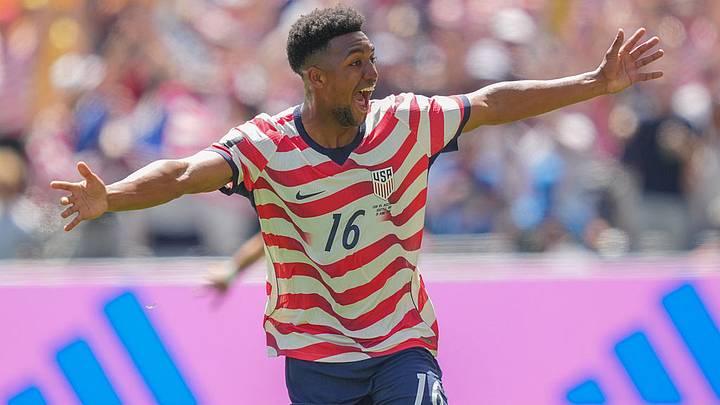
It wasn't a masterpiece. At times, it was downright messy, such as when 6'6" Australian center back Harry Souttar extended his arms—each seemingly as long as a goalpost—nearly twice around Folarin Balogun, towering over the U.S.'s 5'10" striker, sparking a minor confrontation and yellow cards on both sides.
Still, the USMNT accomplished its mission, defeating the deceptively capable Australian side 2–0 on Friday beneath the Seattle sunshine. The 2026 World Cup co-host holds firm at the top of Group D standings, with a perfect run through the group stage now a very genuine prospect.
Before shifting focus to the final remaining opponent, Türkiye, whom the U.S. faces on Thursday, here are three key takeaways from the crucial victory over Australia.
New Stars Emerge

The USMNT may have been without its primary star, Christian Pulisic, but others have rapidly stepped up. The 11th-minute goal that handed the USMNT its early advantage, though officially recorded as an own goal, was born from the sheer brilliance of Balogun.
The 24-year-old striker surged down the left flank, cutting toward the goal line and battling through Australia's towering defenders. With the outside of his right foot, he whipped the ball across the box toward the onrushing Ricardo Pepi. A 6'4" Cameron Burgess, scrambling desperately to recover, reached the ball first, but rather than clearing it over the bar, he inadvertently guided it into his own net.
While the stat sheet won't fully reflect Balogun's contribution to that crucial opener, there are clearly more standout moments ahead for the young forward. He scored a brace in his World Cup debut last week, accounting for half of the U.S.'s goals in a commanding 4–1 win over Paraguay at SoFi Stadium, becoming the first USMNT player to score multiple goals in a World Cup since the tournament's inaugural edition in 1930 and firmly planting himself in the Golden Boot conversation.
Alex Freeman, the youngest player on the USMNT roster at just 21, was equally impressive on Friday. The right center back looked unsettled in the opening minutes against Australia, but he quickly adapted to the visitors' approach, reading when the Aussies would attempt to catch him off guard on the counter. Freeman not only delivered on the backline with five clearances and four tackles, but also headed home the U.S.'s second goal in the 43rd minute—a Superman-esque leaping header off a rebound—for just his third international goal.
The 2026 World Cup—hosted across the U.S., Canada and Mexico—promises to elevate the sport's profile across a continent still largely warming to the game. Yet perhaps equally significant, this tournament is also proving to develop the USMNT's talent pool, a side that has historically struggled at soccer's grandest stage.
The Stars and Stripes are finally asserting themselves on the world stage and establishing themselves as genuine tournament contenders. More importantly, they are demonstrating the very real potential for even greater achievements ahead, given the team leans as heavily on young emerging talent as it does on established stars like Pulisic and Weston McKennie.
Pochettino Proves His Worth
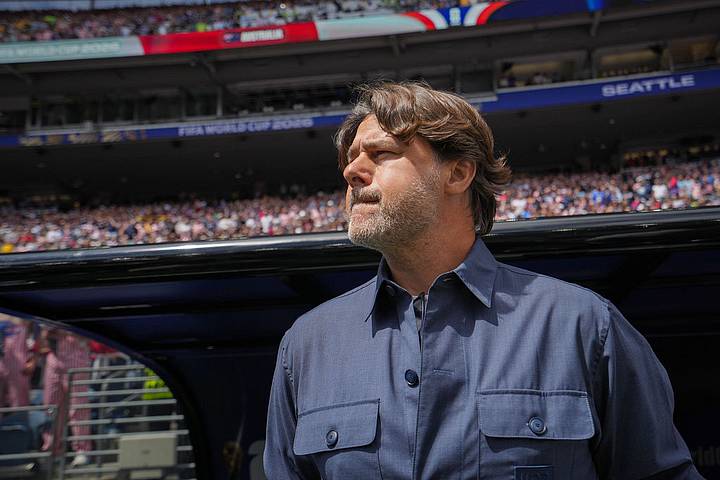
Australia presented the USMNT with a distinctive challenge. The Socceroos not only allowed the Americans to control possession and dictate the game's rhythm, they actively invited it, opting to sit deep with five defenders across the back and four in midfield. They kept the U.S. busy in the center of the pitch, and it was precisely within the repetition of the Americans' sideways passing that Australia planned to pounce. All the Socceroos needed was a touch slightly too heavy, a run a fraction too slow, or one small mistake.
It was the kind of tactical puzzle that demanded Pochettino's best work as a manager, and he delivered on every front.
The former Tottenham Hotspur, Paris Saint-Germain and Chelsea manager shifted the U.S. to a three-back system before kickoff, confident that his trio of center backs could cover one another against swift counterattacks, which in turn allowed Antonee Robinson and Sergiño Dest to push high up the pitch without the constant pressure of being first to track back in transition.

It was a bold—yet inspired—decision by Pochettino to deploy Balogun and Ricardo Pepi together up front, as the two strikers had only lined up alongside each other on just two prior occasions. Balogun typically operates as a lone striker and has thrived in that role.
Nevertheless, supported by Robinson and Dest as makeshift wingers, the striking duo soon overwhelmed Australia's sturdy five-man backline and allowed the U.S. to do precisely what Türkiye had failed to do against Australia: convert on limited opportunities. The Americans headed into halftime with two goals from just a 1.20 xG (expected goals) and nine total shots.
The striker partnership also gave Balogun the freedom to drift wider—an unconventional position for him—but his pace proved even more dangerous from the left flank, regularly getting the better of Australian fullback Jacob Italiano, while Pepi held his position more centrally.
USMNT Making History

The hard-fought win over Australia secured the first chapter of history the USMNT is looking to write this summer on home turf. It marked the first time since 1930 that the USMNT claimed two victories in the group stage. In that inaugural 13-team competition, the Americans won back-to-back matches against Belgium and Paraguay to reach the semifinals, where they were soundly beaten by Argentina 6–1.
SI answers is our AI answer engine trained on human-created content.
The last time the U.S. won twice at the World Cup, across all rounds, was in 2002, stunning Portugal 3–2 in the group stage opener before beating Mexico 2–0 in the round of 16 to reach the quarterfinals—the deepest run the team has made in the modern era of the competition.
After controlling both of its opening Group D matches, more history appears well within reach.