
 ไทย
ไทย English
 中國人
中國人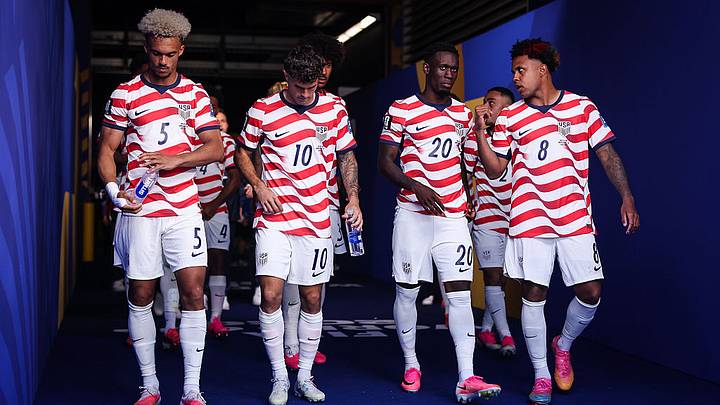
The Americans' promise lasted all of 61 seconds in the World Cup round of 16 against Belgium. How do they make it last a full 90 minutes?
The U.S. men's national team was dismantled 4–1 by the European giant in Seattle this summer, crashing out at the same stage that had eliminated them five times before at soccer's biggest stage, including the last three tournaments in which they participated (2010, 2014, 2022).
But for the briefest of moments, it appeared the Stars and Stripes were on the verge of rewriting their story.
Belgium pressed the USMNT from the opening whistle, needing just nine minutes to break the deadlock, yet standout midfielder Malik Tillman offered the Americans a ray of hope just after the half-hour mark with his trademark free kick, leveling the score with a perfectly-placed strike that rattled both the net and Lumen Field.
MALIK TILLMAN FORCES THE EQUALIZER FOR THE @USMNT 🇺🇸
ANOTHER FREE KICK BEAUTY AND THE BUILDING SHAKES IN SEATTLE! pic.twitter.com/uUO9amIJ3Z
That hope was short-lived, however, as Belgium struck back just a minute later on the very next play — a swiftness that signaled Tillman's goal would amount to little more than a consolation.
What went wrong? The USMNT had entered the arena as a slight favorite. A lopsided defeat was the last thing anyone anticipated. While Belgium ranked in the global top 10, the Red Devils had been inconsistent throughout North America up to that point. Meanwhile, the host nation had been riding a wave of momentum.
More critically, how does the USMNT stop this from happening again? The challenge will be even steeper for the Americans at the 2030 World Cup in Morocco, Spain and Portugal, where they'll no longer have the advantage of a passionate home crowd behind them.
There's no quick solution — it's something that will require the full four years to address.
USMNT Lacking High-Stakes Moments

USMNT players individually experience high-pressure matches nearly every week during the club season. Most of them compete in Europe's elite leagues, including the English Premier League, Italian Serie A and Spanish La Liga, which also feature marquee competitions like the Champions League, Europa League and the FA Cup.
Yet together, while representing their country, those high-pressure moments are far too infrequent — meaning clashes with global heavyweights like Belgium carry a shock factor that can become an insurmountable barrier, as painfully demonstrated in the round of 16.
"That outside pressure of playing in a big game, in a big stadium, in a big environment, that builds character, so that when you get into a game like Belgium, you can say, 'Come on, let's have it,'" former USMNT goalkeeper Brad Guzan said last week on the Unfiltered Podcast.

To begin with, the USMNT automatically qualified for the 2026 World Cup as a co-host, bypassing the standard qualification process ahead of the tournament — already one fewer high-stakes opportunity on the calendar.
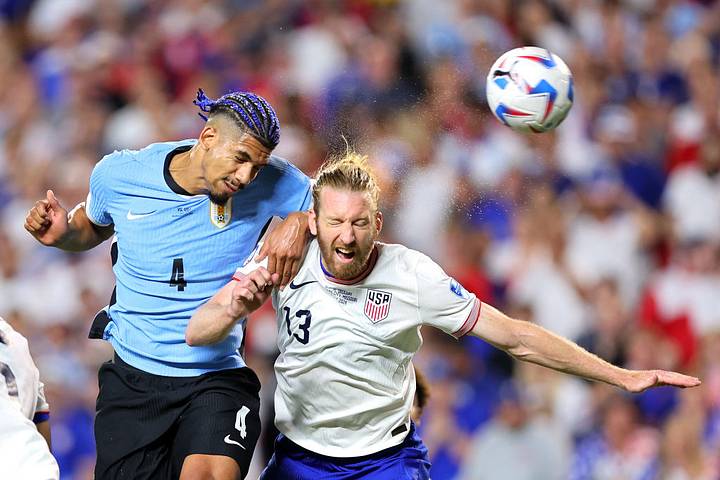
Over the four-year cycle between the 2022 and 2026 World Cups, the currently 16th-ranked Stars and Stripes played just 17 matches against globally top-20 nations, nine of which came against familiar opponents Mexico (five), Colombia (two) or Uruguay (two). They simply didn't face enough varied elite competition, and many of those outings weren't high-stakes affairs. Of those 17 games, only three were competitive matches — in the Concacaf Nations League, Concacaf Gold Cup and Copa América, respectively. Those tournaments, particularly the first two, fall well short of replicating World Cup-level pressure.
Only five of those 17 matches came against top-10 ranked teams prior to the World Cup, two of which were against Germany and none of which were competitive fixtures. Three of the five were clustered in the months immediately before the tournament, rather than being evenly distributed across the four-year cycle.
Capitalizing on, Curating High-Stakes Moments for the USMNT

Admittedly, the USMNT has little control over its geographic situation — it will continue to compete in Concacaf tournaments and Copa América (when invited), frequently facing Caribbean and South American sides that don't provide the true test needed, yet remain easy matchups to arrange and access. The team also has no say over the UEFA Nations League, which effectively blocks the U.S. from meeting European sides during certain international windows due to that inter-confederation schedule.
What the USMNT can work toward, however, comes down to two things. First, making the most of the competitions it does participate in, treating them with the same urgency as World Cup matches.
"If we're in Copa América, look to get to a Copa América final," former USMNT star goalkeeper Tim Howard said on that note. "Win the Gold Cup. Win [World Cup] qualifying. Win the Nations League. I don't know exactly where our Olympic team is, but maybe medal, maybe get to a semifinal."
Enable functional cookies to see this feature.
Second, manager Mauricio Pochettino must make it a priority to schedule more high-caliber friendlies throughout the four-year cycle whenever the calendar allows, even if the additional travel to Europe cuts into player recovery time or tightens the international window. The bulk of the USMNT's stars are already based in Europe anyway — rotate the rest more aggressively.
The sheer experience gained from elite matchups outweighs any drawbacks. It provides regular benchmarks to measure the team's progress against the world's best and naturally elevates the intensity of each game.
"Give them tangible steps, so they're not like, 'Well, let's hope we get to the quarterfinal in four years,'" Howard added. "There have got to be steps. Players have got to get to big moments."