
 ไทย
ไทย English
 中國人
中國人
The 2026 World Cup didn't unfold the way any of the host nations had envisioned, as the United States, Canada and Mexico all crashed out in the round of 16. Yet, as much as this tournament represented a planned high point for all three programs, the journey continues.
A new cycle has begun: Mexico is no longer under Javier Aguirre—Rafael Márquez now leads the side—while the USMNT remains uncertain about its managerial future, and Canada kicks off a fresh chapter under Jesse Marsch.
It's Mission 2030 for all three Concacaf heavyweights now, with each facing World Cup qualifying, regional tournaments and potentially other competitions, creating a demanding schedule over the next four years.
While there's a brief respite before each side returns to action in the four-match September and October international window and ahead of the Concacaf Nations League resumption in November, the groundwork for the next four years is already being laid.
Here's what each of the 2026 World Cup co-hosts can anticipate over the coming years.
End of 2026, Early 2027—Concacaf Nations League
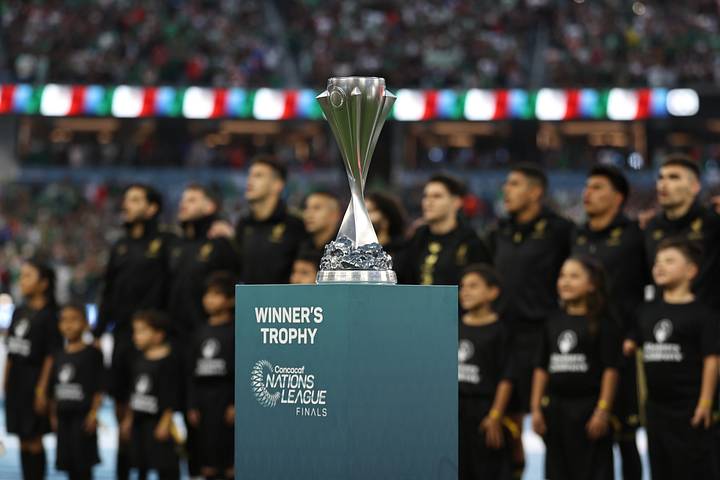
The next set of matches for the three teams will be the autumn friendlies, before diving into the Concacaf Nations League in November. Although the competition gets underway in the September window, the region's top four sides earn a bye to the two-leg quarterfinals, scheduled for the November window.
While potential opponents won't be known until the Nations League draw on July 23, the three nations and Panama are assured they won't be drawn against one another, and will instead face one of Costa Rica, Curaçao, Dominican Republic, El Salvador, Guatemala, Haiti, Honduras, Jamaica, Martinique, Nicaragua, Suriname or Trinidad and Tobago.
Should each host nation progress through the two-leg quarterfinals, they would advance to the final four, with the semifinals, final and third-place match all set for March 2027, most likely on U.S. soil.
The USMNT claimed the first three editions of the Concacaf Nations League, while Mexico took the 2024–25 edition, beating Panama in the final after Panama stunned the USMNT in the semifinals. The USMNT now seeks a fourth title and redemption after finishing fourth, having fallen to Canada in the third-place match.
2027—Concacaf Gold Cup

While teams have grown accustomed to fielding first-choice squads during Nations League windows, the 2027 Concacaf Gold Cup could provide the first genuine glimpse of a revamped core for each of Concacaf's top sides, with teams frequently sending rotated rosters to the summer competition.
With notable veterans on each squad in 2026, it will be an opportunity for coaches to truly begin shaping their new foundations, evaluating fringe players and youngsters who could take on more prominent roles in the years ahead. At the same time, it carries the weight of a competitive tournament—again, likely hosted in the U.S.—and presents a chance to lift silverware.
Mexico has claimed the last two Gold Cups, while the USMNT previously triumphed in 2021. The two nations have won all but one of the 18 titles since the tournament's inception in 1991, with Canada holding the lone remaining title—the only trophy in the nation's men's soccer history—from 2000.
2028—Olympics, Possibly Copa América

The summer of 2028 remains somewhat uncertain. At this stage, no North American teams have received invitations to the 2028 Copa América, despite their involvement in the 2025 edition, in which Canada reached the semifinals. North American teams also featured in the 2016 tournament. However, both previous editions were held in the United States—and no host has yet been confirmed for the 2028 edition.
Each of the 2026 World Cup co-hosts would be eager to participate in the 2028 Copa América, which would provide tougher competition from South America than they typically encounter in Concacaf; however, the nature of that potential involvement remains to be seen.
What is confirmed is that the U.S. and one additional Concacaf nation will compete at the 2028 Los Angeles Olympics, a U23 tournament permitting three overage players per squad. The U.S. earns automatic entry as host nation. Former LAFC head coach Steve Cherundolo will be at the helm, while Canada and Mexico will battle for the remaining spot through the Concacaf U20 Championships beginning July 23, 2026.
Men's Olympic soccer doesn't always feature the world's elite, but both Neymar and Lionel Messi have graced the tournament, with Neymar serving as an overage star in 2016 when he guided Brazil to gold on home soil in Rio de Janeiro.
All three senior national teams will also return to Concacaf Nations League action, beginning in the fall window.
2029—World Cup Qualifying, Nations League
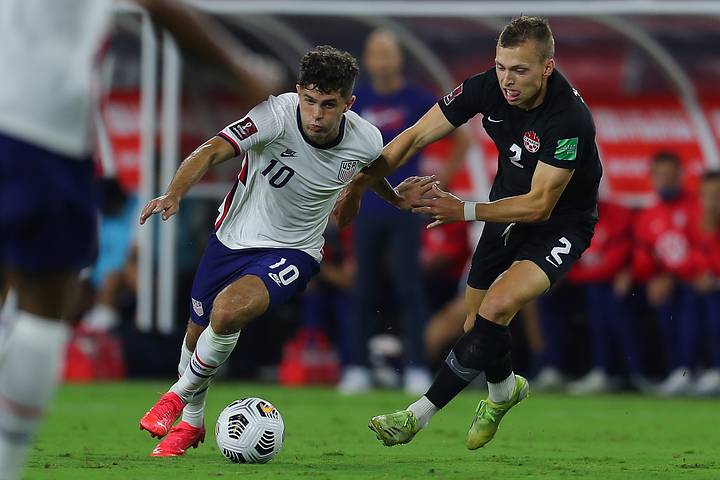
The biennial calendar repeats in 2029, with another likely first-choice window featuring the semifinals and finals of the 2028–29 Nations League and a depth-oriented Gold Cup in the summer, serving as a precursor for teams with eyes on the 2030 World Cup the following summer.
Yet the regional trophies won't be the primary concern in 2029 for Concacaf's top-ranked sides; rather, the focus will be on securing a berth at the 2030 World Cup, a process that should be considerably more straightforward than the last qualifying campaign, given the expanded 48-team format—barring any further changes from FIFA.
Under the current 2030 format, Concacaf would place the final 12 hopefuls into three groups of four, with each team playing home and away against the other sides in their group. This is likely the stage at which Mexico, the U.S. and Canada would enter, with the top two in each group advancing to the World Cup. Meanwhile, the two best third-place finishers would contest a play-in match for the chance to advance to the inter-confederation playoff.
World Cup qualifying offers no guarantees, as Italy has discovered the hard way, but Concacaf is certainly less treacherous than it once was, back when all three nations last punched their tickets to the 2022 World Cup in Qatar.