
USMNT's Secret Weapons for 2026 World Cup Exposed by Top U.S. Soccer Chief

The United States men's national soccer team discovered its advantageous group placement for the 2026 FIFA World Cup during the draw ceremony at the Kennedy Center, while additional benefits, such as venue selection authority, also became apparent to U.S. Soccer officials at the Washington, D.C. gathering.
Although competing on home soil before supportive audiences will obviously represent the primary benefit for the USMNT this summer, U.S. Soccer's Sporting Director Matt Crocker gained valuable insights during the draw while conversing with England's men's national team representatives.
"They (England) were urgently arranging travel for the following day after the draw in order to attempt securing some of their training bases," Crocker explained on the U.S. Soccer Podcast with David Gass and former U.S. women's national team standout Meghan Klingenberg. "We managed to lock ours down a full year earlier."
The USMNT, together with fellow co-hosts Canada and Mexico, received their official group stage fixtures and potential elimination round pathways in February 2024, enabling these federations to carefully organize accommodations, practice venues and additional components of World Cup preparation before and throughout the competition.
Additional considerations include determining optimal locations for relatives and supporters to lodge and guaranteeing that every aspect of the player environment enables athletes to concentrate on performing at their peak during matches.
Venues, Accommodations and Scheduling Benefits
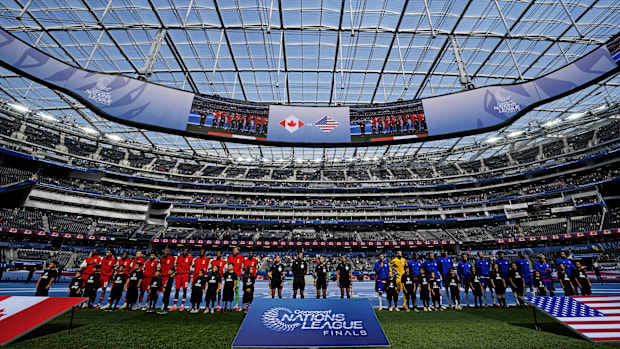
The three co-hosting nations were permitted to select venues that benefited them. The USMNT will compete in two matches at the enclosed SoFi Stadium in Los Angeles and one in Seattle's mild summer conditions, potentially avoiding the harshest weather challenges in the Central and Eastern United States.
Canada, similarly, has selected the climate-controlled BC Place Stadium in Vancouver as its primary venue for two group stage contests and possible round of 32 and round of 16 matches, should it advance from Group B.
"We were able to choose locations which would offer more favorable weather conditions in terms of climate ... the accommodation facilities that we desire," Crocker stated. "Everyone believes the practice facilities are extremely important, and certainly they are, but players will spend ... most of their free time around the hotel, so you want that setting to feel like home, and you want them to feel at ease.
"[There are] numerous logistical elements that you want to remove from the players having to consider and stress about, and we've been able to establish many of those foundational components well ahead of any other country."
The USMNT will begin the tournament on June 12 facing Paraguay in Los Angeles, then meet Australia in Seattle on June 18 and return to Southern California for its group stage conclusion against one of Türkiye, Slovakia, Romania, or Kosovo on June 25.
"It's not simply about mattresses or bathrooms," Crocker continued. "You want their rest and their sleep conditions to be as similar to what they would experience at home as we can possibly achieve, so we're examining the style of bedrooms, the ventilation, the illumination, all of those elements are vital ... rest is equally important as practice itself."