
Wayne Rooney Breaks Silence on the Shocking Conversation That Ended His Man Utd Career
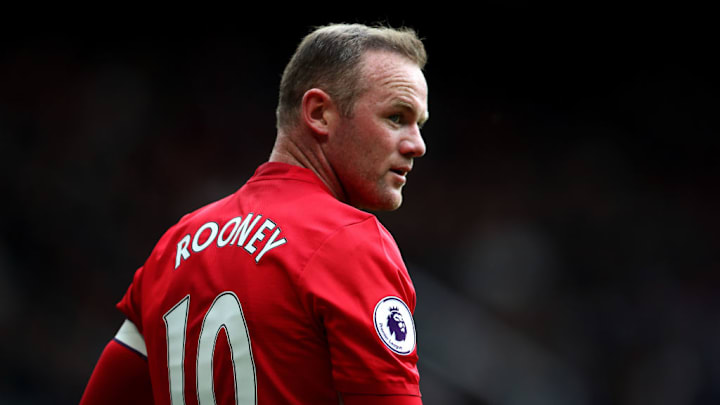
Wayne Rooney has disclosed that a "candid discussion" with José Mourinho opened the door for his eventual departure from Manchester United during the summer of 2017, after initially requesting permission to leave six months prior.
When he exchanged Old Trafford for a homecoming to childhood team Everton, in a transfer linked with Romelu Lukaku's move the other way, Rooney had accumulated 559 matches for the Red Devils across 13 seasons. His tally of 253 goals remains a club milestone that seems unlikely to be surpassed anytime soon.
However, it became evident by the time Rooney reached 30 in October 2015, having been a regular starter for both club and nation since age 17, that his formerly elite abilities were beginning to fade. When Mourinho took charge in 2016 and signed Zlatan Ibrahimović, a player several years his senior who hadn't truly flourished until his thirties, Rooney recognized his era was ending.
"I began the campaign alongside Zlatan and I understood José only deploys one striker," he remembered.
"In the opening three or four matches, he fielded both of us and I realized that once I had a poor performance, I wouldn't feature and Zlatan would be the main forward."
Rooney actually did begin in a deeper role behind Ibrahimović as United took on Bournemouth, Southampton, Hull City, Manchester City and Watford during the early stages of the season. With Juan Mata also vying for the attacking midfielder position and Ibrahimović finding the net regularly as the central striker, Rooney found himself relegated to substitute appearances and inconsistent selection until the Swede suffered an injury in April.
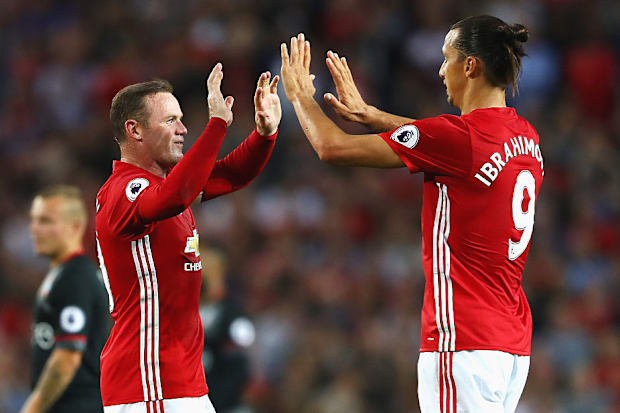
This situation explains precisely why Mourinho responded as he did when Rooney made his transfer request.
"I approached him and had a frank discussion with José, asking if I could go out on loan in January since I wanted regular playing time, but he declined. He explained he required me particularly for the Europa League campaign but I could depart in the summer," Rooney explained.
"I got up, shook his hand, didn't voice any further complaints, accepted my bench role and contributed when called upon for the remainder of the season. That represented an honest exchange between two professionals reaching an understanding, which I believe is the proper approach."
Rooney was recounting this experience in reaction to Mohamed Salah's controversial statements about feeling Liverpool have undermined him with a recent benching decision.
'Time Catches Up With All of Us'
Rooney has been an outspoken critic of Salah this campaign after witnessing the Egyptian icon's standards decline, resulting in his eventual benching by Arne Slot.
He particularly objected to Salah's remarks about not needing to compete for his position daily because Liverpool's talisman believes he's already secured it through past achievements.
Rooney also voiced surprise and frustration that Salah's reaction to what represents a normal aspect of football hasn't been to intensify his efforts.
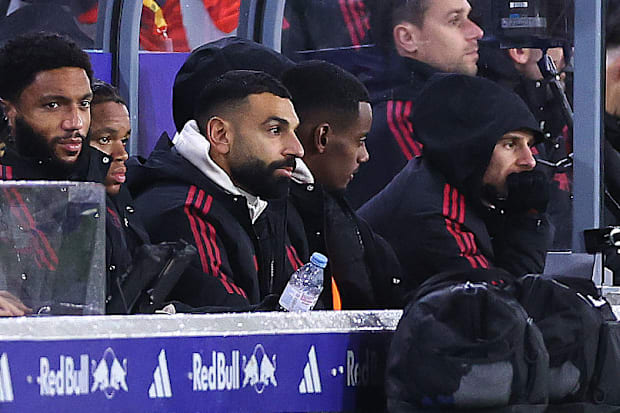
"Age eventually affects everyone during their playing career and this campaign he hasn't appeared at his peak form or sharpness," the former England skipper stated. "I have been quite outspoken about this over recent months and obviously Arne Slot has observed this and benched him.
"What you'd hope to see is, given he's been one of the key figures—arguably the most important—for Liverpool in recent years, you'd want him to get to work and declare, 'Right then, I'll prove you wrong.'
"The difficulty arises when you reach that stage in your career, and your displays deteriorate, you search for explanations and the final person you examine is yourself. I believe that's what's occurring with him.
"I'm confident that in a few years' time, when he reflects on this period, he'll wish he hadn't made those comments. Only he can resolve this predicament by improving his performances... and while that may sound straightforward, instead of self-reflection, he's seeking external factors to blame."