
 ไทย
ไทย English
 中國人
中國人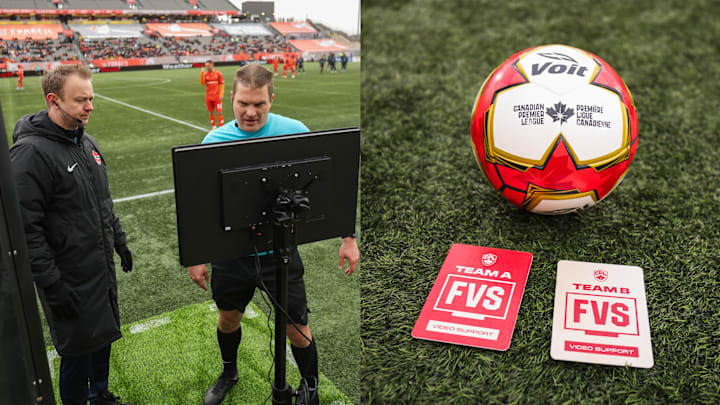
The Canadian Premier League kicked off its eighth campaign featuring Arsène Wenger's "daylight offside" rule and the debut of Football Video Support at the professional level.
The ex-Arsenal boss, currently serving as FIFA's head of global football development, has been a driving force behind the rule, which states that an attacking player is considered onside if any playable part of their body—excluding the hands or arms—is level with or beyond the second-to-last defender.
An offside decision is only triggered when there is a visible gap—the so-called "daylight"—between the attacker and the second-to-last defender. The modified rule is designed to promote more scoring and reduce controversy surrounding borderline offside decisions.
Its full effect remains to be seen over time, and the opening matches of the Canadian Premier League did not produce a close call that necessitated the application of Wenger's onside regulation.
FVS, Challenges Hold Up Play

The CPL's inaugural use of Football Video Support (FVS) proved to be a notable addition, however, deployed six times across three games while overturning only a single decision.
A simplified version of the widely adopted Video Assistant Referee (VAR) system, FVS operates without a dedicated video official and therefore does not automatically scrutinize every match-altering incident.
Instead, each head coach is given two challenge cards—comparable to the challenge systems used in the NHL and MLB—which they can display to request a video review, subsequently carried out on the pitch by the head referee using a monitor showing the available broadcast camera angles.
Its early applications caused considerable delays and sparked widespread frustration among those in attendance.
The season's opening goal came on a contested play, after Forge were awarded a spot kick for a foul on Brian Wright. Ottawa challenged the ruling and claimed there had been an infringement earlier in the sequence of play.
Check this out!
After @ForgeFCHamilton were awarded a penalty, @atletiOttawa issued the first FVS challenge in CPL history 📺
📹: @OneSoccer pic.twitter.com/LxvofWMQGb
The officiating team spent more than five minutes examining the replay, with their microphones connected to the broadcast but inaudible inside the ground, before upholding the penalty decision that led to Forge's opening goal.
The system was later employed during Cavalry FC's 2–1 victory over Pacific FC, marking the first instance of a call being reversed through the technology.
Cavalry attacker Jay Herdman had been brought down by Pacific's Tristan Marshall, with the original call going against Herdman, before Cavalry manager Tommy Wheeldon Jr. lodged a challenge for a penalty, which ultimately reversed the initial ruling.
A historic moment in the CPL as the league's first successful FVS challenge earns the @VWcanada Moment of the Match
📺: @onesoccer | #CPLSoccer pic.twitter.com/qpYfHNugvt
"I think it places greater responsibility on the coaches to work alongside the officials, rather than leaving the officials to make the call based solely on what they observe," Wheeldon Jr. said after the game. "So we challenged a couple of plays. We felt that on Herdman, it was a clumsy tackle and a knee to the face, and he hasn't been able to adjust to the ball. So if that's anywhere else on the pitch, it's a foul. So we're going to contest it. We got it right."
That match concluded with the longest review of the opening weekend, as Cavalry pushed for a red card following an altercation in second-half stoppage time. The referee spent over seven minutes assessing the incident before deciding against issuing a red card, with the match finally concluding as the clock reached the 102nd minute.