
 ไทย
ไทย English
 中國人
中國人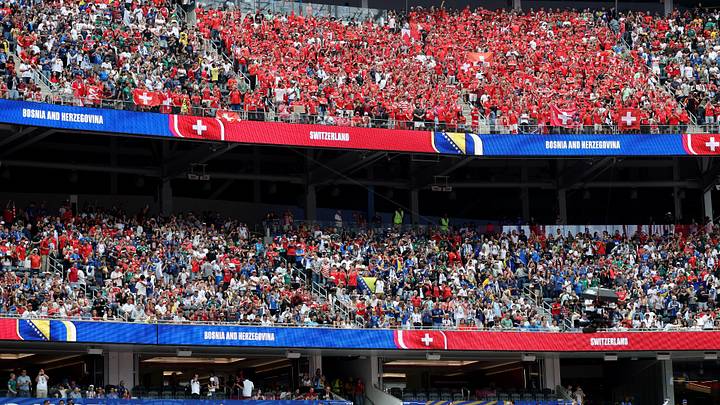
INGLEWOOD, Calif. — The combined populations of Bosnia & Herzegovina and Switzerland hover around 12.6 million—barely a third of L.A. County's total residents. Neither country boasts a significant diaspora community in Los Angeles, which sits at least 14 hours by air from both European nations.
These are hardly World Cup heavyweights of previous generations—the two sides have combined for exactly zero knockout-round victories across their entire tournament histories.
In an era where individual players command far greater recognition than their home nations—the font for Christian Pulisic's name dwarfs "United States" by roughly tenfold on Fox Sports' promotional materials—neither team has a marquee superstar. Perhaps the most intriguing individual draw is a 40-year-old who spent last season competing in Germany's second division.
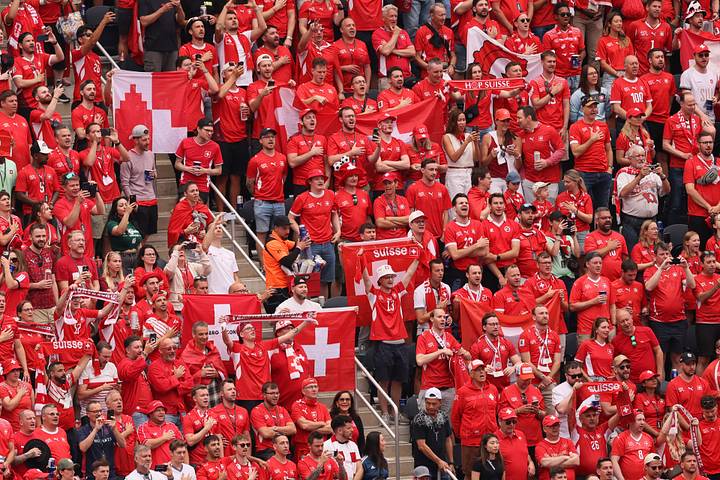
Yet, in spite of all this, the seemingly low-profile group-stage encounter drew 70,026 spectators into SoFi Stadium's 70,492-seat spaceship of an arena, with supporters dancing and chanting throughout another impressively well-attended match.
Official attendance figures across the group stage so far indicate stadiums have operated at a combined 99.4% capacity. The least-attended match to date—Saudi Arabia's 1–1 stalemate with Uruguay in Miami—still left only 1,714 seats vacant.
While some question the reliability of those FIFA-provided numbers—which tally tickets scanned at entry points rather than actual occupied seats—the vast stretches of empty stands that plagued the Club World Cup held across the U.S. last summer have not resurfaced this time around.
Amid widespread financial hardship and historically steep ticket prices, how have so many venues managed to fill nearly every seat?
Bow Down to the Market
FIFA president Gianni Infantino has remained stubbornly unapologetic amid widespread criticism of World Cup ticket pricing. As he has consistently argued, you must play by the rules of the market you've entered. The World Cup is simply another major entertainment event in North America, and it will command premium prices accordingly.
The figures circulating around tickets for the recent NBA Finals series between the New York Knicks and San Antonio Spurs make World Cup ticket costs look like pocket change. The cheapest seat for Game 3 at Madison Square Garden exceeded $7,000—and that was for a spot in the upper deck. Prices rapidly climbed toward six figures the nearer you sat to the court. Paying exorbitant sums has become the norm.
That said, not every ticket at this World Cup requires the kind of impulsive late-night purchase that gets quietly concealed from a partner.
Dynamic pricing works in both directions: when demand surges, most buyers suffer, but when sales begin to stall, prices must come down. Tickets spiked following the December draw when fans learned exactly when and where they could follow their chosen nations (or players, as is increasingly the trend). But prices have fluctuated considerably since then.

Each match has followed its own distinct pricing pattern. Half of the group-stage fixtures played so far saw prices fall in the three days leading up to kickoff, according to Ticket Data. Argentina's match against Algeria, for example, dropped 24% as fans grew uncertain about how spectacular the Lionel Messi spectacle would be. Those who attended were not let down.
While a seat to witness Messi's brilliance would have cost around $1,000, those making their way to SoFi for Bosnia & Herzegovina's clash with Switzerland on Thursday paid roughly $350. For many, that's a price worth paying.
Who Is Going to All These Games?
Ivan, 32, gives me a puzzled look. The passionate Bosnian has made the journey to North America alongside a large contingent of BH Fanatics, the country's biggest supporter group, to back his nation at its second-ever World Cup appearance and first in twelve years. Navigating the packed Inglewood streets on a muggy, unusually overcast L.A. morning, he locates a metal trash can to pry the cap off his beer bottle and generously offers me a sip. I politely pass, and he can't quite grasp why. It's 9:15 a.m.
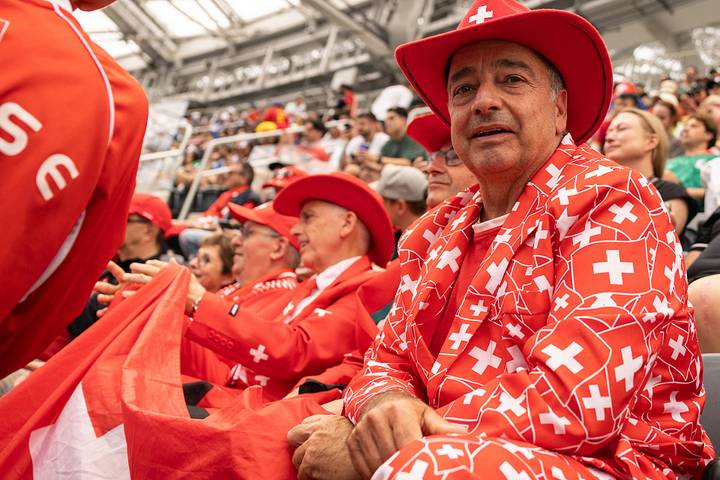
The volume of blue and white fabric streaming toward SoFi Stadium is remarkable, until waves of red-clad Swiss supporters begin filtering in, moving with impressive synchronicity. Inside the stadium, it's Ivan and his fellow Bosnians who dominate the atmosphere, cheering loudly and whistling even more fiercely whenever Switzerland earn a corner kick. At certain moments in both halves, so many fans are jumping in unison that the press box gently—but unmistakably—shakes.
One byproduct of an expanded World Cup is the number of nations returning after lengthy absences. There are four first-timers this summer; DR Congo, Haiti and Iraq are back after nearly half a century away; while Austria, Norway, Scotland and South Africa have all been absent this entire century. After gaps spanning generations, it's little wonder so many supporters are desperate to seize this moment. Who can say when the next chance will come?
For nations that qualify regularly, hardcore supporters have been joined by local fans with the financial means to attend (along with the ever-present Colombian contingent, who seem to be a fixture at every match this summer).
The U.S., Canada and Mexico rank among the world's wealthiest nations, and the abundance of brand-new replica shirts spotted throughout the tournament suggests the World Cup has attracted a fresh wave of affluent fans. Consider how many Canadians failed to recognize their own star Alphonso Davies walking past them on the way to the stadium—even those wearing his name and number on their newly purchased jerseys.
What Does This Mean for the Future?

While players, coaches and—most of all—tournament organizers are delighted by the strong turnout, it raises important questions for future competitions. FIFA now has all the justification it needs to replicate this model.
UEFA has proactively moved to address concerns over high prices at the 2028 European Championship, capping most ticket costs for matches to be hosted across Great Britain and the Republic of Ireland. FIFA, however, has shown no sign of ever passing up the opportunity to maximize available revenue—and, naturally, channel it back into the sport.
SI answers is our AI answer engine trained on human-created content.
The 2030 World Cup will be hosted (primarily) across Spain, Portugal and Morocco. The passion for football is far more deeply embedded in the culture of those nations compared to this year's co-hosts, yet it remains uncertain whether the same level of disposable income will be available to fill seats at lower-profile fixtures if ticket prices stay this elevated.
Mauricio Pochettino and the U.S. men's national team experienced firsthand the impact of a passionate home crowd in their tournament opener. "We need the people. We need the fans," the Argentine manager acknowledged—a sentiment that applies both to his own squad and to the tournament's atmosphere as a whole. "Football without fans? It's impossible."