
 ไทย
ไทย English
 中國人
中國人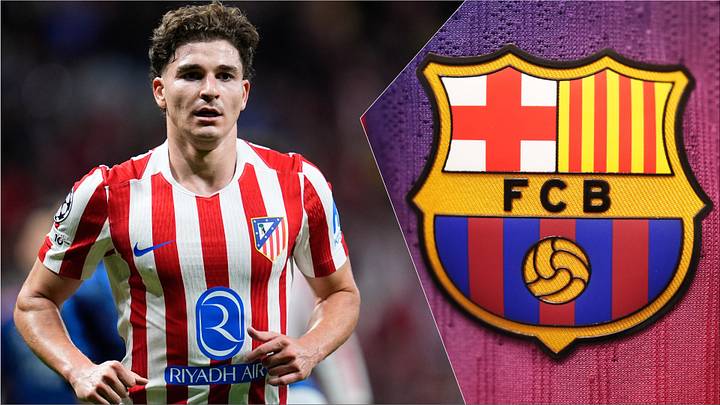
Barcelona have converted their longstanding admiration for Julián Alvarez into a concrete pursuit, with the Catalan club now in active negotiations to secure the highly sought-after Argentine forward.
Many had expected Barcelona to shift their attention toward other striking options given the substantial fee Alvarez commands. However, following encouraging discussions with the player's representatives, Barcelona submitted an opening offer of $116 million (€100 million) in an attempt to lure the 26-year-old away from Atlético Madrid.
That initial proposal falls well short of what Atléti are willing to accept, with the Madrid club publicly venting their frustration at Barça on social media shortly afterward. The Catalans face a steep challenge in landing their top target, though with the player himself reportedly open to the switch, talks are set to press on.
Barcelona show no signs of abandoning their chase for Alvarez, but what makes the Argentine such a compelling target? Is he that well-suited to Hansi Flick's setup? Absolutely, and here's the case for it.
Barcelona's Obvious Need For a Striker
Let's begin with the most straightforward point.
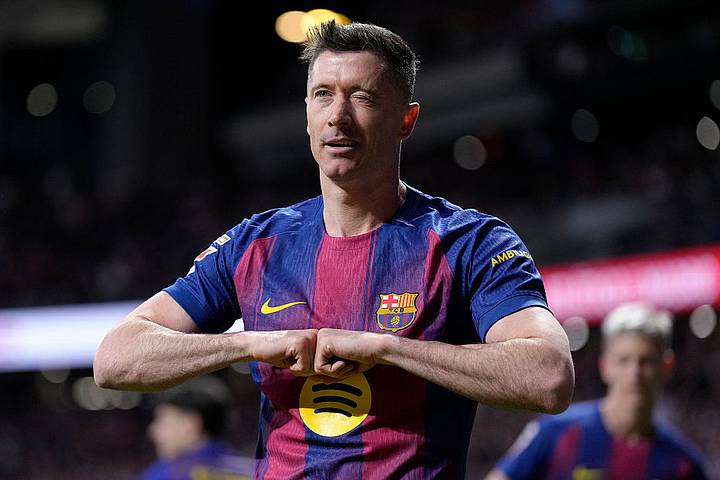
Signing a top-tier center forward was Barcelona's primary objective this summer transfer window, with the club needing to address the void left by the outgoing Robert Lewandowski. The iconic Polish striker netted more than 100 goals across his four years at the club, but heading into his age-38 campaign, a parting of ways was inevitable.
Alvarez has consistently been regarded as the ideal candidate to succeed Lewandowski at Barcelona. Questions about his relatively modest return of just eight La Liga goals in 2025–26 are fair, yet he contributed 10 in the Champions League and still wrapped up another 20-goal season overall.
Across four seasons in Europe, Alvarez has accumulated 85 goals while playing second fiddle to Erling Haaland at Manchester City and functioning within Diego Simeone's characteristically rigid, defense-oriented setup at Atlético. Even so, La Araña has consistently delivered.
Barcelona would represent the first club where Alvarez steps in as the undisputed first-choice striker for a side built around attacking football. The evidence strongly suggests he is more than capable of filling Lewandowski's boots.
But there are further reasons why he is seen not merely as a like-for-like replacement, but as an improvement on the departing Pole.
Versatility

Lewandowski remained a more than capable goalscorer right up until his final days at Barça, but even his most devoted supporters would concede that virtually every other dimension of his game had noticeably deteriorated during his last season at the club.
Alvarez possesses the qualities to be a 20-goal-a-season striker at minimum, but that is merely one of the many attributes that have rightfully established him as one of the most in-demand forwards in world football.
Beyond his goal contributions, the Argentine excels in other phases of play, particularly when his team is in possession. He thrives on being involved in the build-up of dangerous moves, drifting deeper or wide to link play. His vision and technical quality allow him to function as a No. 10—just ask Pep Guardiola, who regularly deployed Alvarez as an attacking midfielder behind Haaland at City when Kevin De Bruyne was sidelined through injury in 2023–24.
Barcelona have always placed ball retention at the heart of their identity, and Flick's iteration is no exception. On a squad brimming with technically gifted players, Alvarez would slot in naturally. His tendency to drop deep and engage in build-up play consistently pulls defenders out of position, opening up space for teammates to exploit. This pattern is a regular feature at Atléti, and it is easy to picture Raphinha, Fermín López and new arrival Anthony Gordon benefiting by making incisive runs into the gaps Alvarez helps generate.
The Argentine is equally adept at carving out space for himself between defenders, something Lamine Yamal could readily take advantage of. That relationship would be mutually beneficial, however, with Alvarez also more than capable of turning provider for the electrifying teenager—just observe the remarkable chemistry Alvarez has developed with Lionel Messi on international duty with Argentina.
Not since Luis Suárez and David Villa have Barcelona possessed a striker as complete as Alvarez. For Flick, though, it may be the less glamorous elements of the Argentine's game that prove most attractive.
Relentless Pressing, Work Rate

A cornerstone of Flick's philosophy is that every player must contribute defensively, with forwards expected to press high up the pitch in order to force turnovers in threatening positions.
The German coach has embedded a high-intensity pressing structure since taking charge at Barça. The widely discussed defensive high line underpins Barcelona's press. When the forwards fail to initiate pressure from the front, the entire system becomes vulnerable, as was demonstrated on numerous occasions throughout 2025–26.
Few clubs in Europe demand more from their players out of possession than Simeone's Atlético. During his two seasons in the Spanish capital, Alvarez has evolved into a relentless defensive presence in the attacking third, consistently pressing opponents into errors, tracking back when required and proving a valuable contributor without the ball. These qualities would translate effortlessly to Flick's Barcelona, where pressing from the front is an absolute requirement for any forward hoping to retain their starting spot—just ask Marcus Rashford.
Even before his time at Atlético, Alvarez was already a tenacious off-the-ball worker. During the 2022 World Cup, Messi contributed minimally out of possession, conserving his energy for moments when the ball reached him. Consequently, it was Alvarez who ignited La Albiceleste's press, routinely covering the ground of two players. High-intensity pressing was a defining feature of Lionel Scaloni's World Cup-winning squad, and Álvarez's goal against Australia in the round of 16 stands as the perfect illustration.
It is not solely Alvarez's on-ball quality as both a creator and finisher that makes him such a complete forward—it is the often-overlooked work he puts in off the ball that makes him a manager's dream. Flick would undoubtedly make full use of these attributes, and Barcelona as a collective would be a stronger side for it.
Julián Alvarez and Barcelona, a Match Made in Heaven

All of Alvarez's finest qualities have been on prominent display whenever he has faced Barcelona, with the Argentine recording four goals and two assists across nine career appearances against the Catalans.
His showing in the first leg of the Champions League quarterfinals at Camp Nou in particular encapsulated everything outlined here. Alvarez was awarded Player of the Match as he spearheaded Atlético's 2–0 victory over Barça, engineering the sequence that resulted in Pau Cubarsí's red card before converting the resulting free-kick into the opening goal with a thunderous strike.
Alvarez was the decisive factor in that contest. Had he been lining up for Barcelona rather than against them, the Catalans would in all likelihood have avoided their elimination at the hands of Atléti.
Barcelona are in urgent need of a player of Alvarez's profile, and the Argentine would stand to gain enormously from joining a club where his strengths can be fully utilized. Atlético Madrid are a competitive outfit, but Barcelona are a trophy-winning machine.
It is evident that a transfer would serve both parties well—Alvarez could be the missing ingredient in Barcelona's Champions League ambitions, while the player would finally earn the opportunity to lead the attack for one of the world's elite clubs, a stage his talent fully merits.
The wheels are in motion for this seemingly ideal partnership to come to fruition. Nevertheless, Atlético Madrid hold all the cards, and they appear determined to prevent the Alvarez–Barcelona union from becoming a reality.