
 ไทย
ไทย English
 中國人
中國人
Sunday's World Cup final between Argentina and Spain is shaping up to be a fiercely contested match, but attendees may also have to contend with smoky conditions, as Canadian wildfires continue to affect air quality across much of the U.S. Northeast, including New Jersey.
A thick orange haze has blanketed Toronto and spread into Detroit in recent days, driven by smoke from wildfires burning in Northwestern Ontario. On Thursday, New York City ranked as having the world's 10th-worst air quality, while Detroit, Toronto, Minneapolis, and Chicago occupied the top four spots, according to IQAir.
The Swiss air quality monitoring platform classified New York's air as "unhealthy for sensitive groups," while the other North American cities in the top 10 exceeded that threshold, reaching levels deemed "very unhealthy" and "hazardous."
New York City was placed under an air quality alert on both Wednesday and Thursday, with the city distributing free K-95 masks to residents seeking protection from the smoke.
Why Smoke Matters
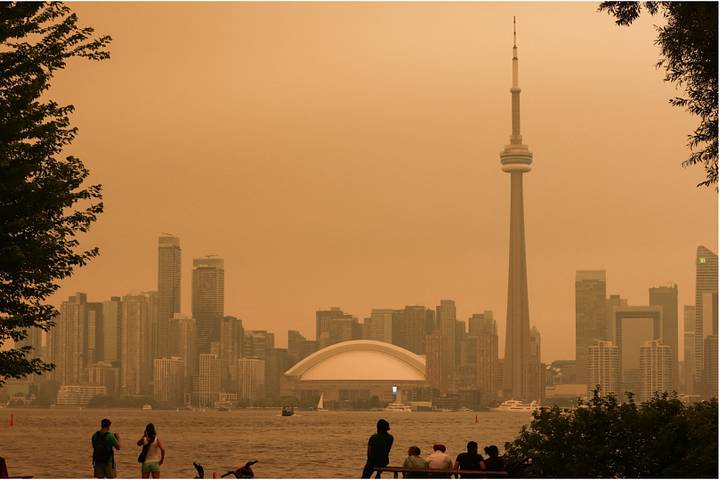
While extreme heat and humidity have already taken a toll on the World Cup and raised concerns ahead of the final at MetLife Stadium—a venue without air conditioning or a roof—the wildfire smoke presents an even more serious health threat.
For otherwise healthy individuals, wildfire smoke can irritate the eyes, throat, and lungs, triggering coughing, wheezing, and other respiratory issues, along with symptoms such as chest tightness, an elevated heart rate, headaches, a runny nose, and fatigue. While spectators would experience one level of exposure, the risk is considerably higher for players, whose oxygen demands are far greater.
On Wednesday, an NWSL fixture between Gotham FC and the Washington Spirit at Yankee Stadium in New York City required mandatory hydration breaks every 15 minutes to allow players to safely complete the match.
"The air quality was really bad," U.S. women's national team midfielder Trinity Rodman told The Athletic following the game. "Not to make any excuses, but I think both sides were all thinking, 'another break, another break, another break.'"
"If we need a hydration break every 15 minutes, then in my opinion we shouldn't be out there playing," she continued, with the match drawing a record attendance for women's sports in New York. "But at the end of the day, there are 40,000 people here. It's a major event, so it's incredibly difficult. It's just a really tough situation for everyone involved."
Thursday marks Major League Soccer's return from its World Cup hiatus, though one anticipated fixture—the Chicago Fire hosting the Vancouver Whitecaps at Soldier Field, which was also set to feature Robert Lewandowski's debut—was postponed. Meanwhile, near Toronto, Canadian Premier League club Forge FC had not yet announced any changes to their Thursday match against Pacific FC, despite hazardous smoke conditions in the area.
Will the Smoke Clear for Sunday's World Cup Final?
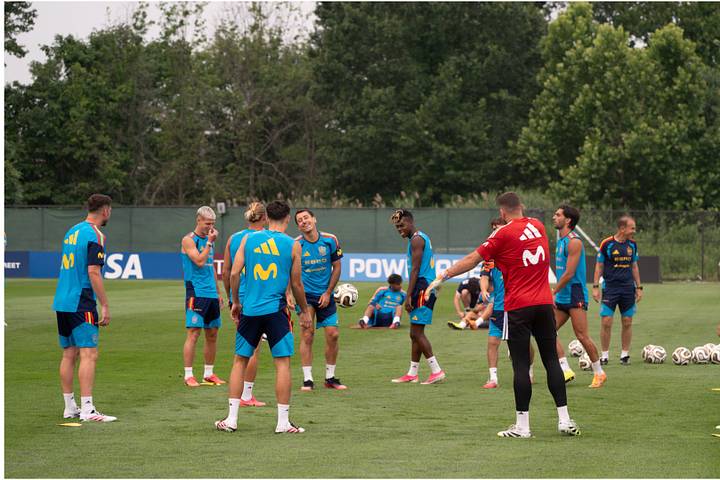
There is cautious optimism that smoke conditions may improve somewhat by Sunday's World Cup final, scheduled for 3 p.m. ET/12 p.m. PT, as rain is forecast across much of the New York City Metropolitan Area on Friday and Saturday.
However, shifting wind patterns and persistently dry forests north of the city could make conditions worse, and the situation remains highly unpredictable. Temperatures are also expected to climb above 82 degrees, accompanied by considerable humidity.
In Toronto, Wednesday's FIFA FanFest viewing event for England vs. Argentina was cancelled due to poor air quality, while in New York, Governor Kathy Hochul and Mayor Zohran Mamdani have called on residents to take additional precautions.
At this stage, there are no plans to delay the match over air quality concerns, though this would not be the first time smoke has cast a shadow over a World Cup final. At the 2015 Women's World Cup, the USWNT beat Japan in Vancouver amid a milder haze caused by wildfires in British Columbia and Alberta.