
 ไทย
ไทย English
 中國人
中國人
Wrexham are set to appoint a Director of Football this summer as the club seeks to bolster its football operations in its quest for a spot in the Premier League.
The Red Dragons achieved the greatest league finish in their history, placing seventh in the Championship and ending the campaign just two points adrift of Hull City, who secured the last available playoff position.
Wrexham had always planned to bring in a Director of Football during their ascent through the divisions and have now determined that the moment is right to pursue such an appointment.
As part of the club's training ground renovation this summer, Wrexham revealed proposals for a "Football Director" to have a dedicated workspace at the Colliers Park facility, alongside offices for the manager, coaching staff, analysts and operations manager.
Wrexham named Mark Swales as Director of Women's Football in October 2025 and are now targeting the appointment of their first-ever Director of Men's Football.
What Does a Director of Football Do?
A Director of Football is a senior executive tasked with overseeing a club's sporting strategy and acting as a bridge between the boardroom and the first-team coaching setup. The role is also widely known as a Sporting Director, with the job title often being the only real difference between the two positions.
At Wrexham, this would involve working closely with Phil Parkinson and his coaching team on a day-to-day basis while keeping regular contact with club directors representing Rob Mac and Ryan Reynolds.
In straightforward terms, the Director of Football's function is to streamline decision-making and enable others at the club to concentrate on their specific areas of expertise. The role typically carries overall responsibility for the sporting side of the organisation, ensuring consistency regardless of who occupies the manager's chair or which players make up the squad. Detractors of the model contend that a Director of Football can diminish the authority and influence traditionally afforded to a first-team manager.
The duties of a Director of Football differ from club to club, and many organisations operate without one. However, they commonly oversee player recruitment, contract negotiations and long-term sporting planning. They are frequently responsible for defining an identity and style of play and ensuring those principles are embedded throughout every level of the club.
Role | Personnel |
|---|---|
Chairman | Rob Mac, Ryan Reynolds |
Directors | Kaleen Allyn, Humphrey Ker, Shaun Harvey, Caroline Hutchinson, Thayer Joyce, George Dewey, Ricky Engelberg, Lee Solomon |
Chief Executive Officer | Michael Williamson |
Chief Financial Officer | Mark Smith |
Chief Business & Communications Officer | Rob Faulkner |
Chief of Staff | Tina Roberts |
Strategy & Projects Director | Aidan Miller |
They also play a pivotal role in managerial appointments, helping assess whether a coaching change is warranted and frequently leading the search for a successor.
Another significant responsibility involves overseeing all sporting departments. This includes ensuring that scouting, data analysis, sports science and performance staff are aligned with the club's long-term vision. While they are generally less hands-on with the day-to-day running of the academy, Directors of Football are responsible for ensuring the correct development pathways exist so that promising players can progress from the youth system to the senior squad.
One criticism of this structure is that it can obscure accountability. When a signing underperforms, debate frequently arises over whether the player was a poor recruitment decision or whether the head coach failed to maximise the resources at their disposal.
There can also be complications around clarity and communication. If a Director of Football maintains a low public profile, the first-team manager may still find themselves fielding questions about transfers and the club's long-term direction, despite no longer holding ultimate responsibility for those matters.
For this reason, a strong working relationship between the Director of Football and the head coach is fundamental to the success of any football club.
What Would a Director of Football Mean for Wrexham?
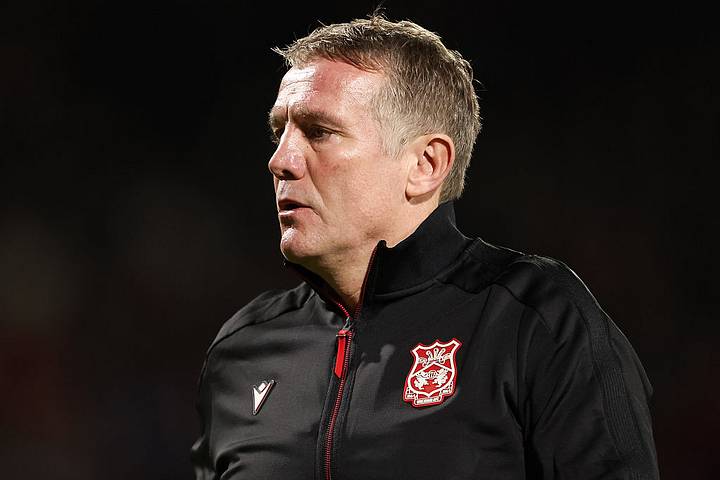
Throughout the club's journey from the National League, several key figures have effectively shared many of the responsibilities typically associated with a Director of Football, even though no one has formally held the title.
The addition of a Director of Football could also shift the balance of power within the club. While manager Parkinson would remain a central figure in footballing decisions and continue to carry considerable influence, he may no longer hold the final word on every major sporting matter. Instead, the Director of Football would be charged with making decisions in line with the club's long-term interests and overarching strategy.
In recent years, Wrexham's transfer committee has been headed by chief executive Michael Williamson alongside Shaun Harvey, Les Reed, Humphrey Ker and Parkinson, with the manager traditionally holding final approval over transfer decisions. It will be intriguing to see whether that dynamic evolves, as Directors of Football are often granted ultimate authority over recruitment strategy and key sporting decisions.
Although Parkinson continues to be held in high regard by the club's owners, a Director of Football would also be responsible for advising on the managerial position and evaluating whether the club has the right individual to lead its long-term project. There is absolutely no suggestion that Parkinson's role is under any threat, but it is worth acknowledging that any future decisions concerning the manager would likely be influenced by the recommendations of the club's new appointment.
SI answers is our AI answer engine trained on human-created content.
Ultimately, Wrexham's intention to appoint a Director of Football represents the next chapter in the club's transformation from a lower-league fairy tale into one of the most recognisable brands in global football.
Many of the individuals who played instrumental roles in the Red Dragons' rise have helped lay the groundwork for future growth, but Wrexham's ambitions stretch well beyond promotion. The club is determined not only to reach the Premier League but also to construct the infrastructure and leadership required to firmly establish themselves there over the long term.