
Xabi Alonso Learns Why Only Two Managers Can Survive Real Madrid's Impossible Demands
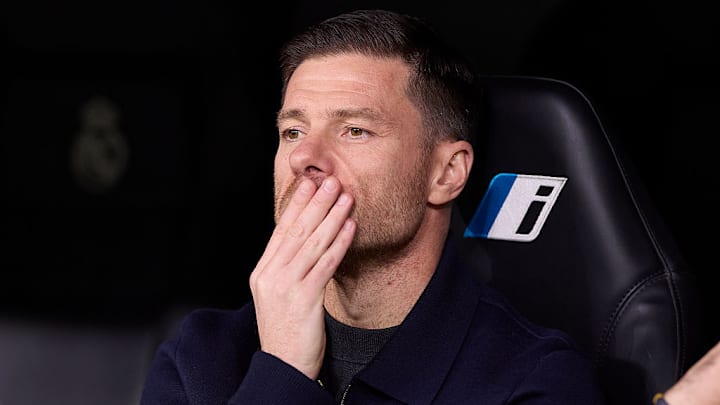
It's understandable why Xabi Alonso, dismissed from his position on Monday, faced such intense pressure at Real Madrid.
Real have claimed European glory 15 times, stand as the world's largest club, possess a spectacular, renovated stadium and feature superstars like Kylian Mbappé, Jude Bellingham and Vinicius Junior in a squad worth over £1 billion ($1.3 billion).
Small wonder their supporters grow impatient when Real lose their strategic and mental composure, inexplicably see players dismissed and fall to mid-table Celta Vigo as they did in December and fail to defeat rivals Barcelona for a fifth occasion in six encounters—this time with the Spanish Super Cup at stake.
Patience isn't a concept that exists at the Bernabéu. Real Madrid are a magnificent football institution and an even grander soap opera, a kind of "Home and Olé." Their supporters are accused of behaving with entitlement, and there's undeniably a smugness to many Madridistas. They would argue they have plenty to be smug about. Examine the silverware in the trophy room.
Hear the assured talk on the Calle de Marceliano Santa Maria which bustles with Real supporters before matches at the Bernabéu 50 yards distant. The street is crowded, impassable by vehicle and challenging for any walker. It's a mass of thousands, some gripping cans of Mahou, others holding flares.
Supporters wave replicas of the European Cup, swirling the pyrotechnic smoke. Ninety minutes before kickoff, they move to the street's end, turn right and join the numbers already assembling at the roundabout by the Bernabéu.
Luxury buses carrying the team sweep past, led by escorts, sirens blazing and police horses keeping the supporters back. Gareth Bale, the soaring Welshman who once adorned Real's flank, would sit by the window on the coach, observing the scenes, absorbing the adrenalin flowing from the fans. When you're among the Real crowd you feel the strength of the support, the fervor and the endless hunger for success. Alonso's task was to satisfy that expectation.
The Bernabéu Waits for No Man
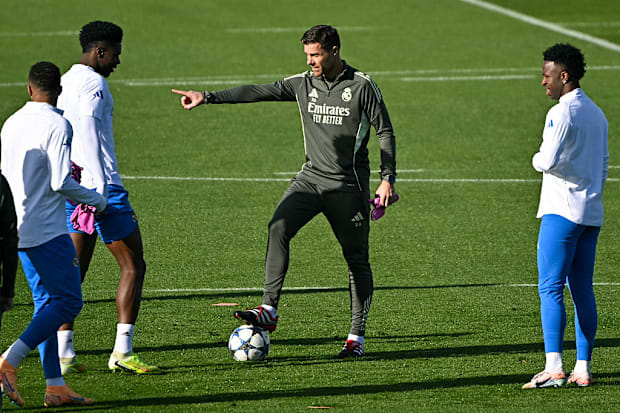
He started the campaign with confidence, earning Manager of the Month honors for August in La Liga, but the 44-year-old was soon battling for his position.
Real have traditionally maintained extremely high expectations. When the team fails to meet standards first established by Alfredo Di Stéfano, Francisco Gento and Ferenc Puskás in the 1950s, supporters express their displeasure. They brandish their white handkerchiefs and, frequently, the manager doesn't survive long after that.
The clock ticks loudly at the Bernabéu. Alonso merited time but coaches seldom receive that at Real. He performed excellently in Germany, guiding Bayer Leverkusen to the Bundesliga championship and developing talents like Florian Wirtz into £116 million assets, yet he was rapidly dismissed at Real.
It demonstrates how ruthless the environment is that Alonso is a cherished former player. He appeared for Real on 192 occasions. He captured the 2014 Champions League, though was banned for the final against Atlético Madrid. None of this connection with the club earns him additional time as manager. It's succeed or leave.
Real have employed 19 head coaches in the 21st century, including two tenures each from Zinedine Zidane and Carlo Ancelotti. Those two towering figures cast shadows that Alonso struggled to escape. In their latest periods in charge, Zidane supervised 114 matches and Ancelotti 234. That suggests patience. Between Zidane's two stretches, Julen Lopetegui lasted 14 matches and Santiago Solari 32. Blink and they were dismissed. It's a brutally demanding position.
Alonso, a beloved player during his time on the pitch at the Bernabéu, found himself under attack. The supporters turned, the press turned and Madrid pundits and journalists were ruthless when they detected weakness. The Spaniard faced the pressure as best he could but couldn't keep the criticism at bay.
Real's Issues Run Deeper Than Alonso
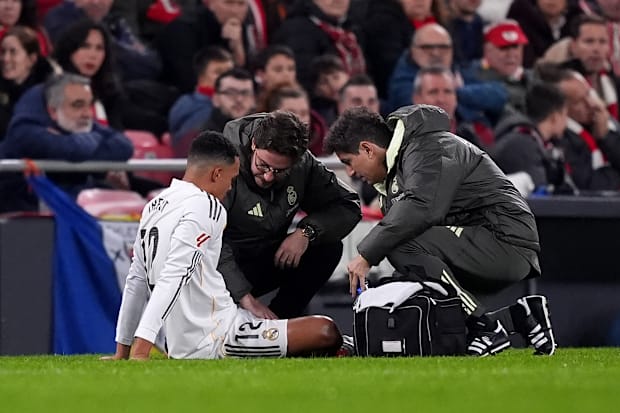
There appears no recognition that the squad is unbalanced, that Alonso might not have selected all the recent acquisitions and that his choices were restricted even further by injuries. Dean Huijsen, Trent Alexander-Arnold, Antonio Rüdiger, Dani Carvajal and Éder Militão all absent at various points. There was minimal compassion. Supporters accustomed to superior standards demand better.
Everything about Alonso was examined, particularly the interpersonal skills needed to manage and motivate such an ego-laden dressing room.
Ancelotti accomplished it through his calm authority, a raised eyebrow here, a simple directive there. Ancelotti's respected reputation as coach and player ensured players responded to him. Having a distinguished coach with a modest personality and great humor, players understood better the idea of sacrificing themselves for the team. Ancelotti is the expert at persuading, as much as coaching.
Zidane's reputation contributed significantly to his successful management of the Real dressing room. In the presence of greatness, players submitted and elevated their performance levels. Zidane and Ancelotti made players feel valued, their egos satisfied. Those players demanding "trophies on the table" from two such coaches would need an extensive table. Ancelotti has claimed the Champions League twice as a player and five times as a manager. Zidane won it once as a player and three times as a manager.
Alonso Released Before He Could Prove His Worth
It's unfortunate that Alonso wasn't granted more opportunity. His career demonstrates that he's a fighter, a leader, who can succeed given time and backing. Alonso embraces responsibility. He was appointed Real Sociedad captain at 20 by John Toshack. He took charge with Steven Gerrard to get Liverpool back on course in the second half of the 2005 Champions League final against Ancelotti's AC Milan.
Alonso was so dedicated to his profession that he practiced shooting from the halfway line in Liverpool training in case the chance presented itself on matchday; he scored from 70 yards against Newcastle United in 2006. The Spanish international absorbed a vicious kung-fu kick in the ribs from the Netherlands' Nigel de Jong in the 2010 World Cup final—and continued playing.
He's a resilient character, a capable coach, but in a battlefield of a dressing room needed to win the players over more effectively. He does possess man-management abilities, drawing on his own experience as a player. The Mohamed Salah situation from December recalled memories of another Liverpool player remaining at home and not facing Inter Milan in San Siro. Alonso missed Liverpool's 2008 trip to face Inter as he was with his wife, Nagore, who was delivering their first child, Jontxe.
Alonso's very appealing, very human but was under extreme pressure. How Alonso would have cherished having the dressing room control and recruitment influence that Pep Guardiola enjoys at Manchester City. How Alonso needed more of his Real players to share his team mentality.
Now, it's up to Álvaro Arbeloa, the newest Castilla manager to be promoted rapidly into the top position at Real. He too will be compelled to demonstrate his abilities and swiftly, under constant pressure from the beginning. Whether he can manage the intensity better than Alonso remains to be seen.