
 ไทย
ไทย English
 中國人
中國人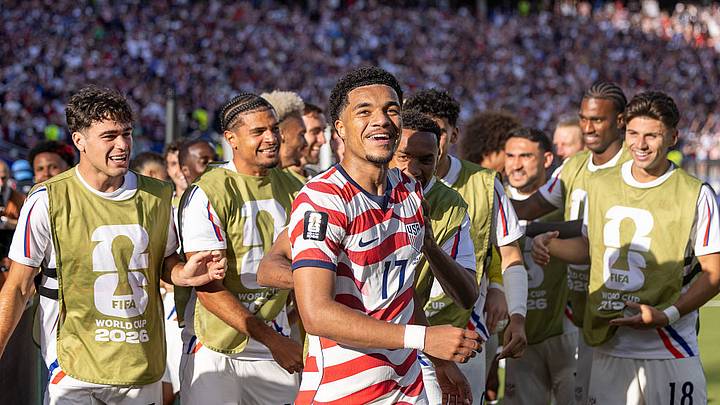
When the U.S. secured the bid to co-host the 2026 World Cup, a central goal was to cultivate deeper interest in soccer throughout the country. According to a newly released report, that goal has been achieved with remarkable success.
Research insights firm Nielsen reports that the number of soccer fans in the U.S. has surged by nearly 10 million over the past year. The data shows that the number of Americans identifying as soccer fans climbed from 66.8 million to 75.2 million between July 2025 and July 2026, marking a 13% increase.
The U.S. men's national team's electrifying run to the World Cup round of 16 on home turf undoubtedly played a major role in fueling that growing enthusiasm.
"The FIFA World Cup 2026 has acted as a powerful catalyst for soccer's explosive growth across North America," said Nielsen's global head of sports Seth Ladetsky, per The Athletic. "Our data shows that fandom is not only reaching record highs, but it is also expanding rapidly among younger, diverse audiences and carrying over into major domestic and international leagues."
Over the four-year span between World Cups, soccer fandom in the U.S. has jumped by 27%, welcoming 16 million new supporters. That momentum is further reflected in the record-breaking 2026 World Cup viewership figures.
World Cup Viewership Reaches Record High in the U.S.

Before 2026, the most-watched non-USMNT soccer match in U.S. history was Argentina's triumph over France in the iconic 2022 World Cup final, drawing 22.3 million viewers. Four years later, that benchmark was obliterated when Spain defeated Argentina in the 2026 World Cup final, attracting a staggering 62.8 million viewers in the U.S., according to Nielsen.
The 2026 World Cup final stands as the most-watched soccer match in U.S. history, with only February's Super Bowl LX drawing a larger U.S. audience in 2026 at 124.9 million viewers.
The NFL continues to dominate American sports; however, to further illustrate soccer's rising viewership, three 2026 World Cup matches surpassed the previous record for the most-watched non-NFL sports broadcast in U.S. history—a record previously held by Game 7 of the 2016 World Series between the Chicago Cubs and the now-Cleveland Guardians, which drew 40 million viewers.
The Five Most-Watched 2026 World Cup Games in the U.S.
Match | Round | Viewership Number |
|---|---|---|
Spain vs. Argentina | Final | 62.8 million |
USMNT vs. Belgium | Round of 16 | 45.9 million |
Mexico vs. England | Round of 16 | 44.9 million |
USMNT vs. Bosnia-Herzegovina | Round of 32 | 36.2 million |
England vs. Norway | Quarterfinal | 34.8 million |
How Soccer Can Continue to Grow in the U.S.

The task now is to sustain soccer's surging popularity in the U.S. over the next four years ahead of the 2030 World Cup. For the moment, things are heading in a very promising direction.
According to Nielsen's report, MLS viewership on Fox and FS1 "is up 55% among men 18–34 and 29% among adults 18–34 compared to before the tournament [2026 World Cup]."
Other leagues such as La Liga and the Premier League—the most-watched soccer league in the U.S.—have seen significant U.S. viewership spikes of at least 30% since the start of the 2026–27 season.
"People ask us all the time: 'How's it going after the World Cup?'" MLS commissioner Don Garber said recently at the Front Office Sports summit. "But that was only a few months ago—leaders of businesses need to think generationally. We started working on our World Cup plan in 2018 when U.S. Soccer won the bid.
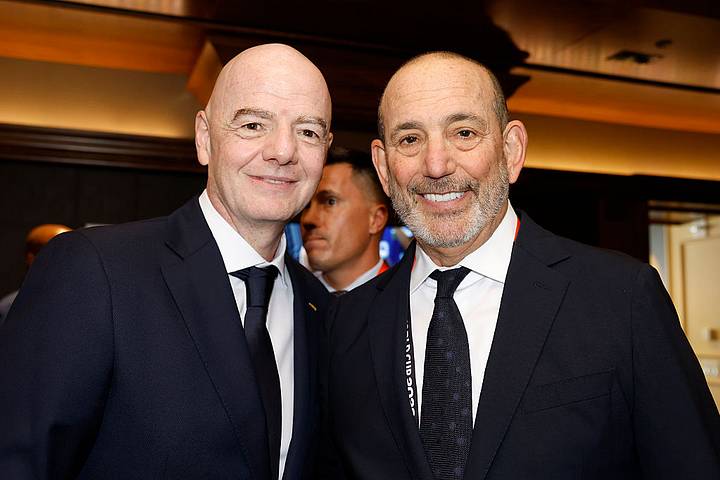
"I keep telling our owners," Garber continued. "'This is not about tomorrow. It's about weeks and years after the World Cup when we'll really capture the opportunity.' That said, our attendances are up, ratings are up, social media is up, merchandise is up—it helps to have Leo Messi—but the future of soccer is incredibly bright because of everything our stakeholders have done and a World Cup that will be remembered as the greatest of all time."
There is plenty of reason for optimism surrounding American soccer. The USMNT won its first four matches following the 2026 World Cup, driven largely by a wave of young debutants—many of them teenagers—who are expected to become key contributors under Mauricio Pochettino during the 2030 cycle.
Many of these emerging talents, including record-breaking attackers Cavan Sullivan and Julian Hall, ply their trade at MLS clubs, and the league has already begun spotlighting its young USMNT stars as part of a new strategy to sustain its growing fanbase and potentially attract even more supporters.
Soccer has never been better positioned to finally cement itself as one of the most popular mainstream sports in the United States.