
 ไทย
ไทย English
 中國人
中國人
England has been in this situation before, but never quite this close. The Three Lions were just five minutes of regular time away from a World Cup final appearance on Wednesday night in Atlanta before everything unraveled. In truth, the cracks had begun to show well before the 85th minute.
The opening half of the semifinal at Mercedes-Benz Stadium in Atlanta was largely forgettable—a scrappy, tense affair that produced a combined xG of just 0.07 alongside 19 fouls, with Argentina's Giuliano Simeone, making his first knockout stage start, seemingly on a personal crusade to keep the game as disjointed as possible.
Argentina arrived with a clear plan to suffocate England and bide their time for the perfect opening. England, equally, was content to absorb the physical battle, embrace the blocks, headers and challenges, avoid being pulled out of shape and, most importantly, keep their composure.
The second half was a completely different story. England's goal arrived from their first genuine opportunity, with Anthony Gordon catching Nicolás Tagliafico off guard at the back post to sneak in and finish Morgan Rogers' cross from point-blank range.
That moment shifted the entire trajectory of the match and the tournament.
Argentina Ascends, England Collapses
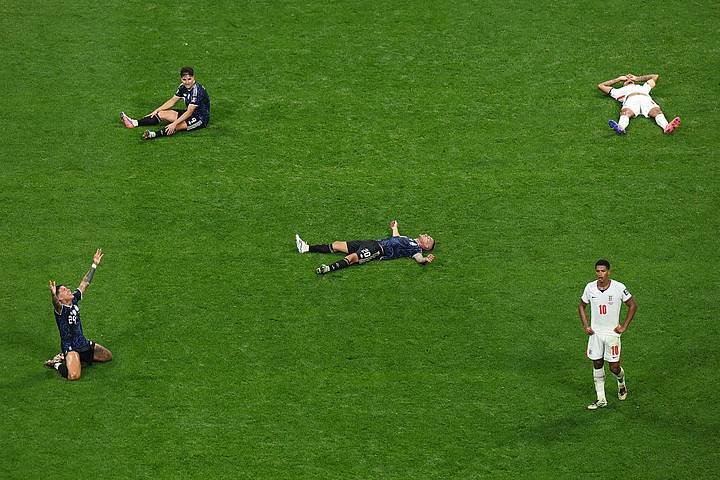
Following Gordon's opener, Argentina roared to life while England retreated into their shell.
Over the next 40-plus minutes, La Albiceleste launched relentless waves of attack on England's goal, with Lionel Messi spearheading the assault as the chief orchestrator of chaos.
Only Enzo Fernández registered more touches than Messi's 94, while the 39-year-old also led all players in chances created (4), completed dribbles (10) and touches inside the opposition box (6).
The late-game nature of the collapse is devastating for England—the stuff of nightmares—but the reality is that when Fernández's equalizer flew past Jordan Pickford, it had felt inevitable for some time.
Though occasionally shaky in possession, England's goalkeeper was in outstanding shot-stopping form throughout the second half, producing at least two world-class saves before Argentina finally broke through. Alexis Mac Allister had also rattled the post, and substitute Nicolás González had headed wide in the moments before Fernández found the net.
England, meanwhile, could not gain any foothold in the game.
Cabo Verde, Egypt and Switzerland had all found success on the counter against Argentina, exploiting Lionel Scaloni's side's defensive vulnerabilities through a lack of width and pace. England didn't even attempt it.
England's Nightmare Collapse in Numbers
Gordon, England's scorer and primary outlet, was Thomas Tuchel's first substitution, withdrawn for defender Ezri Konsa just past the 70-minute mark. Harry Kane worked tirelessly in a deeper role, but left a conspicuous void that desperately needed a target striker to at least hold the ball up and stop Argentina from simply recycling possession endlessly.
Tuchel's next two changes, with just over ten minutes remaining, were both defenders—Dan Burn and Nico O'Reilly—with England clearly intent on riding out the storm and nothing more. Attack versus defense.
As widely circulated on social media, England managed just two accurate passes in an 18-minute window between the 66th and 84th minutes. From the 67th to the 92nd minute, England held just 7.5% possession. The statistics are extraordinary for professional soccer, let alone a World Cup semifinal.
The Messi Factor
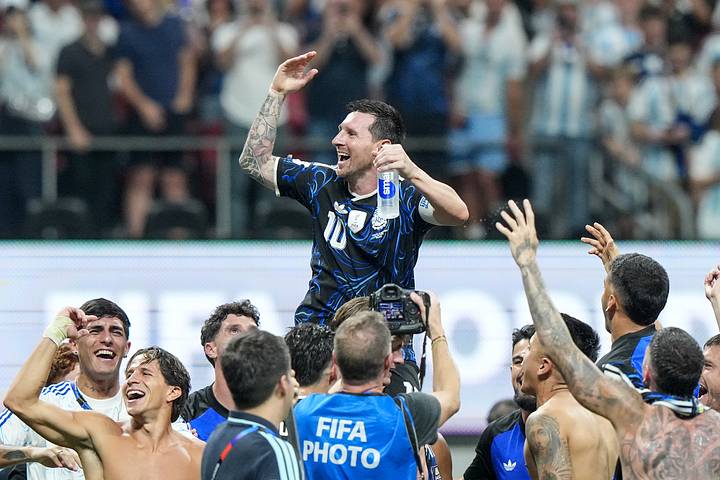
England had managed to survive backs-to-the-wall performances in earlier rounds against Mexico and Norway, but this was an entirely different challenge.
With all due respect to Julián Quiñones and Antonio Nusa, they are not Lionel Messi.
It may seem like a straightforward observation, but you simply cannot invite the greatest footballer to ever play the game to take his best shot at you for 40 minutes. England's approach felt almost deliberately naive in Atlanta—the worst of the Gareth Southgate era's caution, blended with the fear-driven inability to rise to the occasion that defined the Sven-Göran Eriksson years.
After a quiet opening 45 minutes, Messi ignited after the break, operating in a position that on paper resembled more of a right wing-back role.
He darted, surged, drifted, dribbled and sliced through England's defensive structure, with the Three Lions only capable of holding back the tide for so long. His second assist, setting up Lautaro Martínez to head home, was characteristically sublime.
With the vote occurring before the final, he has almost certainly secured the tournament's Golden Ball award.
Tuchel's Tactics Follow Familiar Pattern of Failure
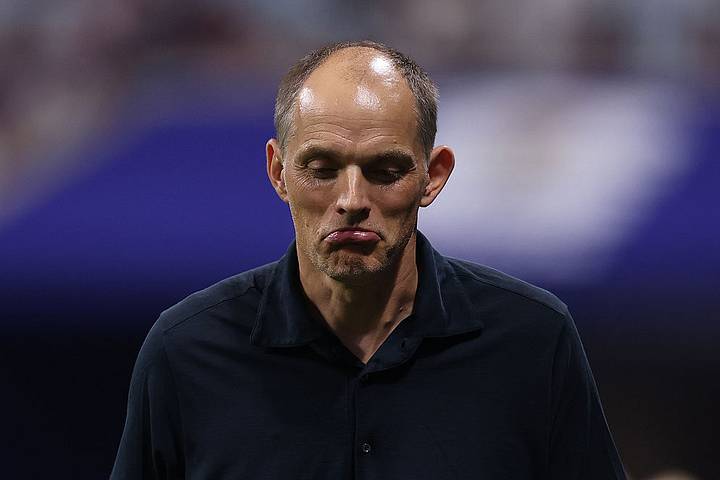
Promoted as a sharper, more courageous tactician capable of breaking England's cycle of underachievement, Tuchel's route to elimination at this tournament has followed a well-worn script.
England's passivity and inability to capitalize after taking the lead will be dissected for years. This marks the third time since 2018 that England have surrendered a lead in a semifinal or final of a major tournament.
England remains the only nation in the 21st century to score first in a World Cup semifinal without going on to win, with this defeat echoing the loss to Croatia eight years ago in Russia.
After the final whistle, a defiant Tuchel stood by his decision to adopt a defensive approach early: "You can discuss this with a million coaches (but) I have to make a decision on the pitch.
"I analyzed the match and I did it a certain way so that's my responsibility. In the moment, no regrets. The team gave everything and we were very, very close. We deserved to be up 1-0."
He continued: "We decided to go to a back five because the gaps were far too open.
"Argentina played with more risk, played with more rhythm and played with the feeling maybe that they had nothing to lose any more, which freed them up and pulled us back. Because we obviously played suddenly with a feeling that we had a lot to lose. Of course the responsibility is on the coach and if it doesn't go well it's easy to say it was wrong."
Reports suggest Tuchel retains the FA's support despite the manner of the exit. His contract extends through the conclusion of the 2028 European Championship to be hosted across the United Kingdom and Ireland. Nevertheless, there are indications that his players felt they could have done more.
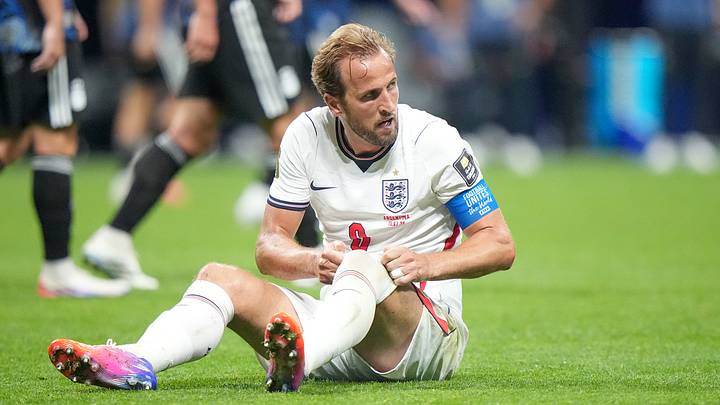
"We should have carried on pushing," Marc Guéhi told the BBC after the match, while captain Kane said to reporters: "Once we went 1-0 up we seemed to just try and hold on which at this level is just not enough, so I'm gutted."
Where Do England Go From Here?
Argentina advances to the final, while England must now face the least coveted fixture in international football: the third-place playoff—commonly referred to as the "Bronze Final"—which is scheduled against France on Saturday in Miami.
Beyond that, it will be a matter of regrouping and going again. The phrase constantly repeated by players, supporters and pundits alike is that "it'll come," but with the wait for a major trophy now stretching past the 60-year mark, the question persists: when?
Bellingham, Kane, Rice and others are consistent winners at club level—as was the original "Golden Generation" two decades prior—yet international glory continues to elude them.
When asked about the 2030 World Cup, Kane did not dismiss the possibility of another attempt, though it does appear we may have already witnessed the peak of his England career.
"Four years is a long way away and I'm 33 in the summer, but as you see with Leo [Messi], he's still performing at the highest level [at 39]," he said.
Enable functional cookies to see this feature.
Before the 2030 tournament arrives, the Three Lions will undoubtedly be among the frontrunners for the European Championships on home soil in two years' time. First, however, there is significant reflection and learning to be undertaken.
As Kane puts it, "For now, it's about processing another tough loss."