
 ไทย
ไทย English
 中國人
中國人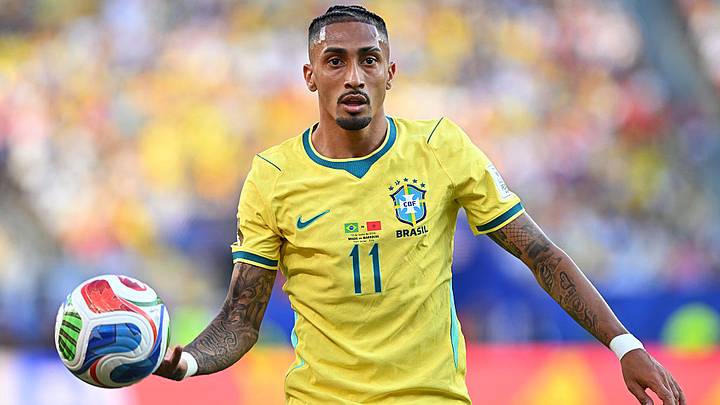
Five-time World Cup champions Brazil were held to a 1–1 stalemate by a determined Morocco side in their 2026 FIFA World Cup Group C opener on Saturday evening at MetLife Stadium in East Rutherford, N.J.
The reigning Africa Cup of Nations holders came out with intensity from the first whistle, putting Brazil on the defensive early. While the South Americans found their footing in the second half, the comeback fell short of securing all three points.
Brazil's pursuit of a long-awaited sixth World Cup crown continues, and the remaining Group C fixtures against Haiti and Scotland offer more favorable opportunities to get back on track.
Here are Sports Illustrated's three key takeaways from the match.
Sluggish Seleção

From the very first kick, Brazil was immediately put on the back foot.
Within just 10 minutes, Morocco had controlled nearly 70% of possession and registered five shots on goal. La Seleção was left scrambling to contain the Atlas Lions, desperately attempting to disrupt their organized attacking moves — a momentum imbalance that dominated the opening 30 minutes of play.
The North Africans, marshaled by captain and Paris Saint-Germain star right back Achraf Hakimi, repeatedly exploited Brazil's left side, targeting Zenit left back Douglas Santos and applying relentless pressure that Brazil struggled to cope with. When not threatening down the left flank, Morocco took full advantage of the gaps Brazil left exposed throughout midfield.
Moroccan striker Ismael Saibari finally broke the deadlock in the 21st minute, slipping between center backs Gabriel and Marquinhos to finish with ease. Saibari collected a pass from right midfielder Brahim Díaz, who was left completely unmarked in the center of the pitch. Santos was too slow to close him down, allowing Brahim to pick out Saibari in stride.
If La Seleção harbors any genuine ambition of lifting that sixth star this summer, they must start matches with greater urgency, imposing their own game plan rather than allowing opponents to dictate terms from the opening whistle. The team must also improve its ability to manage pressure, rather than repeatedly being overrun in the same areas of the pitch.


Momentary Brilliance

The momentum shifted in an instant thanks to a flash of genius from Brazilian forward Vinícius Júnior in the 32nd minute. The Real Madrid star cut to the left side of the goal before unleashing a thunderous strike into the far upper corner, a shot so fierce it nearly took the hands off goalkeeper Yassine Bounou.
Vini Jr leveled a contest that had been anything but balanced up to that point, raising the question: can a single moment of individual brilliance truly offset the kind of organized, systematic dominance Morocco had been displaying?
As it turned out, yes. Not only does the scoreboard — often mercilessly — have the final say in soccer as in most sports, but Vini Jr's moment of magic proved to be precisely the spark Brazil needed. The stunning strike breathed new life into the South Americans, who settled into a more composed rhythm, stringing together passages of play rather than relying on isolated individual efforts. They headed into halftime with all the momentum and carried that confidence into the second half.
Brazil, across its storied World Cup history, has long defined itself as a team capable of winning on the strength of individual brilliance. Nearly all five of Brazil's World Cup triumphs have been shaped by a dominant individual talent, with the 1970 tournament in Mexico being the lone exception. Most iconically, a teenage Pelé led the way in 1958, while Garrincha shouldered the burden four years on. Romário inspired the nation to glory in 1994 — the last time the World Cup was staged in the United States — and Ronaldo was the undisputed star in 2002. Perhaps Brazil is simply returning to its proven formula for World Cup success, anointing Vini Jr as the standard-bearer for this summer's campaign.
Saturday's goal was Vini Jr's 10th for Brazil in his 50th international cap. He arrives in ideal form, deeply familiar with the methods of head coach Carlo Ancelotti, having featured in 209 matches under the Italian tactician during their successful partnership at Real Madrid.
'Rumo ao Hexa' in Jeopardy?

Brazilian supporters have rallied behind a new battle cry — 'Rumo ao Hexa' — meaning the road to the sixth.
While Brazil secured a valuable point against a tough opponent, the team's ultimate ambition may still be under threat.
In each of La Seleção's previous World Cup-winning campaigns, the team has claimed victory in their opening group stage fixture, establishing a winning mentality and momentum to carry through the tournament. If historical patterns hold any weight, Brazil's stumble out of the gate could prove costly.
Indeed, across the last 20 World Cups, Brazil has drawn their opening match on only three occasions, winning the remaining 17. The Brazilians have never suffered a defeat in a World Cup opener.
Brazil now shifts focus to a more manageable challenge, taking on Haiti on Friday in Philadelphia. Requiring at least three more points to secure a place in the knockout rounds, Brazil concludes group play against a passionate Scotland side on Wednesday, June 24 in the sweltering heat of Miami.