
 ไทย
ไทย English
 中國人
中國人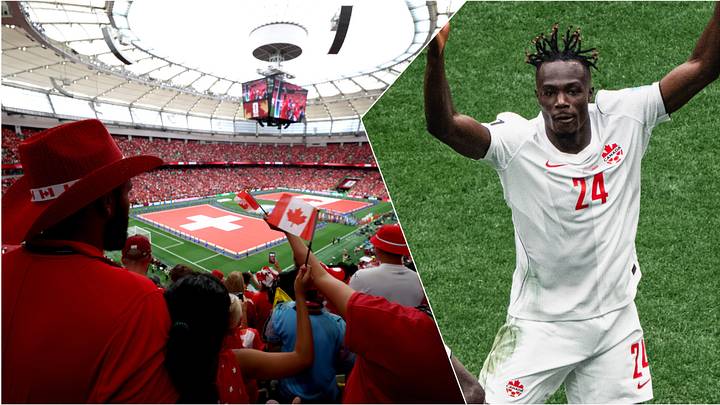
VANCOUVER — The relentless roar of the crowd, streets filled with red smoke and thousands of supporters, accompanied the euphoric outbursts whenever a pivotal moment unfolded. On Wednesday, Canada soaked it all in—and then said goodbye to it, without a chance to truly revel.
While the U.S. men's national team has joined its supporters in singing "Country Roads" after advancing through the group stage, and Mexico has been able to celebrate in front of its home faithful, the northernmost co-host has yet to experience a moment of pure joy.
The team's spirits were dampened even after dismantling Qatar 6–0 to secure the country's first-ever men's World Cup victory, as they absorbed the news of star midfielder Ismaël Koné suffering a broken leg. The opening match, a historic occasion in Toronto, ended in a draw against Bosnia & Herzegovina in their World Cup debut.
And on Wednesday, Les Rouges said their goodbyes to their home World Cup. Following a pair of defensive lapses in the opening 17 minutes of the second half, Rubén Vargas and Johan Manzambi found the net, propelling Switzerland to a 2-1 win and the summit of Group B.
Now, Canada won't play another home fixture. The road leads to the United States and Los Angeles. Despite reaching the knockout rounds for the first time in the nation's men's soccer history, they haven't yet become the side they envisioned themselves to be.
"It was great to have a pro-Canada crowd pushing us in every match," star forward Jonathan David said after the final whistle. "We're a little disappointed, and the emotions are mixed. We obviously wanted to stay in Vancouver, so not being able to do that hurts everyone, but we'll regroup and prepare for what's next."
Weeks That Mattered at Home

While Canada's World Cup journey will conclude south of the border—either in the knockout rounds or, miraculously, by lifting the trophy—the past two weeks in Toronto and Vancouver, along with the pre-tournament friendlies in Montreal and Edmonton, carried real significance.
As early as 8 a.m. local time on Wednesday, Vancouver's streets were awash with red and white, and within the hour, thousands formed a massive sea of red marching toward BC Place, led by the Royal Canadian Mounted Police.
For the third time this summer, the country came to a standstill in a way that only men's ice hockey had previously managed.
Viewership figures have reflected that enthusiasm. Though numbers for Wednesday's match weren't immediately released, the previous two games drew averages of 3.2 million and 5.3 million viewers on TSN, with more than 11 million—or 26% of Canadians—tuning in to at least a portion of the win over Qatar.
"I've been following this team for 30 years, and it used to be all long balls, but now we play a controlled style and everything has evolved—just look at the response from the Canadian public," said Rick, who traveled to Vancouver from Timmins, Ontario, holding signs reading "My Swiss watch says it's Canada's time" during Wednesday's march to the stadium.
🇨🇦HERE COMES CANADA!
10:00am on a Wednesday and the March to the Match is in full force ahead of #CanMNT vs Switzerland.
Plenty of #8 signs for Ismaël Koné. pic.twitter.com/AUj9IJJc49
"Seeing this gives me goosebumps; it's incredible to witness the whole country rally behind something we've never really experienced before."
Those figures and the wave of public support, compared to the recent Milan Cortina 2026 Olympics, were second only to the 8.7 million Canadians who watched the gold medal men's hockey game—the first in 12 years to feature NHL players.
"When I first joined this team, even qualifying for Qatar 2022 felt like a fantasy," said defender Alistair Johnston. "We got there, and it didn't go exactly as planned, but everything has always been building toward this moment... and we're not going to treat this as the end of our journey."
A battle of the signs.
Rick, from Timmins, Ontario says that "Swiss cheese it's great, it's got holes like your back line."
Thousands of #CanMNT marching this morning. pic.twitter.com/b8CiLBXbKF
For a nation that spent years playing in front of what were essentially away crowds on home soil—Caribbean bands were even brought in for some matches against island nations to generate atmosphere—having a genuine home crowd behind them was meaningful.
And the performances, combined with the public gatherings, have ignited the country's passion for soccer in an unprecedented way.
"We desperately wanted to keep playing here and sustain the momentum that has been building around the team and the tournament across the country, and I'm clearly disappointed," said an emotional Jesse Marsch after the match. "But we still have a tremendous opportunity ahead to push forward in the next game and inspire the nation, even if it's from Los Angeles."
Finding a Way, Away

All is not lost. While the journey continues away from home soil, Canada is well-positioned to make a deep run and will have taken valuable lessons from the defeat against Switzerland.
At the same time, they went head-to-head with a top UEFA side without the likes of Alphonso Davies—whom Marsch admitted was "never going to play," with his availability serving purely as a "decoy"—as well as Koné, and a fully healthy Stephen Eustáquio, who lasted just 32 minutes.
Eustáquio said after the match that he would be fit for Sunday's knockout fixture, while Davies's availability remains uncertain.
Canada's energy in the Group B encounter was subdued from the outset. The weight of the occasion seemed to affect them at times, until the imposing attacking presence of Promise David entered the fray and scored on his very first touch.
"We started passively," Marsch said, having urged his players to "wake up" at the end of the match. "We had very few sprints and very little intensity, and that made us more vulnerable and exposed."
From that, they will have grown. Having not played a World Cup qualifying campaign, Canada has had limited experience in must-win situations, and gaining that exposure—amid the pressure of a home crowd—will have sharpened them for the high-stakes moments ahead.
U.S. Games Nothing New for Canada

On Sunday, the nation will pause once more. Fan zones will be packed as Canada faces its first must-win match at a men's World Cup.
Playing in the U.S., even at SoFi Stadium and in front of a crowd likely dominated by opposition fans, is nothing unfamiliar. If anything, it's business as usual, and the pressure may even feel less daunting than performing in front of a home crowd.
SI answers is our AI answer engine trained on human-created content.
"I think in a knockout game, everything becomes a bit more delicate and significant," Promise David added. "It's not like we can count on another chance. You've got 90 minutes to give everything and secure the win. We would have loved to do that in Vancouver. We finished second. But that's how it goes."
For this Canadian squad—which won a knockout match to reach the 2024 Copa América semifinals—there is still a chance to celebrate. They've shown themselves and 41 million Canadians that they can compete at the highest level, and on Sunday, despite limited rest, they'll continue making history. And those viewership numbers? They'll only keep climbing.