
 ไทย
ไทย English
 中國人
中國人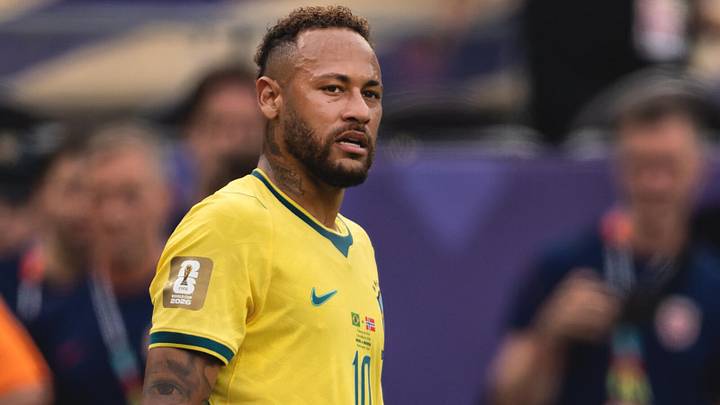
Celebrations erupted across Brazil when Carlo Ancelotti announced that 34-year-old Neymar had secured a spot in his 26-man squad for the 2026 World Cup. Yet barely a month later, the Seleção had already been eliminated from the competition.
Any hopes of claiming a record-breaking sixth World Cup title this summer were always going to fall short. Brazil's underwhelming midfield and fullback options had already signaled the team's downfall before their World Cup journey even began.
Nevertheless, there was considerable excitement surrounding the South American giants, now guided by Ancelotti. Even if the iconic Italian manager couldn't lead his new side to the final on July 19, he could at least steer Brazil on a deep run — one that would signal the Seleção's long-awaited resurgence.
Instead, Brazil couldn't even advance past the round of 16. Ancelotti's squad, who required a last-minute victory over Japan just to reach the last 16, imploded against Norway at MetLife Stadium. The early elimination marked the first time in 36 years that the nation failed to reach the quarterfinals at a World Cup.
There is no shortage of culprits for the disappointing outcome, but Ancelotti's preference for familiar veterans over nurturing the current generation transformed what should have been a summer of progress into an all-but-guaranteed failure.
Ancelotti's Neymar Decision Served As the Ultimate Distraction
In the lead-up to the 2026 World Cup, one question dominated Brazil's entire preparation: Would Neymar be called up? The former Barcelona icon hadn't featured for the national side since rupturing his ACL in October 2023 and had publicly lobbied for inclusion in Ancelotti's squad for this summer's marquee event.
Neymar had managed an extended run of fitness — by his standards, at least — and was rediscovering his goalscoring touch at hometown club Santos. The whole nation was desperate to see the legendary forward wear his iconic No. 10 shirt on the global stage one last time.
Ancelotti, who had not selected Neymar once since taking charge of the Seleção, succumbed to the hype and used a roster spot to bring the 34-year-old to North America. The announcement was greeted with widespread joy across Brazil, particularly after footage emerged of the superstar's tearful reaction to the news.
Neymar's inclusion shielded Ancelotti from the wrath of an entire nation — and possibly some of his players too. It also dominated every headline, overshadowing the manager's puzzling decision to omit Chelsea striker João Pedro from the squad.
The 24-year-old, who netted 23 goals in his debut campaign with the Blues, could have been a crucial asset in sharing the goalscoring burden with Vinícius Júnior and Matheus Cunha. Even Richarlison could have contributed from the bench.
But it was Neymar who received the call-up... only to feature for just 37 minutes all tournament.
WIN FIFA WORLD CUP 2026™ FINAL TICKETS & OTHER PRIZES

Neymar's Allure Blinded Ancelotti

The narrative and nostalgia surrounding Neymar's return for one final World Cup was seemingly impossible to resist. But sentimentality alone cannot win a World Cup, particularly when the player in question has such a troubled injury history as the No. 10.
Even before the tournament got underway, Neymar was already nursing a calf problem that ruled him out of Brazil's two pre-tournament friendlies. Ancelotti had the chance to replace the stricken forward with Pedro — or another option — before the competition began, yet he retained Neymar in his squad.
The 34-year-old sat out Brazil's group stage fixtures against Morocco and Haiti. With each day he spent on the sidelines, the narrative surrounding Brazil's World Cup shifted further toward when — or whether — Neymar would feature, rather than what the team was actually producing on the field. Vinícius Jr contributed two goals and an assist in the Seleção's opening two matches, yet the conversation remained fixated on Neymar.
The forward's reputation is well-earned. Neymar is Brazil's all-time top scorer and was the face of the national team for more than a decade. He is the idol of virtually every player in the squad, including Vinícius Jr, who wasted no time returning the No. 10 shirt he had been wearing in Neymar's absence.
Just as the relentless questions about Neymar's availability were growing exhausting, he finally stepped off the bench for a 14-minute cameo against Scotland. Vinícius Jr scored twice more in that match, yet every headline and every discussion centered on Neymar.
Neymar Was Not the Hero Brazil Needed
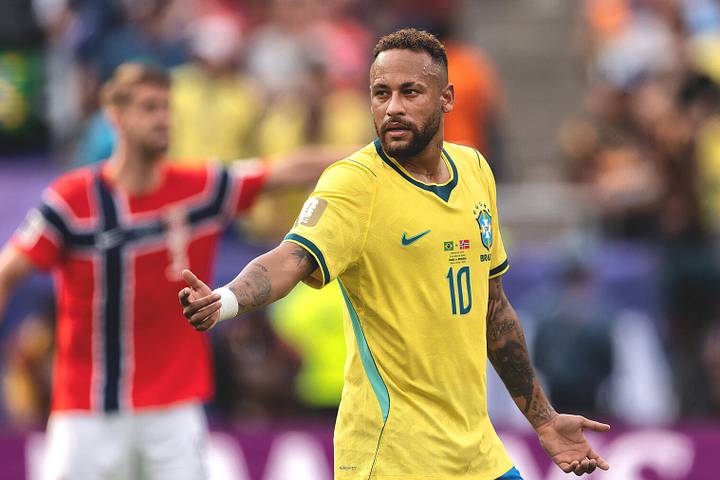
Despite finally breaking his duck with an appearance, Neymar did not see a single minute of action against Japan in the round of 32. Ancelotti feared the match could go to extra time, and the Santos captain lacked the fitness to handle such extended minutes.
The manager couldn't turn to Pedro to help Brazil find a breakthrough, nor could he rely on Neymar. The responsibility fell instead to Vinícius Jr's underwhelming attacking partners, and Gabriel Martinelli stepped up to deliver.
The late winner rescued Brazil, but it ultimately only delayed the unavoidable. Against Norway in the round of 16, Brazil struggled to unlock the opposition. Bruno Guimarães saw a poor penalty saved, Endrick failed to convert a trivela assist from Vinícius Jr, and Matheus Cunha was substituted after just 58 minutes.
This time, Ancelotti did turn to Neymar, who played 24 minutes and earned a consolation penalty in stoppage time. Beyond that, he completed just nine passes, failed to register a single accurate cross, and won only one of six duels — all with Brazil's World Cup survival at stake.
Rather than surrounding Vinícius Jr with the strongest support available, Ancelotti stubbornly persisted with a player who is clearly past his best. And Brazil paid the ultimate price.
Ancelotti Must Learn From His World Cup Shortcomings

Shortly after Brazil's World Cup campaign ended in New Jersey, Neymar announced his retirement from international football. Drawing the curtain on his storied career in the yellow shirt marked the end of a historic era — and effectively compelled Ancelotti to begin a new chapter.
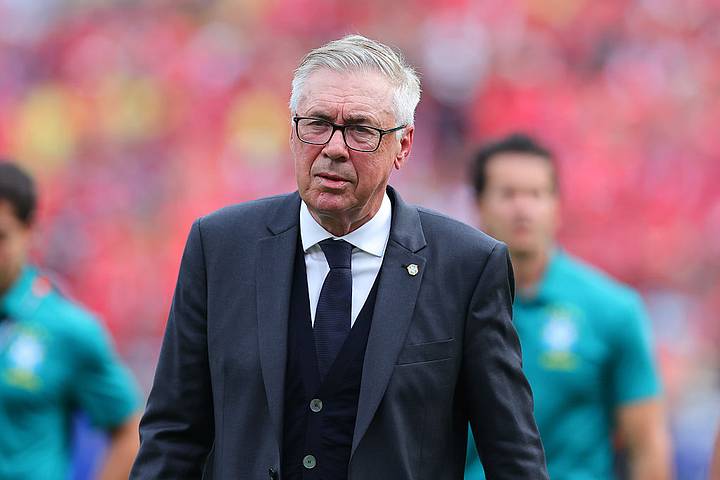
The manager had become well-known for leaning on experienced players during his two stints at Real Madrid, showing reluctance to hand younger talents meaningful opportunities. He fell into the same pattern with Brazil; only Gabriel is under 32 in his starting defensive line. A fading Casemiro anchored his midfield. Somehow, 32-year-old Fabinho even earned a World Cup roster spot, only to contribute a meager 71 minutes across the entire tournament.
Endrick, meanwhile, arrived at the tournament off the back of a dazzling loan spell at Lyon. The teenager was brimming with confidence, yet Ancelotti didn't even introduce him against Morocco when Brazil desperately needed a goal. The striker was also handed just eight minutes in a comfortable win over Scotland.
Enable functional cookies to see this feature.
Ancelotti did give Endrick more playing time in the knockout rounds, but it was evident that whatever confidence the forward had built during his time in France had evaporated. Had he been given more minutes and greater trust from his manager, he might well have converted the glorious chance he wasted against Norway.
Ancelotti simply cannot guide Brazil back to greatness if he refuses to place his full faith in the next generation. The likes of Endrick, Estêvão, and Pedro are central to the Seleção's future. They are the support that Vinícius Jr, Raphinha, and Rodrygo need if the five-time world champions are to have any realistic hope of adding a sixth star above their crest in the years ahead.