
 ไทย
ไทย English
 中國人
中國人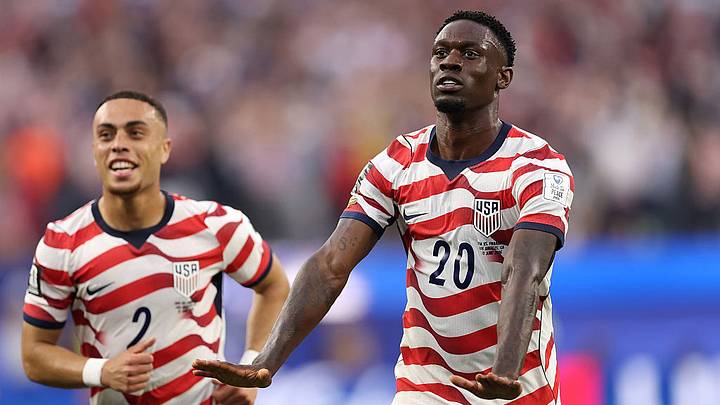
"Why not us?"
The aspirations of U.S. men's national team head coach Mauricio Pochettino grew increasingly bold. Why couldn't the United States, never before a World Cup finalist, accomplish something that would surpass the greatest underdog story in the nation's celebrated sporting legacy: the "Miracle on Ice"?
It was on home ice in Lake Placid where a group of college athletes shocked a hockey dynasty. At the peak of the Cold War, the USA squad defeated Soviet professionals 4–3 to claim gold at the 1980 Winter Olympics—a story now immortalized in a compelling Netflix documentary.
Pochettino's 26-man squad aimed to reach unprecedented heights this summer, with pre-tournament anxiety giving way to the most commanding victory of the Argentine's tenure. A 4–1 triumph over Paraguay captivated the nation, sparking belief that perhaps this time, things could be different.
Ultimately, however, the USMNT, celebrated by some as the greatest squad ever assembled, fell to an all-too-familiar outcome. There was no miracle; not even their best-ever World Cup showing. That distinction still belongs to the quarterfinalist side of 2002.
Here's how the two campaigns stack up.
USMNT's 2026 World Cup Run Compared to 2002 Legends

Group Stage
First, let's address something important. While we know the U.S. finished third at the inaugural World Cup in 1930, comparing that three-game run from 96 years ago to the current team's campaign would be doing them a disservice.
A direct comparison between the two is simply not feasible. 2002 serves as a far more appropriate benchmark.
Thirty-two nations took part in South Korea and Japan 24 years ago, compared to 48 this summer. So while the USMNT was knocked out one round earlier than the 2002 quarterfinalists, both teams played five matches in total.
Pochettino's side began brilliantly, dismantling Paraguay 4–1 and comfortably dispatching Australia 2–0. They played with the fluidity of a top European club side, with the Argentine's philosophy finally bearing fruit after considerable struggle.
Back in 2002, Pochettino was himself a World Cup participant, and England supporters long recalled him as the defender who fouled Michael Owen to hand David Beckham his famous penalty redemption. An Argentina side that entered as tournament favorites crashed out in the group stage.
A memorable run with some of the most notable wins in our history.
This is 26 USMNT Moments: Past to Present.
Ep. 16 - 2002 FIFA World Cup 🎬 https://t.co/ZSD5XPvM0a pic.twitter.com/FmFBF2k9RY
The USMNT was still in its developmental stages 24 years ago. Hosting the World Cup eight years earlier had helped fuel the growth of Major League Soccer (MLS), and Bruce Arena's roster featured genuine talent, from a young Landon Donovan to Brian McBride.
Few anticipated them toppling Portugal, Euro 2000 semifinalists, on Matchday 1, however. Their 3–2 victory in Suwon stands among the finest results in USMNT World Cup history, even if the Stars and Stripes were ultimately forced to hold on after surging into a 3–0 lead. Arena's team then drew with South Korea, and were fortunate that the co-hosts defeated Portugal on Matchday 3, given that the Americans had already lost 3–1 to Poland.
Pochettino's USMNT experienced no such turbulence this time around. FIFA's decision to use head-to-head records as the primary tiebreaker meant the team had already clinched top spot in Group D with a game remaining. A heavily rotated lineup then fell 3–2 to Türkiye to close out the group phase.
Unlike 24 years ago, the current squad had been widely expected to advance to the knockout rounds—and not simply due to the expanded tournament format. The 2002 USMNT entered the World Cup at 300–1 odds to lift the trophy, while this year's team carried 60–1 odds.
Group Stage Stat | 2002 | 2026 |
|---|---|---|
Opponents | Portugal, South Korea, Poland | Paraguay, Australia, Türkiye |
Finish | 2nd | 1st |
Record | 1-1-1 | 2-0-1 |
Goals For | 5 | 8 |
Goals Against | 6 | 4 |
Knockout Stages
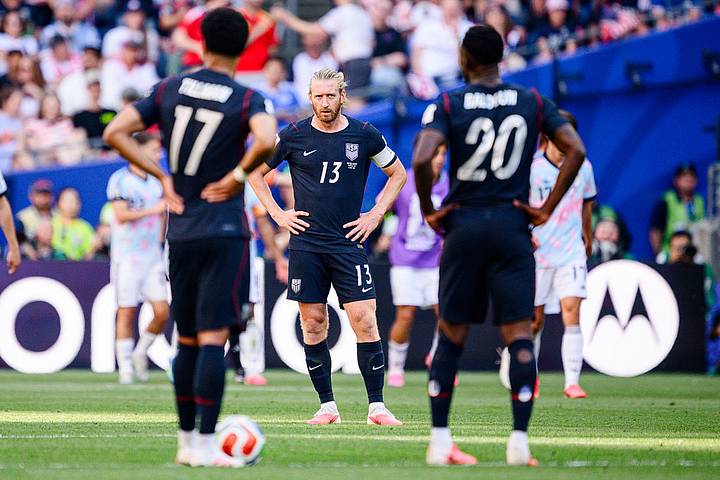
By topping Group D, the USMNT earned a round of 32 clash against one of the eight third-place finishers. Bosnia and Herzegovina provided spirited opposition, though Pochettino's team were widely favored to advance.
Arena's side, having been convincingly beaten by Poland just days earlier, were also satisfied with their draw against familiar rivals Mexico, even though El Tri had defeated Italy and Croatia to claim top spot in Group G and entered the tournament as the seventh seed. "We knew them," said Eddie Pope, a member of the 2002 squad. "It wasn't because they were an easy team to beat. It was just that we felt like we could beat them."
And beat them they did. Goals from Donovan and McBride secured a 2–0 win, a comparatively more impressive result than the USMNT's victory over 61st-ranked Bosnia by the same scoreline, even if Folarin Balogun's controversial red card forced them to play much of the second half a man down.
In 2002, the USMNT's run was tainted by a glaring missed handball call against Germany. Arena's side were trailing thanks to a Michael Ballack goal when Torsten Frings inadvertently handled on the goal line following a brilliant Oliver Kahn save from future USMNT head coach Gregg Berhalter.
Had Scottish referee Hugh Dallas made the correct decision, the U.S. would likely have been level and with a numerical advantage for much of the remaining second half. Germany went on to reach the final, though it was far from a classic German side.
The 2002 squad therefore departed the Far East having suffered a heroic near-miss. In contrast, the 2026 team delivered a flat performance against Belgium in Seattle. FIFA's reinstatement of Balogun following his suspension sparked widespread fury and only galvanized the Red Devils, who faced a far diminished version of the USMNT that had impressed at the tournament's outset. A 4–1 defeat accurately reflected the gap between the two sides at Lumen Field.
While Pochettino had declined to dismiss the near-impossible dream of conquering the soccer world, the more pragmatic majority had backed his team to at least replicate the 2002 performance. They fell short of even that benchmark, with the USMNT now having exited the World Cup in the round of 16 at four of the last five tournaments.
"I think overall there were positives that we're going to take away from it, [but] it just doesn't feel like it matters," midfielder Tyler Adams succinctly put it.
So what does all of this mean?
Enable functional cookies to see this feature.
USMNT's 2026 Total World Cup Campaign vs. 2002
Stat | 2002 | 2006 |
|---|---|---|
Games Played | 5 | 5 |
Won | 2 | 3 |
Drawn | 1 | 0 |
Lost | 2 | 2 |
Goals For | 7 | 11 |
Goals Against | 7 | 8 |
Top Scorer(s) | Landon Donovan, Brian McBride (2) | Folarin Balogun (3) |
Finish | Quarterfinals | Last 16 |