
 ไทย
ไทย English
 中國人
中國人
England were on the verge of reaching the 2026 World Cup final, only for a late Argentina surge to eliminate Thomas Tuchel's side in dramatic fashion at the final whistle.
The Three Lions kept the reigning world champions at bay for 85 minutes in Atlanta, daring to dream of reaching just their second-ever men's World Cup final, and their first in six decades. Anthony Gordon's 55th-minute strike was the sole difference between the teams until Argentina finally stirred.
A stunning equalizer from Enzo Fernández delivered the first blow to England's hopes, before a composed header from Lautaro Martínez — despite being surrounded by defenders — extinguished them entirely. Yet another shot at a major title ended in agony, and there is no shortage of culprits to point to.
The 2–1 loss will weigh heaviest on Tuchel, whose tactical choices in the closing stages denied his team a showdown with Spain at MetLife Stadium.
England's Conservative Strategy Threw Away the Game
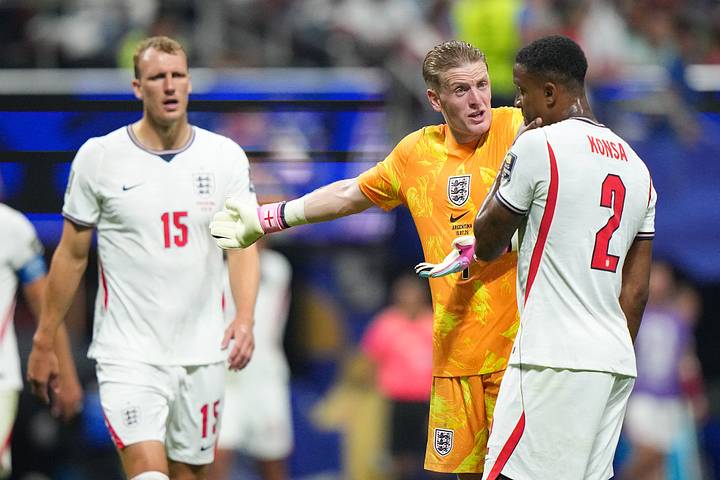
The Three Lions were in a comfortable position for roughly 70 minutes. England led 1–0 and had largely neutralized Argentina's attacking efforts. Space existed to exploit on the counter and potentially add a second goal, or at minimum keep the opposition unsettled.
Instead, Tuchel managed the game as though his side were a man down at the Azteca. The German coach withdrew Gordon — one of the few players consistently threatening La Albiceleste's defense — in favor of center back Ezri Konsa. In an instant, England shifted to a back five, sitting deep inside their own half with more than 20 minutes still remaining.
That approach might hold up against Mexico or a lesser opponent, but it was never going to be sufficient against the reigning world champions. England abandoned any ambition of attacking or retaining possession, relying entirely on a packed, desperate defensive shape to see them through.
But the Europeans seemed to forget they were facing Lionel Messi. The introductions of Nico O'Reilly and Dan Burn only added to England's disorganization, as though Tuchel were simply throwing bodies forward without any real plan.
It felt inevitable that Argentina would find the net — and they did so twice. By the time England tried to push forward, the damage had already been done.
Jude Bellingham Goes Quiet—And So Did England
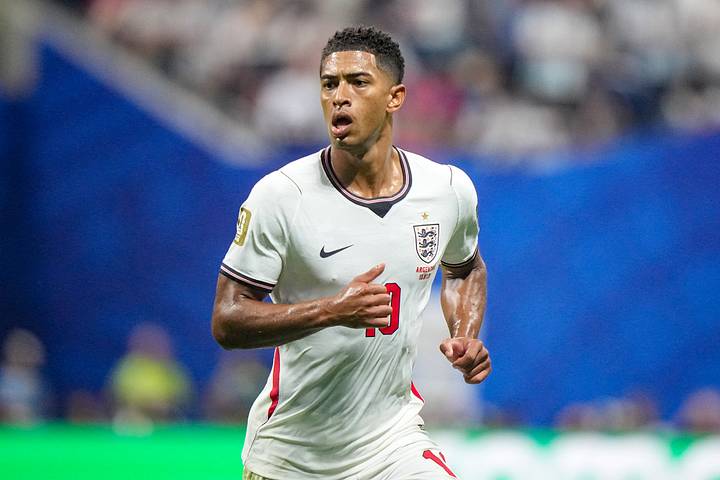
England entered the semifinals having scored 13 goals at this summer's World Cup, with 12 of those coming from Harry Kane and Jude Bellingham. The two stars had shouldered the team's attacking burden, repeatedly stepping up to drag the Three Lions past DR Congo, Mexico, and Norway.
While Kane didn't get on the scoresheet against Argentina, he still played a key role in the build-up to his side's only goal of the evening. Bellingham, however, was effectively neutralized throughout the semifinal.
The Real Madrid midfielder was subjected to Argentina's physical approach all night, taking punishment almost every time he received the ball. Bellingham was forced to work in tight spaces, limiting his capacity to produce incisive passes or contribute meaningfully in any way.
It didn't help that so much of England's attacking play was channeled through the wide areas, bypassing Bellingham in central positions. With so little delivery into the box, the 23-year-old's characteristic forward runs posed no real danger.
With Bellingham subdued and Kane starved of service, England needed others to step up in attack. Morgan Rogers and Gordon responded, but Tuchel failed to give the rest of his options a meaningful chance to contribute.
Tuchel's Experiment Reaps Rewards And Then Backfires

Tuchel raised eyebrows by handing Rogers a starting berth on the right wing, passing over both Bukayo Saka and Noni Madueke. The pair had shared starts throughout the tournament, yet in the most important match of the summer, they were left on the bench in favor of a player yet to register a single goal contribution at the 2026 World Cup.
Rogers endured a shaky opening half, struggling to make any real impact in the first 45 minutes. He barely touched the ball, often standing idle as England's most dangerous moments came down the opposite side.
He would likely have been among the first substitutions had the game stayed goalless, but the Aston Villa man chose his moment — and his target — perfectly to hand England the lead in the 55th minute. Rogers delivered a superb cross for Gordon, who converted a move that had originated from Kane deep inside his own half.
Rogers may have hoped for a more prominent role this summer, but the 23-year-old remained patient and made the most of his one starting opportunity. Questions will linger, however, over why Tuchel kept Rogers on for the full 90 minutes while Gordon was the one taken off.
Once it became apparent England required a second goal, Rogers offered little in the way of a goal threat or creative spark. He finished the match with just one blocked shot and a mere 25 touches. Saka and Madueke, meanwhile, didn't feature for a single minute, and Marcus Rashford only entered the fray in the 96th minute.
Djed Spence Rises to the Occasion

Djed Spence's previous England start had come in the round of 32, when he deputized at right back in the absence of the injured Reece James and Jarell Quansah. Two weeks on, the Spurs full-back was called upon again, this time returning to his favored left side.
On paper, Spence being tasked with containing Messi looked like a recipe for disaster. Giuliano Simeone, who had tormented full-backs at Real Madrid and Barcelona throughout the club season, also posed a genuine threat despite his limited involvement in the tournament so far.
Yet Spence more than held his own against both players, using his explosive pace to snuff out danger down his flank. Even when he found himself badly out of position in the 57th minute, he had the recovery speed to chase down a surging Simeone and produce a superb tackle inside his own penalty area to dispossess the Argentine.
The only reason Messi found enough room to deliver the decisive cross was that the full-back appeared to pick up an injury just moments earlier. That cruel twist does nothing to diminish the overall display Spence produced on Wednesday.
The 25-year-old also merits recognition for his attacking contributions. In a match where clear-cut chances were scarce, several of England's most promising moments originated down the left. Spence combined effectively with Anthony Gordon, leaving Nahuel Molina chasing two England shirts with little success. He also provided solid delivery into the box, though a teammate always seemed to be just out of reach at the end of his crosses.