
 ไทย
ไทย English
 中國人
中國人
Argentina netted twice in the dying moments to overturn a deficit and defeat England 2–1, keeping their championship defense on track in a breathtaking semifinal clash destined to be remembered in World Cup history forever.
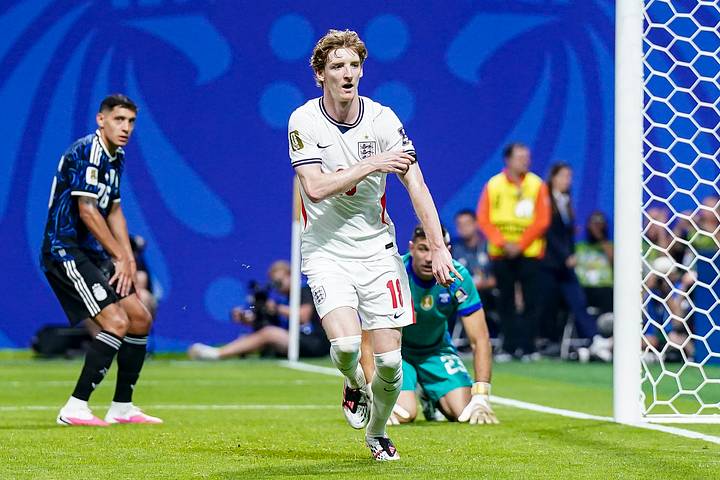
The two fierce international adversaries exchanged blows—almost physically—right from kickoff, and the match appeared completely deadlocked until England broke the stalemate through Anthony Gordon, who slipped in behind Nahuel Molina and slotted home the opener 55 minutes in.
Between Thomas Tuchel's cautious tactics and Argentina's relentless fighting spirit, La Albiceleste took command from that point, pinning England deep inside their own half and peppering Jordan Pickford's goal with attempts.
England's resistance finally crumbled when Enzo Fernández leveled with a long-range strike in the 85th minute, and seven minutes later, Lionel Messi delivered his second assist of the night by exquisitely setting up Lautaro Martínez, who headed La Albiceleste into the World Cup final from close range.
Reigning champions for a reason. pic.twitter.com/CH3JNsQRZI
Argentina once again suffered but demonstrated their undeniable championship character. Lionel Scaloni's squad responded with their backs to the wall to overcome by far the toughest challenge they've faced in the tournament.
For the first time ever, the reigning European and South American champions will collide in the World Cup final. Argentina vs. Spain, the top two sides in FIFA's world rankings, will battle for eternal glory. Only La Roja stand between Argentina and becoming the first back-to-back World Cup champions since Brazil more than 60 years ago.
Scaloni's Faith in Rodrigo De Paul Runs Out
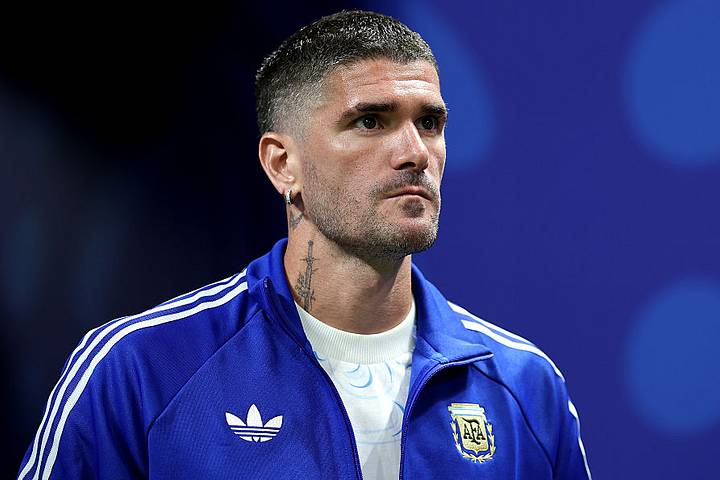
Scaloni had been almost entirely reluctant to make significant changes to Argentina's starting lineup despite being pushed to the edge in all three knockout fixtures. Against England, Scaloni finally altered his setup, bringing on Giuliano Simeone and dropping Rodrigo De Paul.
Aside from a brilliant assist for Lionel Messi's first goal of the tournament, De Paul's performances this summer have been underwhelming at best. Argentina's midfield as a unit has struggled to dictate matches throughout the World Cup, failing to reproduce the dominance they displayed at Qatar 2022.
While Enzo Fernández and Alexis Mac Allister share some of the blame, De Paul had been largely invisible both on and off the ball in recent outings. Many questioned the midfielder's decision to leave Atlético Madrid to join Messi at Inter Miami last summer, viewing the move as premature given he was still only 31.
It hasn't been a disastrous tournament for De Paul, but some of the pre-World Cup concerns about his form have proven valid, as he's struggled to cope with the high-intensity matches Argentina has been involved in.
Scaloni's switch to Simeone made logical sense, introducing a far more direct, counter-attacking dimension after accepting his midfield would likely struggle to dominate proceedings once again. Dropping De Paul, given his diminished influence in recent games, can hardly be considered a shock.
A refreshed De Paul did enter the fray as Argentina pushed forward in search of a comeback, and looked considerably sharper during his brief appearance than he had in previous matches.
Argentina's Strategy: Make This a Copa Libertadores Affair
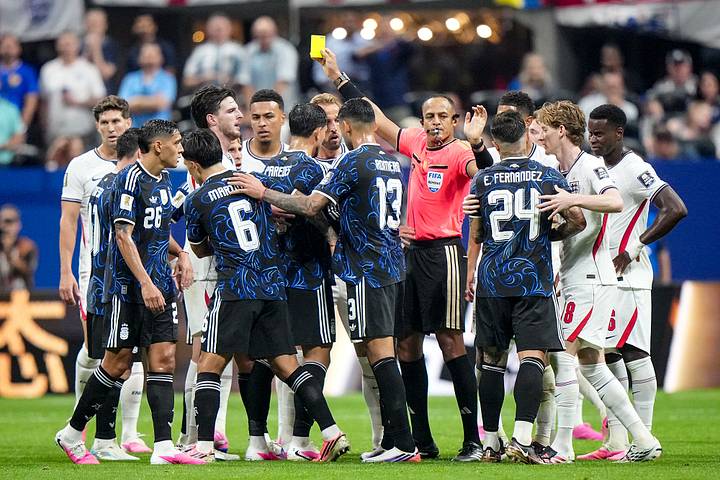
The hostility between both nations dominated pre-match discussion and it didn't take long for it to be forcefully expressed on the pitch—well beyond both sets of supporters booing each other's national anthems.
From the opening whistle, Argentina's defensive game plan was crystal clear: destroy. It was as though every Argentine player was following the age-old South American philosophy that says, "the ball can go past me or the player can go past me, but never both." Consequently, the match descended into an all-out battle reminiscent of a high-stakes Copa Libertadores fixture.
England appeared the sharper side—if only marginally—in the early exchanges. Gradually, however, La Albiceleste managed to significantly slow the tempo through persistent fouling, and the Three Lions eventually accepted the physical contest and began scrapping in the trenches.
By the time the first half concluded, there had been just three combined shots and not a single one on target. Meanwhile, Argentina had committed 12 fouls compared to England's seven.
This "Copa Libertadores blueprint" played perfectly into the strengths of one of Argentina's key figures: Leandro Paredes. The Boca Juniors midfielder excels in this environment, tasked with almost single-handedly neutralizing the brilliant Jude Bellingham—and Harry Kane whenever he dropped deep to get on the ball. He unsettled the Real Madrid star with persistent nudges, shoves, and the occasional late challenge.
Argentina's Fatal Flaw Exposed
Argentina's 2026 World Cup squad is nearly identical to the group that claimed the nation's third star in Qatar. While not entirely unexpected, the failure to find an upgrade at right back was widely flagged as a potential vulnerability. Against England, Nahuel Molina confirmed those concerns.
Scaloni spent the entire tournament alternating between River Plate's Gonzalo Montiel and Molina—a player who managed just 13 appearances in La Liga for Atlético Madrid last season. Regardless of which option Scaloni chose, the starter tended to struggle while the substitute performed better. Argentina fans even began creating memes about the dilemma.
Molina was handed the start on Wednesday and five minutes before the hour, he committed a costly error that laid bare Argentina's critical weakness. Molina was caught ball-watching, completely losing track of his man as Gordon strolled in behind him to meet Morgan Rogers's cross and tap England in front. A truly inexcusable defensive lapse from the Atlético Madrid right back.
La Albiceleste found a way to recover from Molina's costly blunder, but it's evident that in the final, Spain will look to exploit Argentina's fullbacks—and Scaloni's vulnerable right flank in particular.
England Opened the Door, Lionel Messi Took Over
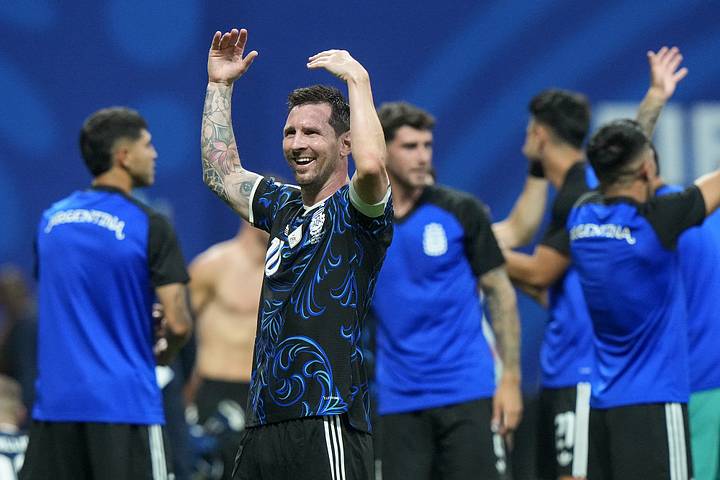
As remarkable as it sounds, conceding first may have been the best thing to happen to Argentina. Tuchel, astonishingly, decided one goal was sufficient and immediately retreated into a deep defensive block, making substitutions that effectively invited Argentina's pressure.
That gamble worked for Tuchel's England against Mexico, but Argentina is an entirely different proposition given the wealth of options and world-class talent they possess from midfield forward. None more influential than Messi.
Messi seized control of the game in the second half and began orchestrating Argentina's response, whipping in crosses that could easily have produced an earlier equalizer. Eventually, Messi found Fernández near the edge of the area and the Chelsea midfielder unleashed a thunderbolt—an action strikingly similar to one where he struck the post against the Netherlands at Qatar 2022.
Once Fernández equalized with five minutes remaining, it felt as though the stage was perfectly set for Argentina to seal it before extra time—and Messi duly delivered.
As if he hadn't just turned 39 days earlier, Messi wriggled past two defenders on the flank and floated a perfect cross for Martínez to head home the winner in the second minute of stoppage time. Messi channeled his inner 19-year-old winger from his first World Cup in 2006, and that's precisely what it took for Argentina to complete yet another miraculous turnaround.
Tuchel's defensive mindset will undoubtedly draw sharp yet justified criticism. Nevertheless, when Argentina was handed the opportunity, it was Messi, once again, who led another stunning comeback.
Enable functional cookies to see this feature.
Two assists, the most chances created (four), the most successful dribbles (nine)—against England in a World Cup semifinal. Yet another truly legendary display from the greatest player of all time.
Messi will appear in his third career World Cup final, and even at this point in his career, he remains the single greatest difference-maker for the most successful Argentina side in the nation's history.