
 ไทย
ไทย English
 中國人
中國人
FIFA president Gianni Infantino has acknowledged that the prospect of a 64-team World Cup will be "examined," with further tournament expansion potentially in the pipeline ahead of 2030.
This summer's competition was expanded to accommodate 48 teams, up from 32—a format that was in place from 1998 through to 2022.
The change resulted in 12 groups of four teams, with the top two from each advancing to the knockout rounds, alongside the eight best third-placed sides.
While the expansion has been welcomed by some for its inclusivity, particularly for nations outside of Europe and South America, the more complex format produced a group stage that required three rounds of matches to eliminate just one-third of all competing teams.
Critics have also argued that the overall quality of the tournament has been watered down by the growing number of participants, while additional strain is being placed on players already burdened by congested fixture schedules.
Infantino Calls Expanded World Cup a 'Huge Success'
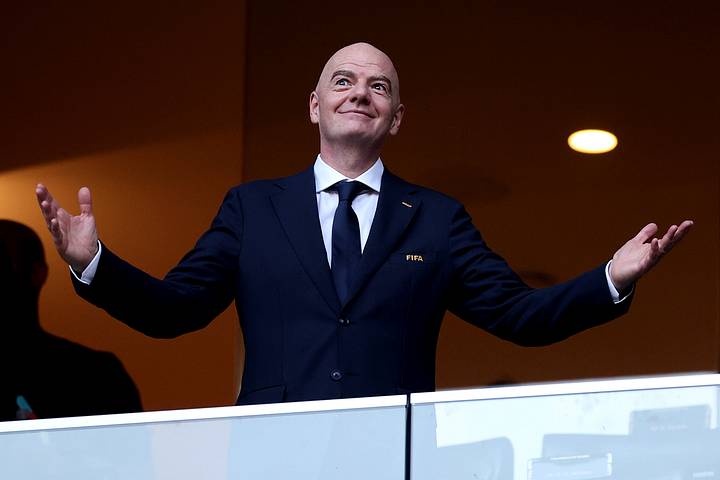
Speaking to Swiss outlet Bluewin, Infantino praised the revamped tournament.
"It's been a huge success with 48 teams," he said. "Every team performed at a high level. Teams from every continent scored goals and picked up at least one point. Nine out of 10 African teams reached the knockout stage. At the last World Cup, there were only five African teams. That really highlights how vital it is to include all teams—to give them the opportunity to compete."
On whether future tournaments could be expanded to 64 nations, Infantino embraced the idea, saying: "That's definitely something that will be examined and discussed in the relevant committees after this World Cup.
"When organizing a World Cup, it's important to organize it for the entire world—not just Europe and South America, but truly every corner of the globe. Every nation should be able to dream of taking part in the World Cup. You can see that the quality of the teams is incredibly high—and it continues to rise, everywhere in the world.
"If you don't give smaller nations a chance to participate in the World Cup, they'll have no motivation to keep developing."
Altruism or Money-Making Scheme?
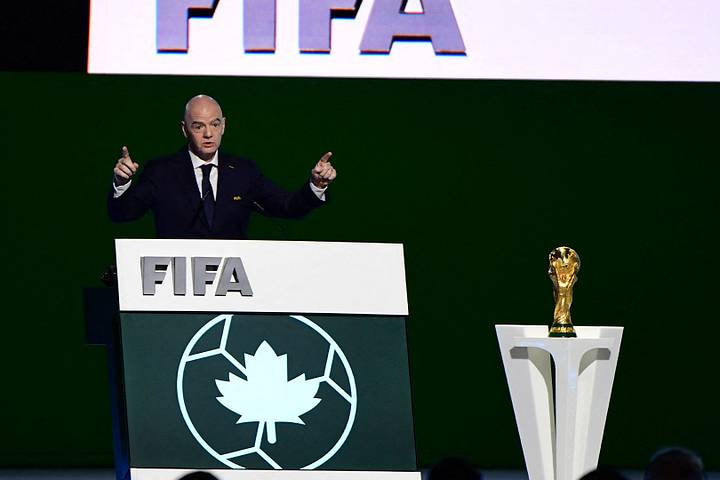
Infantino may speak passionately about uniting the world through soccer and giving every team a chance to feature at the tournament, but a larger World Cup also translates to greater revenue.
FIFA has forecast record revenue levels across its current commercial cycle (2023 to 2026), with the World Cup serving as a central driver of that growth.
Forbes reports that FIFA anticipates generating as much as $9 billion from activities in 2026 alone, surpassing the $7.6 billion in total revenue from the previous four-year cycle that included the 2022 World Cup in Qatar.
According to projections in FIFA's 2024 annual report, that $9 billion includes $3.9 billion from broadcasting rights and over $3 billion from hospitality rights and ticket sales.
Logically, a further expanded tournament would only push those already record-breaking revenue figures even higher.
What Will the 2030 World Cup Look Like?
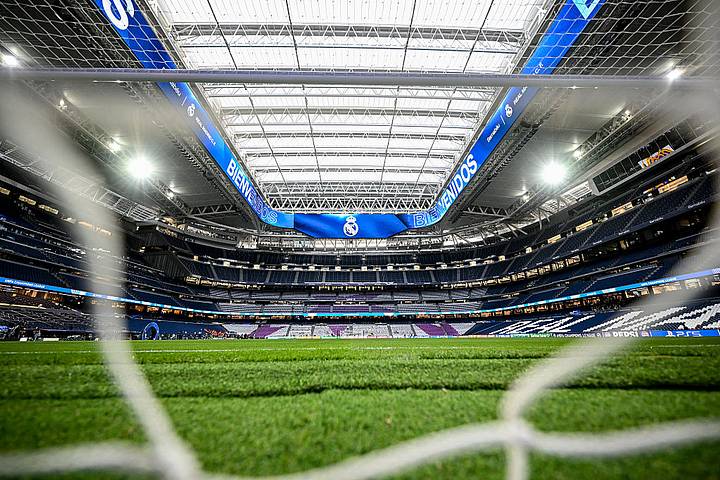
Whether the next World Cup, scheduled for 2030, will undergo another expansion remains to be seen.
What is confirmed is that the 2030 tournament will be hosted across six countries as part of plans to celebrate the competition's 100th anniversary. 1930 hosts Uruguay will stage one match, as will Argentina and Paraguay at the tournament's opening, with the remaining fixtures divided between Morocco, Portugal and Spain—with the final set to be held at Real Madrid's Santiago Bernabéu stadium.
The Athletic reported last year that in 2025, FIFA had already held discussions about expanding that tournament to 64 teams.
UEFA president Aleksander Ceferin is among those opposed to a 64-team format, having previously described FIFA's proposal as a "bad idea."
Enable functional cookies to see this feature.
"It's not a good idea for our qualifiers either," he told reporters at the UEFA congress last year.
A 64-team tournament would mean more than a quarter of FIFA's 210 men's international sides would qualify, and would require significant changes to several regional qualification processes, while others would likely become largely redundant.