
 ไทย
ไทย English
 中國人
中國人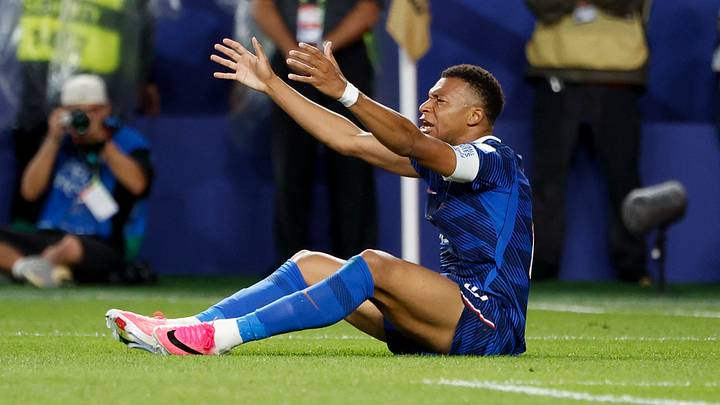
FIFA's decision to mandate hydration breaks in every half of play at this summer's World Cup has clearly sparked a divided reaction among fans and officials alike.
The idea itself isn't new—hydration breaks were first used at the 2014 World Cup—but this year marks the first time they've been made obligatory in every half, regardless of weather conditions. FIFA has faced considerable backlash over the policy, with supporters becoming increasingly outspoken in their displeasure as the tournament has moved forward.
Fans attending France's 3–0 victory over Iraq on Monday witnessed a hydration break during the opening half, though the second half became the first of the tournament not to feature a mid-half stoppage.
Why Hydration Break Was Canceled
The use of hydration breaks in matches played under mild temperatures or inside climate-controlled venues has already drawn widespread mockery this summer, but France's clash with Iraq pushed things to an entirely new level.
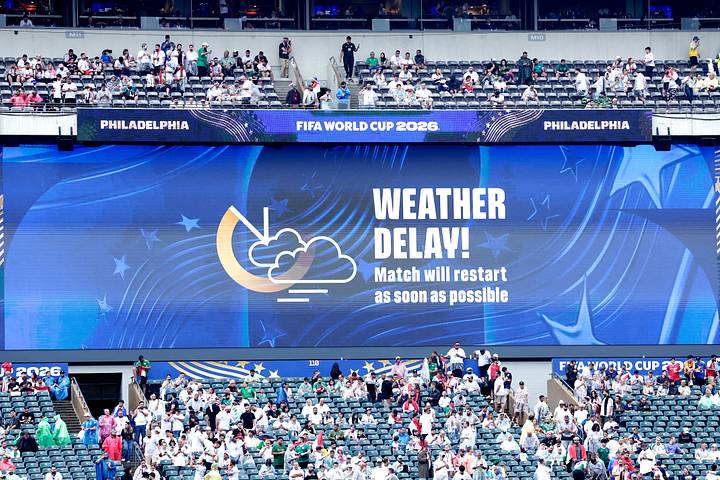
The second half was held up for two hours due to a severe thunderstorm, with heavy rainfall making the pitch unplayable and lightning alerts prompting officials to urge spectators to vacate their seats.
Once play finally resumed, the conditions clearly made a hydration break unnecessary, and the unplanned two-hour stoppage ultimately led FIFA to scrap the scheduled break in the second half.
"No hydration break in the second half," a FIFA spokesperson confirmed in a brief statement.
What's Wrong With Hydration Breaks?
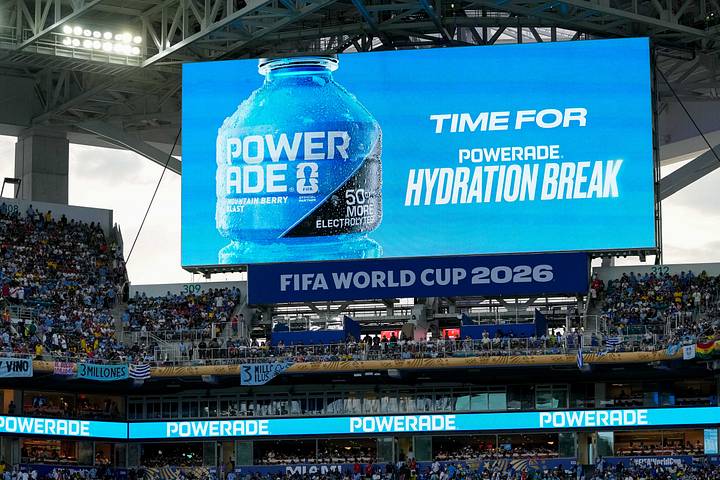
The idea of dividing each half into two segments—effectively turning the game into four quarters—feels foreign to football supporters and draws comparisons to American sports formats like the NFL and NBA. Many traditionalists have objected on those grounds alone, but the discontent surrounding hydration breaks goes much deeper than that.
Broadcasters have been granted permission to air commercials during the stoppages. While some have committed to staying with the live action, those choosing to run advertisements have reinforced the perception that this World Cup is primarily driven by commercial interests—especially when broadcasters miss the resumption of play to complete a commercial break.
As for the matches themselves, not only have stadium spectators grown frustrated with the interruptions, but the stoppages have repeatedly disrupted the flow of games, giving struggling teams a chance to regroup while deflating the momentum of the side in control.
"I think that it interrupts and changes the identity of a football match much more than I thought," England manager Thomas Tuchel admitted. "Of course, I've had hydration breaks before when it was really hot and necessary, but those were shorter and only occurred in a few matches.

"Now, from a standpoint of fairness to every team, it breaks the match almost into four quarters. I think it changes the characteristics of the match more than I expected.
"As a coach, I appreciate the chance to address the team and bring them together, but on the whole, I prefer football when each half flows continuously. It builds momentum. It's difficult to establish and sustain momentum when breaks keep interrupting play.
SI answers is our AI answer engine trained on human-created content.
"The contest between players on the pitch unfolding over an extended, uninterrupted stretch is what gives the beautiful game its character, and these breaks detract from that. But in terms of fairness, naturally, it makes sense that all teams receive the same treatment."