
 ไทย
ไทย English
 中國人
中國人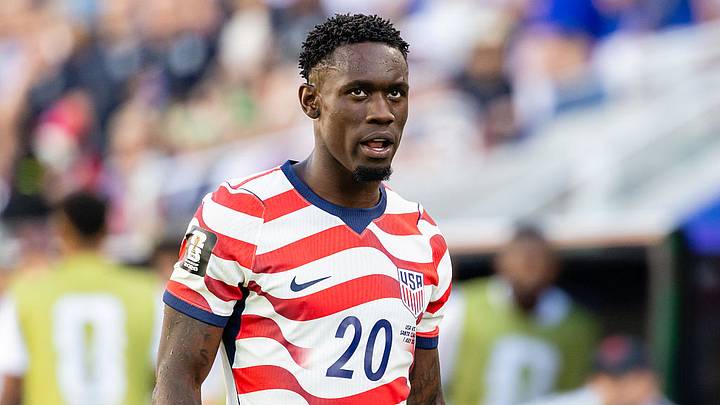
Belgian fullback Thomas Meunier has reflected on the Folarin Balogun red card controversy from this summer's World Cup, revealing that the incident led to "everyone" rooting for the U.S. men's national team to be knocked out in the round of 16.
Balogun, who enjoyed a standout summer spearheading Mauricio Pochettino's attack, was controversially dismissed during the Stars and Stripes' round of 32 victory against Bosnia and Herzegovina. The red card carried an automatic suspension for the striker until FIFA made the extraordinary decision to lift his ban, clearing Balogun to feature against Belgium in the following round.
FIFA president Gianni Infantino faced intense criticism over the ruling, particularly after U.S. President Donald Trump confirmed he had personally urged the sport's governing body to reconsider the incident. Belgium publicly voiced its opposition to the decision—and continues to do so months after claiming a commanding 4–1 win over the USMNT in the round of 16.
"Federations are political, the financial aspect, everything is linked, it's a bit like a government," Meunier told The Athletic. "As long as the politicians take the best decision for the people, it's not a problem. But, if the politics are—I'm not going to say 'corrupted,' but goes against sport—then it's dangerous.
"And that's what we had with Balogun. The consequences of their defeat went on him, but he didn't ask for anything. This was too much, too much on him. But after that incident, this conflict, everyone wanted us to beat America, because of that situation. Everyone wanted them to be eliminated."
The widespread perception was that the USMNT had received preferential treatment owing to President Trump's involvement and his relationship with Infantino. Pochettino's side swiftly transformed from sympathetic underdogs into a heavily scrutinized host nation with a target on their backs—and they crumbled under the weight of that pressure.
Balogun Scandal Just Another Stain on the 2026 World Cup
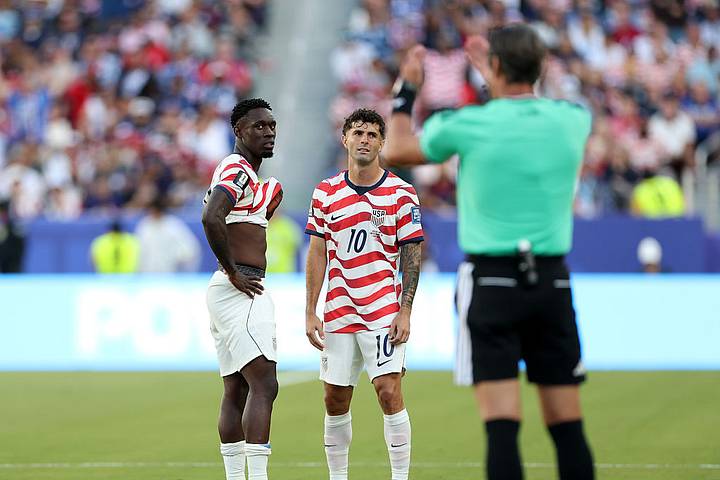
Even before FIFA lifted Balogun's suspension, the 2026 World Cup was already mired in controversy. Exorbitant ticket prices, inflated transportation costs, President Trump's tariff threats aimed at European nations, and the U.S.'s military conflict with Iran were among the many issues diverting attention away from the sport itself.
Meunier echoed a sentiment shared by many regarding this summer's flagship tournament when addressing the Balogun scandal: "I think this event was a reflection of the whole World Cup—led by capitalism, entertainment, money. This World Cup was the dark side of traditional football."
Nevertheless, FIFA considered the tournament an enormous success, as it became the largest and most lucrative World Cup in history. Unlike the organizational difficulties that plagued the 2024 Copa América and the 2025 Club World Cup, the United States performed admirably as a host nation.
"The positive is that we have seen America is a sports country," Meunier said, "and they have the infrastructure to organize a World Cup every year.
"But as long as it stays about football and nothing more. The problem is that football was not the first priority at World Cup 2026."
The World Cup Is Still Haunting Infantino, Balogun

Despite FIFA's efforts to generate positive headlines in the wake of the World Cup, Infantino finds himself in a more precarious position than ever. The dust had barely settled following Spain's victory over Argentina in the final before the 56-year-old's plans to sell stakes in future World Cup commercial rights to private investors were leaked to the public.
A fierce backlash ensued, compelling Infantino to scrap his proposals. Yet that did little to silence federations and prominent figures across the sport who are calling for a change in leadership.
The Royal Belgian Football Association joined the chorus of critics on Monday, withdrawing its backing for Infantino and calling for the Balogun incident to be formally reviewed at the next FIFA Council meeting.
"Two months after the events, our questions remain unanswered," RBFA president Pascale van Damme said.
Balogun netted three goals across four appearances at the 2026 World Cup and rapidly became a recognizable name in the United States and beyond. Yet his name is now more closely associated with Infantino and President Trump than with his performances on the field.
And it appears unlikely that he will be able to separate himself from the controversy anytime soon.