
 ไทย
ไทย English
 中國人
中國人
Following France's victory over Senegal at MetLife Stadium, midfielder Adrien Rabiot voiced his frustration with the playing surface.
"The pitch ... I'm not even sure you can call it that," the AC Milan star said. "It felt more like an artificial surface—pretty hard and quite stiff."
France head coach Didier Deschamps shared his player's sentiment, describing it as a "special surface." He added: "I think there's probably concrete underneath, with very short fibers."
France is far from the only side to express concerns. When Brazil kicked off its 2026 tournament against Morocco at the same stadium, Vinicius Junior noted how the heat "dries out" the pitch, which in turn affects the team's ability to "get into our rhythm."
Pitches have been regularly watered at halftime to address any dryness, though a faulty sprinkler at Gillette Stadium during Norway's victory over Iraq on Tuesday meant all sprinklers had to be shut off during the halftime watering to avoid further damage. Ground crew were then required to clear the excess water from the affected area before play could resume.



Moisture levels are monitored daily at MetLife Stadium, alongside surface firmness and ball roll, as part of FIFA's commitment to ensuring playing surfaces remain consistent throughout the tournament and meet required standards.
Following last summer's Club World Cup—where the final was held at MetLife Stadium—Chelsea captain Reece James remarked that the pitches he encountered in the United States during that competition were "not so good" compared to what he's accustomed to in Europe. "There's astro underneath and maybe grass on top. It's not the best for the body, for the joints, for the muscles."
Why MetLife Stadium's Pitch Needed to be Changed
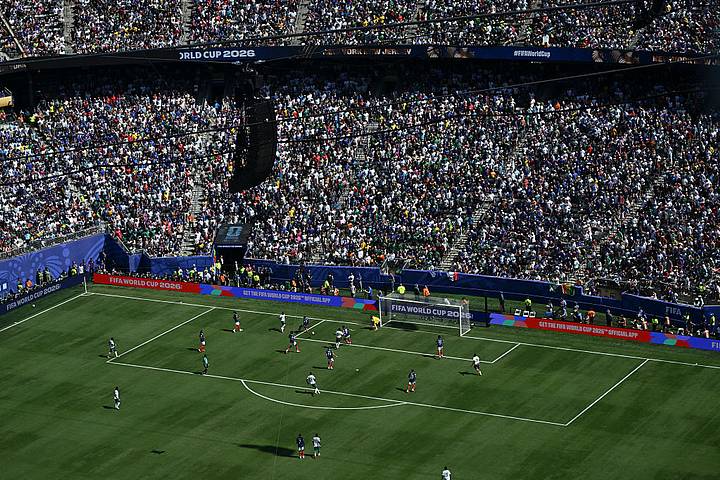
The current playing surface at MetLife Stadium was installed specifically for the World Cup. In a venue that typically features a synthetic surface, a temporary grass pitch has been laid on top—involving far more sophisticated technology than it might suggest—in order to comply with FIFA's tournament requirements.
All 11 U.S. stadiums hosting World Cup matches primarily serve NFL teams, and seven—MetLife Stadium among them—normally feature synthetic turf. Back in 2015, when Canada hosted the Women's World Cup, nearly 50 players filed a gender discrimination lawsuit against FIFA over being required to compete on artificial surfaces.
It was defended by then secretary general Jérôme Valcke on the grounds that "sooner rather than later the men's World Cup will also be played on artificial pitches." However, FIFA later instructed prospective hosts bidding for the 2023 Women's World Cup to exclude synthetic turf pitches, and contrary to Valcke's prediction made over a decade ago, no such shift has occurred in the men's tournament—even in a co-hosting nation where most surfaces are ordinarily artificial.
Today, FIFA requires that all World Cup matches—for both men and women—be played exclusively on natural grass.
European Teams More Sensitive to Climate, Pitch Differences
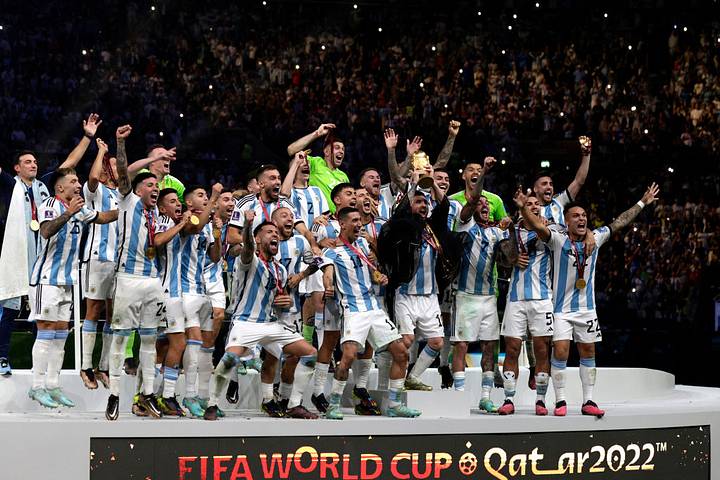
European teams don't always perform well away from home. It wasn't until 2010—in South Africa—that a European nation first claimed a World Cup title outside its own continent. Spain took that honor, with Germany following suit in Brazil four years later.
In every other World Cup staged outside Europe, whether held across the Americas or in Asia, a South American nation has ultimately lifted the trophy.
Both of Uruguay's World Cup triumphs (1930, 1950) came on South American soil. Brazil secured four (1962, 1970, 1994, 2002) of its five titles outside Europe—with 1958 in Sweden being the sole exception—while Argentina claimed all three of its championships in South America (1978), Central America (1986), and Asia (2022).