
 ไทย
ไทย English
 中國人
中國人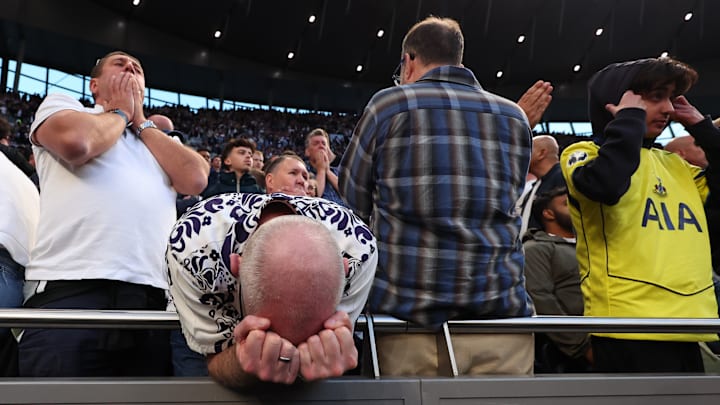
At the beginning of last season, Tottenham Hotspur were rated by England's top soccer analytics organization as the "best managed club" throughout the country's entire football structure. Less than two years on, they find themselves on the brink of their first relegation in nearly half a century.
The possibility of this catastrophic collapse is etched across the faces of Tottenham supporters (and Xavi Simons) after every poor result nudges them closer to the drop. Yet, the most tangible consequence of relegation will be laid out in stark financial terms across the club's balance sheets.
Top financial analysts in the industry estimate that Spurs could earn between $311–372 million (£230–275 million) less in the Championship compared to this current season, a jaw-dropping set of numbers for a club once celebrated as a model of financial efficiency. It has been a sharp—and costly—decline.
Breakdown of Tottenham's Estimated Revenue Drop

Pillar | 2025–26 in Premier League | 2026–27 in Championship |
|---|---|---|
League Broadcast | $173 million | $73 million |
Champions League Broadcast | $96 million | $0 |
Matchday | $177 million | $107 million |
Commercial | $377 million | $303 million |
Total | $823 million | $483 million |
Data estimated by BBC Sport and Swiss Ramble. Converted from £ to $ at current rates.
According to the most recently published accounts, Tottenham recorded the ninth highest revenue of any soccer club in the world. That figure is only expected to grow once this season's numbers are examined—due in large part to the financial windfall generated by their run to the Champions League round of 16. That simply gives Spurs a greater height from which to fall.
The club is set to absorb the heaviest blow in broadcast revenue, with the Championship unable to come close to matching the enormous television riches available in the Premier League.
Tottenham would receive parachute payments distributed to relegated clubs, worth approximately $61 million, but that represents a fraction of the income they have been collecting for years. EFL central distribution amounts to a modest $6.8 million, while Spurs are on course to earn $178 million from Premier League television rights alone this season.
As one of the "Big Five" clubs that drove the creation of the Premier League in 1992 to unlock these revenue streams, this is an especially painful reality to confront.
Commercial revenue is also expected to decline due to clauses embedded in agreements with partners such as Nike and AIA, who would reasonably expect to pay less to sponsor a club now playing in the Championship. The reduction could be in the vicinity of 20%.
Supporters will also anticipate some form of price relief. A ticket to watch Spurs face Arsenal in the Premier League can hardly be priced the same as a fixture against League One champions Lincoln City. What pricing structure Tottenham ultimately adopts remains to be seen, but total matchday revenue could decline by roughly 40%.
"I think it's going to be somewhere around £250 million to £275 million compared to this current season," soccer finance expert Kieran Maguire forecast on The Sports Agent podcast earlier this month. "That takes into account the fact that Spurs have the second highest yield in terms of how much they generate per supporter, per game. It's a very sophisticated operation they run ... And then, of course, there won't be any European football next season."
Over the past two seasons, relegated clubs have experienced an average revenue decline of 41%, according to Swiss Ramble. Yet, even accounting for this anticipated drop, Spurs would still comfortably shatter the record for revenue generated by any Championship club, easily eclipsing the $185 million accumulated by Leeds United during the 2024–25 campaign.
Costs Cut in the Championship

If Spurs are facing a shortfall of roughly $340 million, they will need to identify ways to recover some of those losses. Tottenham already posted significant deficits last year and while the risk of breaching financial regulations is not imminent—many of these losses fall outside the scope of these flexible rules—certain costs will inevitably need to be reduced.
Multiple reports have suggested that one of Daniel Levy's final acts as executive chairman was to include a 50% wage reduction clause in every player's contract in the event of relegation. Having finished 17th in the 2024–25 season, Spurs felt the need to protect themselves. In the view of sports finance expert Professor Rob Wilson, it did not go far enough.
"Some other clubs could have 90% relegation clauses or arrangements for players to leave," Wilson told The i. "But because Spurs have been relatively stable in the Premier League, they don't have the clause they would need to properly survive going down.
"It's nowhere near sufficient. You need a minimum 75% relegation clause in order to balance your books when you drop down."
In the event of demotion, Tottenham's wage bill would be reduced from approximately $374 million to $187 million. However, operational costs are expected to remain elevated—the expense of staging a Championship match is broadly comparable to a Premier League one—even without the added burden of European fixtures.
Players will almost certainly need to be sold to bridge the remaining financial gap. The difficulty is that every club is aware of this, leaving Spurs in a weakened negotiating position heading into each transfer discussion.