
 ไทย
 English
 中國人
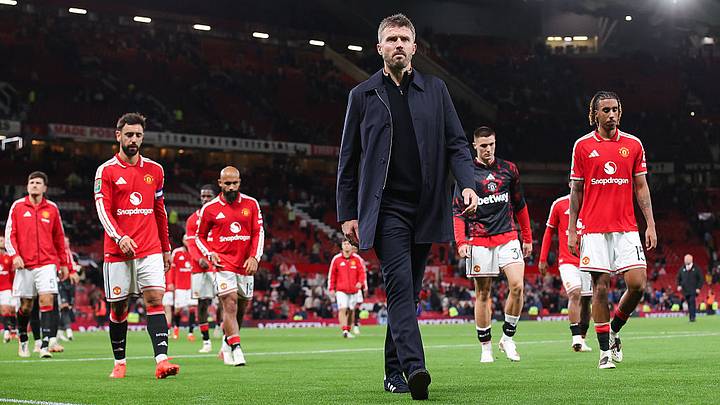
Manchester United may be enduring a run of six straight matches without a victory, but that's still far from threatening the club's longest such sequence.
To find that record, you have to travel back nearly a century to 1930. The world looked vastly different then. World War I remained a raw wound in collective memory, the stock market had collapsed and the Great Depression was underway, though the economy wouldn't reach its lowest point for another two years, while John Steinbeck was still seven years from publishing Of Mice and Men.
In English soccer, Manchester United was far from the dominant name. The club had scaled the summit twice under manager Ernest Mangnall, in 1907–08 and 1910–11, but faded as a force almost as rapidly as they had risen.
Mangnall departed for Manchester City in 1912 and United were flirting with relegation from the top flight by the time competitive action was suspended indefinitely for the war at the close of the 1914–15 season.
Record-Breaking Slump Years in the Making
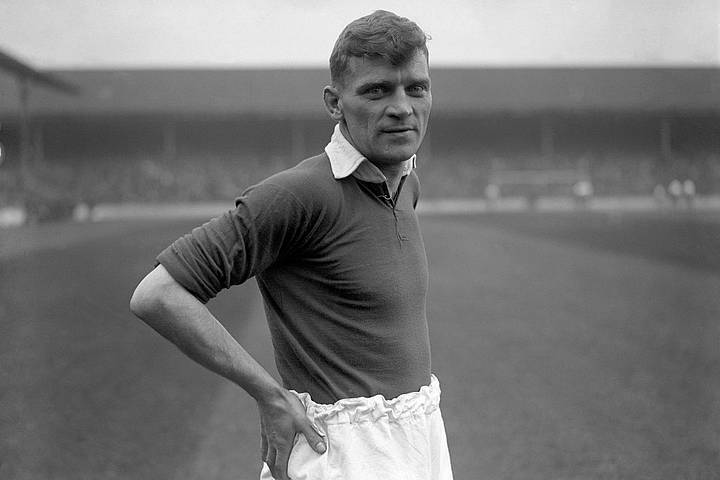
When soccer resumed after the war that was meant to end all wars but achieved no such thing, United finished 12th, 13th and then 22nd, suffering relegation in 1921–22. A pattern was clearly forming that would eventually allow the club to go 16 consecutive matches without claiming a single win.
The club returned to the First Division—the name of English soccer's top tier for over 100 years before the Premier League era began in 1992—after three seasons in the second tier, yet continued to struggle against the powerhouses of the era: Huddersfield Town, Sunderland, Everton and a rising force called Arsenal.
Manager John Chapman was mysteriously suspended by the Football Association in 1926 for "improper conduct," with no further explanation provided. Lal Hilditch was hastily installed as player-manager—Ryan Giggs in 2014 being the only other instance of that in the club's history. Herbert Bamlett, a former referee and widely regarded as one of United's worst-ever managers, became the permanent appointment, and matters steadily deteriorated.
In 1927, principal owner John Henry Davies—the man who had helped finance the rescue of Newton Heath from bankruptcy in 1902 before renaming the club—passed away. His health had been declining for years, and his death pushed United to the financial edge once more.
United wrapped up the 1929–30 season in 17th place out of 22, just two points above the relegation zone. The campaign ended with four matches without a win—relatively unremarkable given the team had already suffered six consecutive defeats during September and October.
The winless run then gathered momentum as 1930–31 got underway. United dropped the opening 12 matches of that campaign, failing to earn a single point until Nov. 1, when the streak finally ended at 16 games with a 2-0 home win over Birmingham City at Old Trafford.
Man Utd's 16-Match Winless Streak in 1930
Season | Date | Result |
|---|---|---|
1929–30 | Apr. 19 | Man Utd 3–3 Everton |
1929–30 | Apr. 22 | Huddersfield 2–2 Man Utd |
1929–30 | Apr. 26 | Leeds 3–1 Man Utd |
1929–30 | May 3 | Man Utd 1–5 Sheffield Utd |
1930–31 | Aug. 30 | Man Utd 3–4 Aston Villa |
1930–31 | Sept. 3 | Middlesbrough 3–1 Man Utd |
1930–31 | Sept. 6 | Chelsea 6–2 Man Utd |
1930–31 | Sept. 10 | Man Utd 0–6 Huddersfield |
1930–31 | Sept. 13 | Man Utd 4–7 Newcastle |
1930–31 | Sept. 15 | Huddersfield 3–0 Man Utd |
1930–31 | Sept. 20 | Sheffield Wed. 3–0 Man Utd |
1930–31 | Sept. 27 | Man Utd 0–2 Grimsby |
1930–31 | Oct. 4 | Man City 4–1 Man Utd |
1930–31 | Oct. 11 | West Ham 5–1 Man Utd |
1930–31 | Oct. 18 | Man Utd 1–2 Arsenal |
1930–31 | Oct. 25 | Portsmouth 4–1 Man Utd |
Fan Power in Soccer Existed a Century Ago
Supporters had already voiced their discontent. The Manchester United Supporters' Club presented a five-point ultimatum to the board, calling for a new manager to replace Bamlett, an overhauled scouting network, fresh signings, five new shareholders on the board and the issuance of new shares to generate funds. Those demands were dismissed, prompting boycott threats ahead of Arsenal's visit—just months before their first league title—to Old Trafford on Oct. 18, 1930.
The boycott never fully materialized, with 23,406 attending to make it the best-supported home fixture of the season. Yet apathy had firmly taken hold, as attendances nosedived afterward and, by May 1931, fewer than 4,000 witnessed the club's final match as a top-flight side for five years.
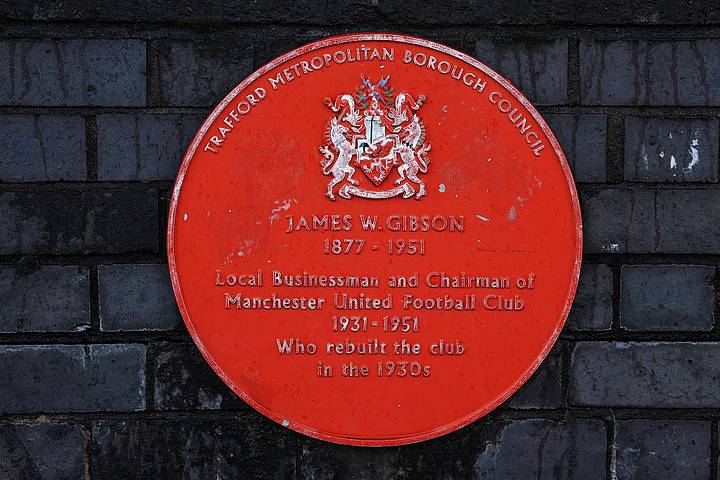
Financially, United were rescued when James W. Gibson assumed control following relegation in 1931, though the on-field struggles didn't immediately cease, with the club coming dangerously close to dropping into the third tier in 1933–34. A promotion, another relegation and a further promotion had United back in the top flight by 1938, with the club adopting a fresh philosophy by establishing the Manchester United Junior Athletic Club—a forerunner to the modern academy—and not fully stabilizing until Matt Busby was appointed manager at the conclusion of World War Two.
Never since has the club gone 16 consecutive matches without a win.