
 ไทย
ไทย English
 中國人
中國人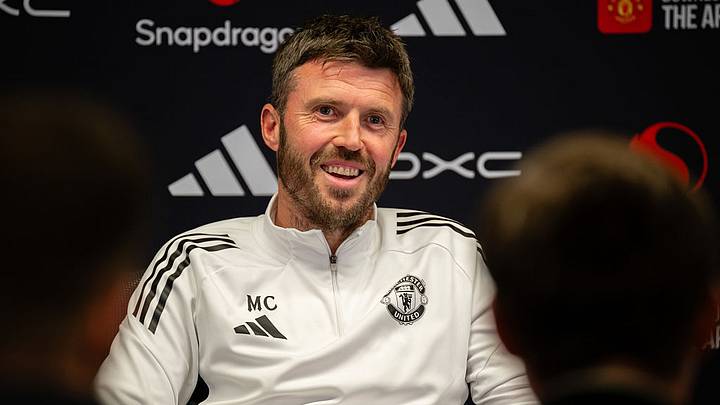
Manchester United stopped short of spelling it out, but Michael Carrick's contract extension through the end of the 2027–28 season signals that he is the man the club has chosen to deliver 'Project 150'.
The initiative was unveiled by chief executive Omar Berrada in the opening weeks of last season — a vision to claim the Premier League title in time for, or ahead of, the club's 150th anniversary marking its 1878 founding at a railway depot in north-east Manchester. The same ambition extends to the women's side, which is chasing its first-ever WSL championship.
Even after United slipped to 15th in the Premier League last season, Berrada held firm on the aspiration. "Why not aim for it?" he told popular fanzine United We Stand in the summer of 2025. "Why not do everything in our power? I firmly believe we can do it."
Much has shifted since the project was first outlined, with United swiftly parting ways with Erik ten Hag before throwing their support behind Ruben Amorim. Yet Carrick's trial run suggests he is already further along the path to achieving that ultimate objective than either of his two predecessors.
Working with the very same squad that Amorim had repeatedly struggled to get consistent performances from, Carrick has accumulated more points across his opening 16 matches than any other Premier League side over the same stretch. It has prompted some United supporters to wonder whether a title push this season could have been on the cards had the switch happened earlier. The team's points-per-game average under Carrick (2.25) projects to 85.5 across a full campaign — a figure that, for context, would surpass champions Arsenal's maximum possible tally of 85, placing the Red Devils in a theoretical contention.
With that upward trajectory and a marked turnaround from a 51-year low just 12 months prior, United are clearly moving in the right direction. But the club must seize the moment while conditions are favorable.
Michael Carrick, 'United DNA'
Carrick grew up in the suburbs of Newcastle and launched his professional career in east London, yet few individuals can claim to embody 'Manchester United' as deeply as he does.
Upon the announcement of his permanent appointment, Carrick spoke with pride about how he "felt the magic of Manchester United" from the very first moment he walked through the doors in 2006.
He reached the pinnacle of the game within his early seasons at the club, featuring in a once-in-a-generation side that claimed three consecutive Premier League titles, lifted the Champions League trophy and appeared in two additional finals. He later earned the club's Players' Player of the Year award — voted for by his teammates — during the 'Van Persie' season, went on to wear the captain's armband, made the last of his 464 appearances, and transitioned into a coaching role.
By the time Carrick departed in December 2021 — following a three-game stint as interim manager — to begin his journey as a head coach, he had spent over 15 years at Old Trafford and experienced the club from virtually every possible vantage point.
It's tempting to downplay the significance of truly 'knowing' a club — and many skeptics have done exactly that — but it genuinely matters. There's no escaping it. "I know what it takes and hopefully I can pass some of that experience on to the players so they can draw from it, and we can keep pushing for more," Carrick told club media when his new role and contract were confirmed.
Ole Gunnar Solskjær, ridiculed for his struggles at Cardiff City beforehand and his ill-fated Beşiktaş stint since, delivered better Premier League finishes at United than José Mourinho and Louis van Gaal — two managers widely regarded as defining figures of their era. Carrick fell short of his aims during his sole prior managerial post at Middlesbrough, but something has clicked at Old Trafford. Pep Guardiola and Zinedine Zidane had each managed only at B-team level — at Barcelona and Real Madrid respectively — before going on to achieve extraordinary success with the first team. Pedigree and history carry weight.
Overly complex tactics have rarely served Manchester United well, nor has a defensive-minded philosophy. Carrick has drawn on what he learned as a player, with those now under his management praising him for stripping things back to basics and producing results in a style that aligns with the United identity.
Recruitment Is Critical
When Berrada reaffirmed 'Project 150' eleven months ago, he noted that the club would have "two or three summer transfer windows" to work with.
The first of those has already passed. And while the arrivals — Matheus Cunha, Bryan Mbeumo, Benjamin Šeško, and Senne Lammens — were originally recruited with Ruben Amorim in mind, all four have made a meaningfully positive impact under Carrick's guidance.
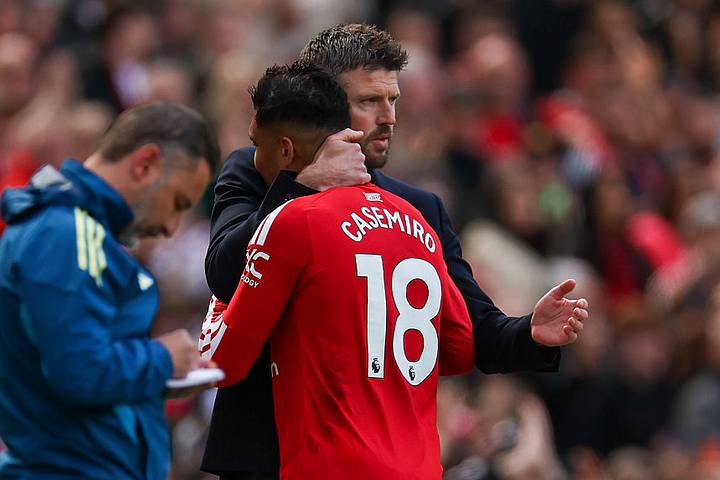
United will need more of the same, particularly given that central midfield — already flagged as a problem area — is set to lose Casemiro. With a scenario emerging in which Kobbie Mainoo could be the only senior midfielder remaining at the club, as many as three new additions in that single position may be required. Beyond that, a left winger, a left back, and a backup goalkeeper are also on the wish list.
The club faces a significantly heavier fixture schedule next season — including eight Champions League group-stage matches alone — meaning the priority is building a squad capable of handling the increased workload, not simply upgrading the first-choice eleven.