
 ไทย
ไทย English
 中國人
中國人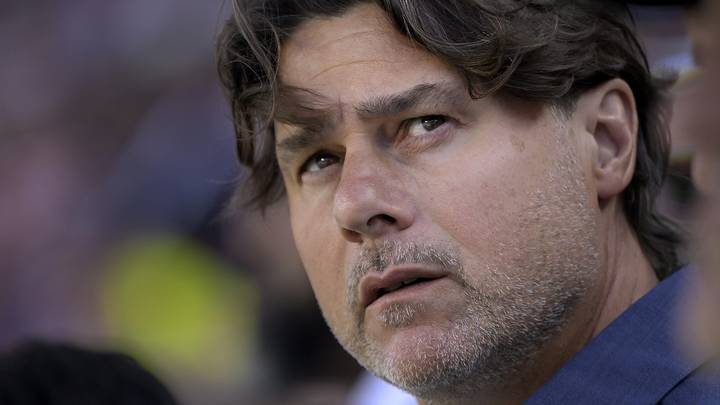
SANTA CLARA, Calif. — Forget Russell Crowe — the most fascinating comparison surrounding Mauricio Pochettino this summer is the one with "La Malinche."
The multilingual Nahua woman who bore that nickname helped Spanish explorers dismantle the Aztec Empire in the 1500s. She revealed the secrets of an unfamiliar world to conquistador Hernán Cortés; Pochettino has done something similar, unlocking the mysteries of the beautiful game for the United States.
For once at this World Cup, there was no storm cloud looming over the U.S. men's national team head coach. No air conditioning units were too noisy, no questions too strange — even FIFA's press officer butchering his name only drew a wry smile. Pochettino was too "proud" of what he had just seen to let any minor irritations dampen his spirits.
It wasn't simply that the USMNT had defeated Bosnia and Herzegovina 2–0 on Wednesday night, securing the team's second-ever knockout stage victory at a men's World Cup — it was the manner of the performance. "It's not only the victory, it's the way that we earned the victory," Pochettino noted, "that is so important."
Just as they have throughout the tournament, the Stars and Stripes marched into the round of 16 playing unmistakably like a Mauricio Pochettino side. It was telling that the proud South American dismissed any notion of having gone even slightly American. "I am 200% Argentine," he declared, repeating it three times as if to ensure his passport remained valid. But that's precisely the point: Pochettino hasn't adapted to fit his new environment — he has reshaped the team in his own likeness.
USMNT Respond to Pochettino's Rallying Cry
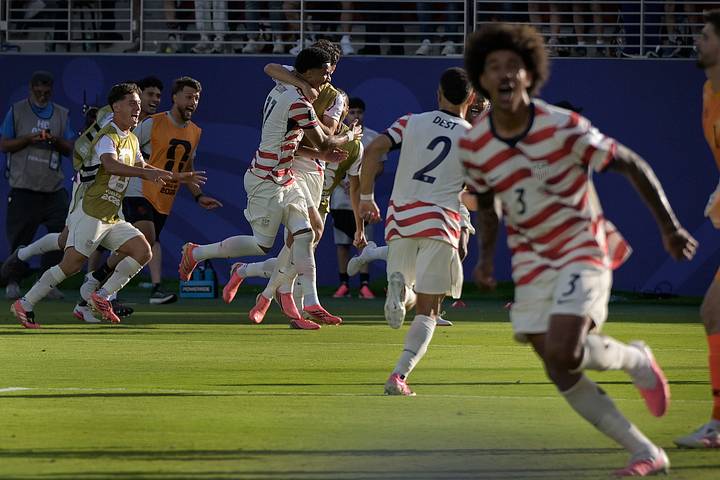
The one mildly fortunate aspect of Folarin Balogun's contentious red card for landing awkwardly on Tarik Muharemović was its timing. Referee Raphael Claus produced his red card in the 64th minute, just moments before the second-half hydration break.
FIFA's decision to divide the match into four segments gave Pochettino the opportunity for one final team address. "Now we need to show that we are a team, we are united," he told his players, drenched in sweat under the dry heat of Santa Clara, Calif. "That is the moment to show to everyone — and to show to ourselves — that it is not only empty words when we say, 'We are a family.'"
The effect Pochettino has on these players is unmistakable. So many members of the current squad have praised the influence of "Coach Poch," embracing his distinctive blend of empathetic leadership. Over those final 25 minutes, the 10 men on the field embodied the tougher side of his character, digging in to deny Bosnia and Herzegovina any meaningful chance on goal.
WIN FIFA WORLD CUP 2026™ FINAL TICKETS & OTHER PRIZES

In the wake of his rallying speech, Pochettino's side willingly surrendered possession — the visitors held 70% of the ball — without conceding a single shot on target. The message landed so effectively that the manager didn't make a substitution until the 87th minute. In fact, during this period of numerical disadvantage, the U.S. doubled its lead through Malik Tillman's powerful free kick.
The build-up to that set piece was pure Pochettino.
Transformation of Four Years

Even with the clock winding down and a one-goal cushion to protect, the USMNT was still winning the ball in advanced areas. Christian Pulisic pressured Muharemović into a panicked clearance that Benjamin Tahirović could only redirect toward Antonee Robinson. The left back's instinct was to play a sharp pass into the feet of his opposite fullback, Sergiño Dest, who was naturally stationed in the center forward position on the edge of the box — winning the foul that Tillman so clinically converted.
The shift in intensity since Pochettino's arrival has been dramatic. At the 2022 World Cup, a side managed by Gregg Berhalter ranked 18th in pressing intensity, allowing opponents an average of 15.8 passes before making a challenge. Only Spain and Germany pressed more aggressively than the U.S. during the 2026 group stage, with Pochettino's side disrupting play every 8.1 opposition passes, according to Opta.
The clear shift in mentality came almost immediately. While the number of matches he had overseen was still in single figures, Luca de la Torre revealed: "The way we press [under Pochettino] is a lot more aggressive, especially from goal kicks. There's the intention to play in the half of the other team."
Tim Ream didn't allow the ball to drop in the U.S. half after Bosnian goalkeeper Nikola Vasilj was forced into a long clearance by the relentless pressing of Weston McKennie and Tillman late in the first half. Three passes, two deflections and six seconds separated Ream's volleyed clearance on the halfway line and Balogun's composed finish.
While a third goal of the summer for his striker will undoubtedly please Pochettino, the sight of McKennie urging Tillman to join him in a coordinated press must have been equally encouraging.
U.S. Coming in Line With Pochettino's Mindset

The gloomy atmosphere following the USMNT's ultimately inconsequential defeat to Türkiye left Pochettino bewildered. "Maybe I am confused, but the mood, the vibes is like we go home tonight," he said with frustration.
It may appear to be a minor detail — much like those 90 minutes of fringe players scrambling around in defeat — but Pochettino is deeply invested in the vibes. This is an openly spiritual figure who keeps a bowl of lemons on his desk to ward off negative energy. "Decisions, personal relationships and absolutely everything else are a matter of energy," Pochettino wrote in his book, Brave New World, co-authored with Guillem Balagué. "Good or bad, small or large."
Reflecting on the challenges of the project he inherited at U.S. Soccer, Pochettino concluded: "The problem was the mindset."
What was once the team's greatest weakness has now become one of its most reliable strengths.
Confronted with the adversity of a harsh red card that, in Pochettino's view, was merely the most glaring of several unfavorable refereeing calls, the USMNT could have unraveled against Bosnia and Herzegovina beneath the punishing Northern Californian sun. Instead, they held their composure. "The players reacted very well to control that emotional part of the game," Pochettino said proudly after the final whistle, "that was so important."
The entire approach to this knockout fixture was refreshingly composed. Gio Reyna brushed off any talk of pressure. "This team really does well with challenges." Ream admitted he didn't "feel too much pressure," while Pulisic said the entire squad is "more relaxed" having experienced these moments at the 2022 World Cup. As Pochettino noted, there is a "maturity" to a team that had long appeared inexperienced.
That quiet self-belief has spread to the supporters. American crowds this summer have treated soccer fandom as one enormous fancy dress celebration. It was a July Halloween in San Jose, with colonial-era founding fathers, Uncle Sams and oversized eagles filling the stands — a wave of excitement rather than anxiety sweeping through the venue.
SI answers is our AI answer engine trained on human-created content.
"I'm not too worried," Roberto told Sports Illustrated after watching the streams of Bosnian fans marching through blue and yellow smoke clouds across the bridge to Levi's Stadium, "as long as the boys come to play." Under Pochettino, they usually do.
The players, Pochettino insists, are the "principle actors." But they are all performing from his script.