
 ไทย
ไทย English
 中國人
中國人
Eyebrows were raised back in May when Luis de la Fuente announced his World Cup squad for Spain without a single Real Madrid player in sight.
There was no place for Dani Carvajal—who had technically already departed Real Madrid following the expiration of his contract—nor Dean Huijsen, as Madrid players fell out of favor following a disappointing season.
Remarkably, it marked the first occasion in history that Spain had fielded a World Cup squad without a single representative from its most decorated club.
Ultimately, Madrid did have a presence on the podium during Spain's victory on July 19, with Marc Cucurella having joined from Chelsea for approximately €60 million ($68 million) just before the tournament kicked off.
Real Madrid Missing From the Party
🇪🇸 ¡Buenos días! 🇪🇸 pic.twitter.com/UxH1Pu5bZ1
Nevertheless, even as Real Madrid's social media team eagerly celebrated Cucurella's achievement, it hardly felt like a genuine victory for Los Blancos.
Barcelona, by comparison, contributed eight squad members, including three who featured in the starting lineup for the final, along with Ferran Torres—the impact substitute who netted the tournament-clinching goal in extra time against Argentina.
Even Atlético Madrid and Athletic Club could each point to three players in the squad.
To Madrid's frustration, Barcelona's influence over the World Cup was especially pronounced. Beyond the contributions of Pau Cubarsí, Lamine Yamal and Torres, De la Fuente's possession-based pressing philosophy closely mirrors the Catalan club's identity, while Alex Grimaldo and Cucurella are among those who passed through La Masia before moving on.
In terms of Real Madrid's own 'DNA', only Marcos Llorente and Víctor Muñoz came through the club's youth ranks. While the latter's recent move to Liverpool generated a tidy profit for Madrid, he didn't feature for a single minute at the World Cup.
So, should Spain's absence of Madrid players be a cause for concern?
Real Madrid's Spanish Problem
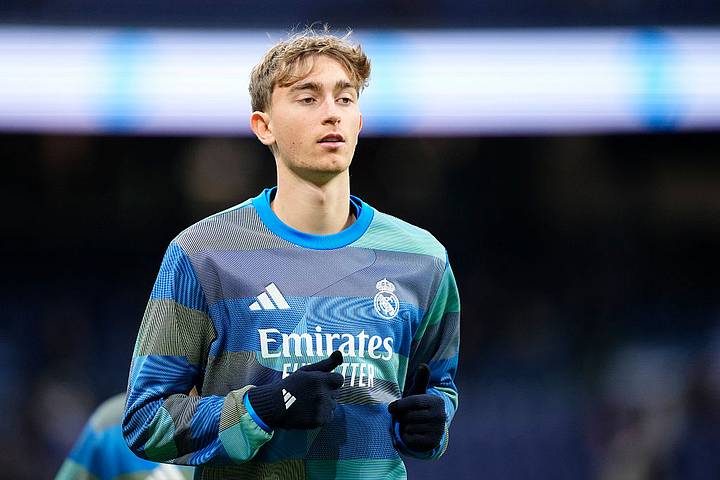
Looking solely at this summer, it's hardly worth losing sleep over the fact that Real Madrid had no players in Spain's squad. Huijsen might feel hard done by, but who else—realistically—had a genuine case for inclusion?
Taking a broader view, however, the pattern becomes more concerning. Madrid had just two representatives at Euro 2024 (Joselu and Dani Carvajal), two at the 2022 World Cup (Carvajal and Marco Asensio), and none at Euro 2020.
The last Real Madrid player under contract to score for Spain at a World Cup was Nacho Fernández, all the way back in 2018.
Madrid has always been a global club, home to some of the world's most celebrated stars, but the dwindling Spanish core in recent years signals a notable shift.
At the 2010 World Cup—Spain's historic first triumph—Real Madrid contributed five players, and the same number again two years later when La Roja claimed the European Championship.
It seems peculiar that Spain's most storied and successful club—one of the country's most prominent cultural and sporting ambassadors—has been largely sidelined when the national team has competed on the world stage in recent years.
Beyond the optics, Madrid's shortage of Spanish players has potentially played a role in leadership issues over the past couple of turbulent seasons, as the departures of senior figures from Sergio Ramos to Lucas Vásquez, Fernández and Carvajal have left a noticeable void in the dressing room.
Who Could Break Into Spain Team?
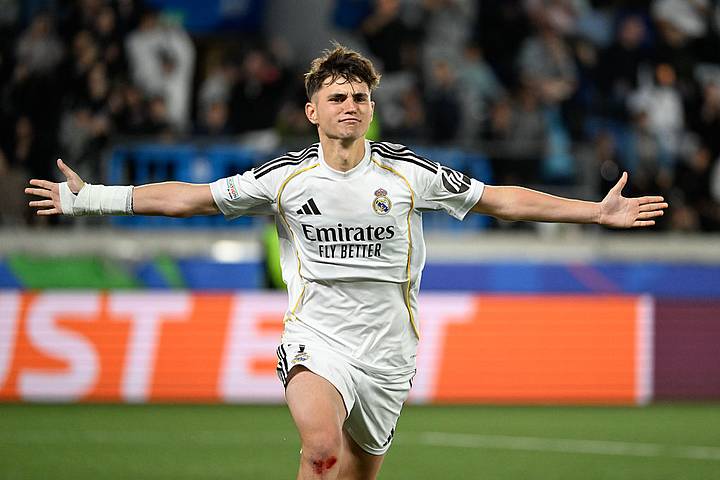
One area where Real Madrid is currently thriving is at academy level, with a number of youngsters emerging from Valdebebas who are tipped for bright futures at both club and international level.
Defenders Diego Aguado and Mario Rivas, midfielder Thiago Pitarch and winger Daniel Yáñez were among the standout performers in Spain's Under-19 European Championship victory this summer.
Aguado has drawn particularly glowing assessments, with one MARCA profile noting: "If he were Diego Aguadinho, he'd command €100 million; the English version, Diego Watery, would fetch €80 million; and Diego Di Aguado another €70 million."
De la Fuente has demonstrated that the route from youth football to the senior national squad is open to Spanish talent. Alongside their international ambitions, all four youngsters will also be eager to impress new first-team head coach José Mourinho during preseason.
Madrid's goalkeeping prospects Fran González and Javier Navarro also appear to have promising careers ahead, with 19-year-old Navarro having shone as Real Madrid claimed the U-19 UEFA Youth League title on penalties back in April.
Further along the development pipeline, Madrid retain a keen interest in a host of Spanish talents scattered across Europe, including 21-year-old midfielder Chema Andres (Stuttgart) and 21-year-old Jacobo Ramón (Como), both of whom could return to the Bernabéu via buyback clauses.
There is also the prospect that Real Madrid, being Real Madrid, could simply invest in proven Spanish talent. Florentino Pérez's presidential rival Enrique Riquelme made a campaign promise to sign a national team star if elected, ultimately identifying Rodri as his target. Pedro Porro is another name that has been loosely connected to the club since the World Cup victory.
The reality, though, is that Madrid will never pursue Spanish players purely for the sake of it, and any homegrown talent breaking into the first team will need to earn their place on merit alone—just as 2010 World Cup winners Iker Casillas, Sergio Ramos and Xabi Alonso once did.