
 ไทย
ไทย English
 中國人
中國人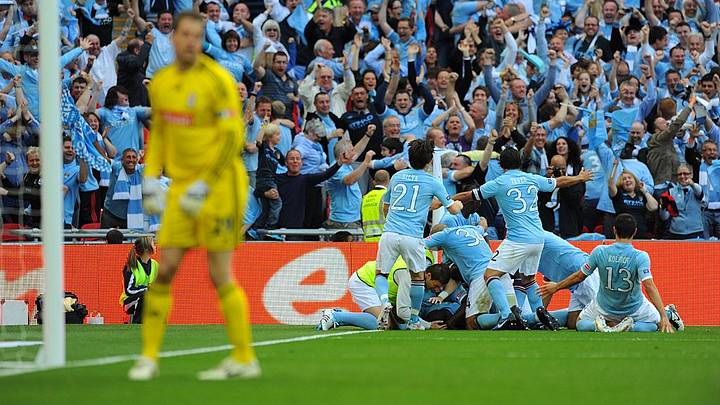
What would the landscape have looked like if Manchester City had operated differently?
That question may never be answered. But, reflecting on reports that City have been found guilty of 114 out of 115 charges brought by the Premier League for violating financial regulations between 2009 and 2018, the thought carries a haunting weight for those whose fortunes may have been shaped by the conduct City continues to deny.
Much of the recent discourse has centered on what penalties might follow. The burning question on everyone's lips is whether City will be stripped of their titles — and if so, whether those honors will be redistributed. Could Manchester United be retroactively crowned champions for 2011–12 and 2017–18, and could Liverpool claim 2013–14?
Manchester United are also exploring how City's violations financially harmed their own club, having missed out on the 2011–12 Premier League title and a Champions League spot in 2015–16 — both lost to City on goal difference.
But what about smaller clubs further down the pecking order... Stoke City, for instance?
Man City Successes Viewed Through New Lens

Stoke faced Manchester City in the 2011 FA Cup final at Wembley Stadium. They made the journey home that evening in defeat, having been beaten 1–0 by a solitary goal from Yaya Touré, who had arrived at City from Barcelona the previous summer for a fee exceeding the combined value of Stoke's entire starting lineup.
"Touré was reportedly earning 10 times what we were paying any of our players," former Stoke manager Tony Pulis wrote in a BBC Sport column this week.
Pulis, who served as Stoke manager for the second time from 2006–13, said the revelations surrounding Manchester City have prompted him to look back on that 2011 final defeat with fresh eyes.
"After the match, my disappointment was softened by the knowledge that we had faced a squad packed with world-class talent, gone up against a top-level manager in Roberto Mancini, and simply come up short," he said. "Today, my feelings are very different, and I'm sure those connected to other clubs affected by City's dominance during that same period, between 2009 and 2018, feel the same way."
"We were beaten, but by a club that has now been found guilty of breaking the financial rules set by the Premier League. In doing so, they didn't just defeat Stoke in an FA Cup final — they accumulated a mountain of titles and went on to utterly dominate English football for over a decade."
It isn't that City cheated on the pitch. But gaming the financial system allowed the club to gain an unfair edge, propelling them into a position of dominance that would otherwise have been unattainable.
The 2011 FA Cup marked the beginning of that era of success. It was City's first major piece of silverware in 35 years, setting the stage for eight Premier League titles, 10 further domestic cups and the Champions League — all claimed by a club that had suffered an 8–0 defeat to Middlesbrough in their final season before the Sheikh Mansour takeover, had recently placed 16th, 15th and 14th in the Premier League, and had spent time in the third tier of English football just a decade prior.
Without Manchester City's financial misconduct, there is no certainty that Stoke — for whom the 1971–72 League Cup stands as their only major trophy across 163 years — would have lifted the FA Cup, since there is no telling who might have reached the final in an entirely different competitive environment. But having come so close and fallen short, with the benefit of hindsight, makes the loss all the more painful.
There is, of course, the argument that Stoke could have won regardless — as Wigan Athletic proved two years later — but that overlooks the fact that Manchester City entered with a substantial advantage built on unfair and dishonest foundations.
City also defeated Sunderland in the 2013–14 League Cup final, and later Watford in the 2019 FA Cup final. The latter falls beyond the timeframe covered by the charges, yet the damage had already been inflicted. These were clubs robbed of their one genuine shot at glory.
Man City Took Away 'What Fans Pray For'
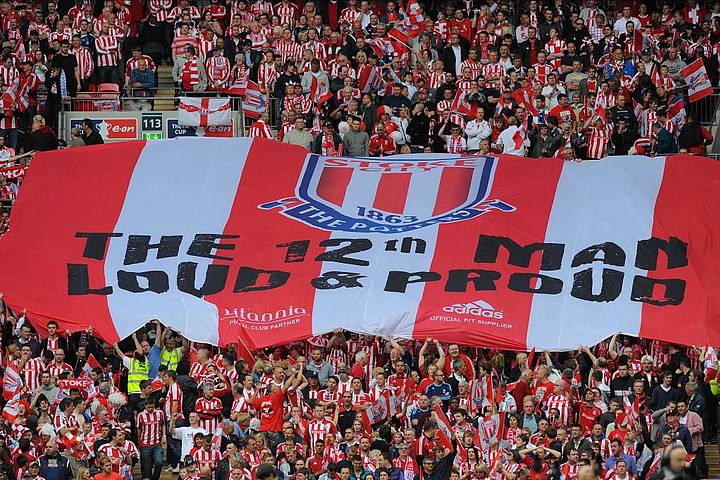
"Taking my Stoke side to the 2011 FA Cup final was one of the greatest moments — if not THE greatest moment — of my 50 years in football as both a player and a manager," Pulis said.
"That day in May will also remain etched in the memories of every Stoke supporter who made the trip to Wembley, dreaming of winning the most prestigious domestic cup competition in world football for the very first time in their club's long history. This was our moment — the kind of day that smaller clubs and their supporters spend their lives hoping for."
It likely carries far greater significance for Stoke, given the magnitude of the achievement, than a league title would for a Manchester United or Liverpool, clubs that have many more to their name.
Pulis does not expect Stoke to be awarded the cup. "I don't anticipate Manchester City calling me or the club to hand back the 2011 FA Cup and the winners' medals their players received," he said. "Nor do I genuinely expect any other trophies or titles to be returned. A points deduction and a substantial fine seems far more probable.
"But I still feel cheated. Whatever comes next, we can never reclaim that day or the chance to celebrate through the streets of Stoke-on-Trent with the cup and medals we fought so honestly to win. After breaking the rules, Manchester City got to do that instead."