
 ไทย
ไทย English
 中國人
中國人
The World Cup stands as the most prestigious sporting competition on Earth, drawing billions of viewers each time it comes around once every four years.
The 2022 World Cup final in Qatar, which saw Argentina defeat France in a penalty shootout as Lionel Messi finally lifted the coveted trophy, holds the record as the most-watched sporting event in history, with an estimated 5.4 billion viewers tuning in globally. That figure could be surpassed once the viewership numbers for the 2026 final between Spain and Argentina are officially confirmed.
Given its massive global appeal, you might find yourself asking: why isn't the World Cup staged more frequently? As it turns out, there are multiple reasons for that ...
Why Is the World Cup Held Every Four Years?
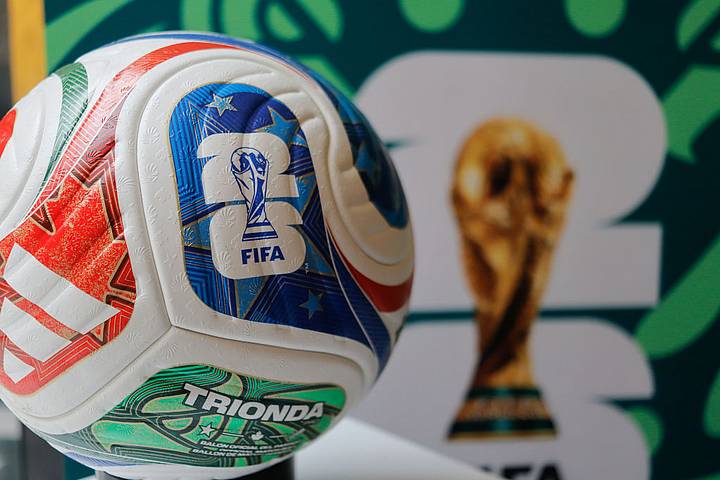
There are a number of reasons why the World Cup takes place only once every four years.
Chief among them is the sheer magnitude of the tournament. Putting together a World Cup demands years of groundwork, from arranging fixtures and choosing host venues to developing the infrastructure required to accommodate millions of supporters, including stadium renovations, transportation networks, fan zones, accommodation and security operations.
For the 2026 World Cup—hosted across three nations: the United States, Canada and Mexico—the logistical challenge was even greater, with multiple stadiums undergoing renovation projects worth hundreds of millions of dollars.
Another significant consideration is qualification. Teams from FIFA's six confederations—UEFA, CONMEBOL, Concacaf, CAF, AFC and OFC—must navigate lengthy qualifying campaigns just to reach the finals. Those matches must be carefully coordinated around domestic league schedules and existing international competitions.
Player welfare is also a critical factor. Today's soccer stars already contend with demanding schedules that include league matches, domestic cups, European competitions, international duty and, for some, events like the Club World Cup. Continental tournaments such as the Euros, Copa América, AFCON and Asian Cup are also held in the intervals between World Cups.
If the tournament were staged more frequently, the football calendar would become nearly unmanageable, heightening the risk of burnout and injury while likely diminishing the overall quality of play at the tournament itself.
Finally, the World Cup's four-year cycle is also tied to the Olympic Games. Since the inaugural tournament in 1930, FIFA has traditionally scheduled the World Cup midway between two Olympic Games to prevent a clash between the world's two greatest sporting spectacles—an arrangement that continues to this day.
Could the World Cup Be Held More Often?

FIFA, the global governing body of soccer, previously examined the possibility of hosting the World Cup every two years rather than every four, after the concept was put forward by Saudi Arabia's football federation.
Following a feasibility study, FIFA president Gianni Infantino stated the change was achievable and could even prove "positive for a large part of the world," with projections indicating member nations could earn an extra $19 million from a biennial tournament.
The proposal, however, met with strong resistance from UEFA and several other confederations, as well as players, coaches and domestic leagues, many of whom contended that the soccer calendar was already overly congested.
Ultimately, given the strength of the opposition, the idea was abandoned.
READ THE LATEST WORLD CUP NEWS, PREVIEWS & ANALYSIS HERE


Barnaby Lane, better known as Barney, is a soccer writer for SI FC. With nearly a decade of experience in the industry, he has worked for a range of household-name publications in both the United States and the United Kingdom, and has interviewed some of the world's biggest athletes—from Usain Bolt and Rafael Nadal to Christian Pulisic (though his favorite interview remains Adebayo Akinfenwa). Barney specializes in Premier League soccer, covering everything from the nostalgia of years gone by to the modern, vastly different landscape of today's game. He also has experience reporting on La Liga and Major League Soccer, the latter of which he developed a particular affinity for during his university days at Virginia Commonwealth University in Richmond.