
 ไทย
ไทย English
 中國人
中國人
While Lionel Scaloni guided Argentina to a second consecutive Copa América title in 2024, he couldn't resist keeping a close watch on the European continental tournament unfolding across the Atlantic.
"Logically," Argentina's head coach admitted at the time, "I want Spain to do well."
Married to a Spanish woman and having played for three different La Liga clubs, Scaloni also had Spain manager Luis de la Fuente as his coaching mentor. "He helped us a great deal," Scaloni fondly recalled about earning his top managerial qualification in 2017. "He's a wonderful person."
Both mentor and student claimed glory two summers ago, but only one can claim soccer's ultimate prize when Spain and Argentina clash in Sunday's World Cup final.
Attacking Threat
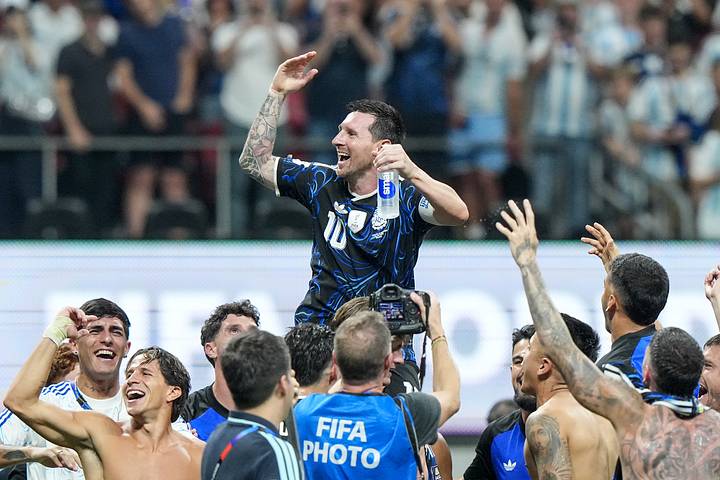
It may be a well-worn saying that having Lionel Messi in your squad is essentially worth a 1–0 head start, but this summer has largely borne that out. If anything, it barely scratches the surface of what Argentina's captain has delivered.
Messi has scored or assisted at least one goal in each of his last 11 World Cup outings, dating back to the group stage win over Poland in 2022 when he had a spot kick stopped. Only once this summer has Messi contributed to fewer than two goals in a starting appearance—and that's only because the dubious goals committee ruled that Cristian Romero's header against Cabo Verde was an own goal rather than a finish set up by the 39-year-old.
On his own, Messi has been directly involved in 12 goals at the 2026 World Cup—the exact same number that Spain's entire squad has managed collectively.
That said, while Argentina may possess the most dangerous individual attacker this summer, Spain's collective attack is far from toothless. No team pins the ball in the attacking third with such relentless precision as the reigning European champions. Winning it back on the break may be Scaloni's most viable path to goal: Argentina has netted more goals in transition than any other side this summer.
Defensive Solidity

There was plenty to admire in Spain's methodical dismantling of France in the semifinals. For Rodri, the standout performer on the night, one aspect of the performance stood out above all: "I'd say [we were] even better without the ball than with it."
Spain has conceded a combined xG of just 2.15 across seven matches, allowing only 10 shots on target—nine of which Unai Simón has kept out. Despite conceding seven times as many goals as their upcoming opponents, Argentina has still been relatively disciplined, surrendering an xG of 4.
The defending world champions do carry a risk of being exposed on the counter, and the center-back partnership of Lisandro Martínez and Cristian Romero is considerably more unpredictable than Spain's. Despite the gap in experience, both Aymeric Laporte and Pau Cubarsí bring a composed, assured presence that Argentina's aggressive defensive duo deliberately and consciously avoid.
Possession
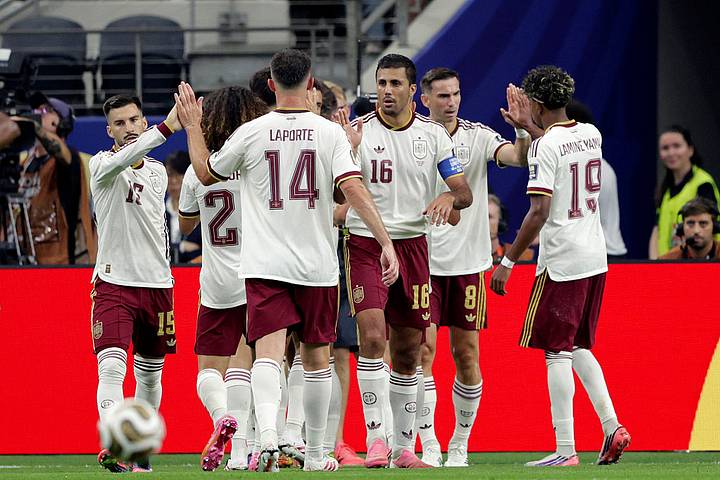
There's little question that Spain's dominance of the ball is unparalleled. Yet Argentina is no stranger to controlling possession either.
Both teams have averaged over 60% possession in their matches this summer. England saw so little of the ball in their semifinal loss that Thomas Tuchel was moved to praise the way ball retention is embedded in the "Argentinian DNA."
The only side on earth that could come close to matching Spain's composure in tight areas is Argentina, who deliberately crowd players into congested pockets of space, such is the collective confidence in each other's touch.
Pressing
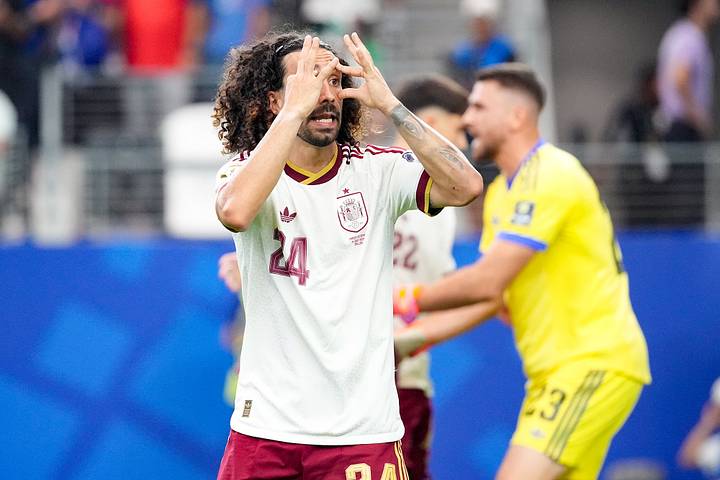
The manner in which La Roja suffocates their opponents is remarkable. No team in the competition comes close to matching Spain's pressing intensity, which is all the more extraordinary given how rarely they surrender possession and therefore have far fewer chances to chase it down.
At the tournament's outset, Brazil manager Carlo Ancelotti predicted: "I think this is going to be a World Cup of intensity—of high intensity." Spain's relentless press all the way to the final has proven him right. Ancelotti also noted: "Argentina does not play a high-intensity soccer."
It was telling to hear Messi attribute Argentina's nervy win over Cabo Verde in the round of 32 to a disorganized pressing structure. Kylian Mbappé pointed to the same weakness when explaining France's defeat to Spain, who are even more adept than Cabo Verde at threading through a disjointed defensive shape.
Set Pieces
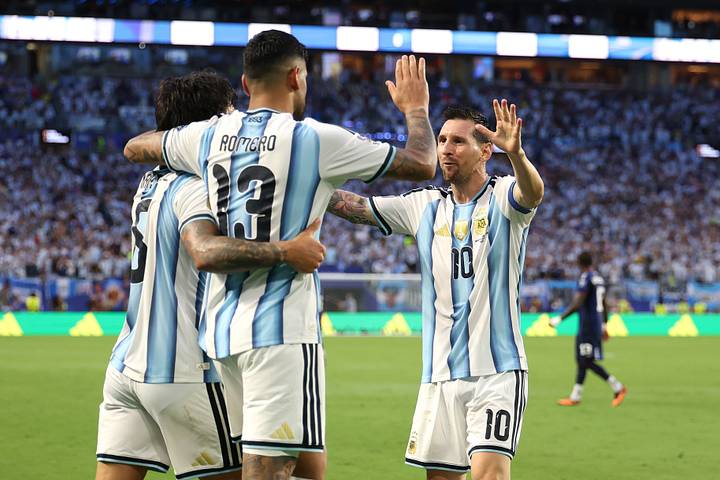
The value of set pieces should never be underestimated, particularly in the modern game. One in every five goals scored this summer has originated from a dead ball situation, and no team at the tournament has been more dangerous from such opportunities than Argentina.
Despite entering the quarterfinals as comfortably the shortest remaining side in the competition, Scaloni has a wealth of deceptively strong aerial players at his disposal. Alexis Mac Allister and Lisandro Martínez both possess impressive leaping ability relative to their height, while any delivery routine becomes significantly more threatening when it's Messi whipping in the crosses.
Spain, however, has yet to concede a single set-piece goal. In fact, they have barely given away a chance from such situations. That is one of the key rewards for sustaining possession so effectively and winning it back so swiftly—opponents rarely get the opportunity to earn a corner in the first place.
Intangibles

Reducing the beautiful game to a collection of numbers overlooks the fact that this is a sport driven by human emotion, passion, and willpower. A grueling 10-month league season can dull those intangible qualities, but they carry even greater weight when everything comes down to a single match.
When it comes to fighting spirit, Argentina stands alone. Scaloni is the greatest champion of his team's almost mythical resilience, crediting the semifinal comeback against England to "teamwork, brotherhood, never giving up and fighting until the very end."
"I think this team plays its best when we're in trouble," he astutely observed.
Luis de la Fuente's side has not trailed for a single moment this summer, making it impossible to know whether they could summon that same raw intensity with their backs against the wall. But Spain carries its own distinct mental strength: an unshakeable belief in themselves.
"Today we faced one of the best national teams in the world," the Basque coach reflected after Tuesday's semifinal against France, "but in front of them they had the best team in the world." Given everything that has unfolded this summer, that claim is difficult to dispute.