
 ไทย
ไทย English
 中國人
中國人
Among soccer's most beloved postgame rituals is the jersey exchange.
Once the final whistle blows, it's a familiar sight to watch players from rival teams pull off their shirts and trade them with an opponent as a show of mutual respect and goodwill.
The tradition gives rise to memorable displays of sportsmanship—and sometimes produces truly iconic imagery. One well-known instance came after France's 2022 World Cup semifinal triumph over Morocco, when Kylian Mbappé was photographed celebrating while wearing the jersey of his then-Paris Saint-Germain teammate and Moroccan star Achraf Hakimi.
But how did this tradition originate, and what drives players to participate? Let's explore.
Why Do Soccer Players Exchange Jerseys?
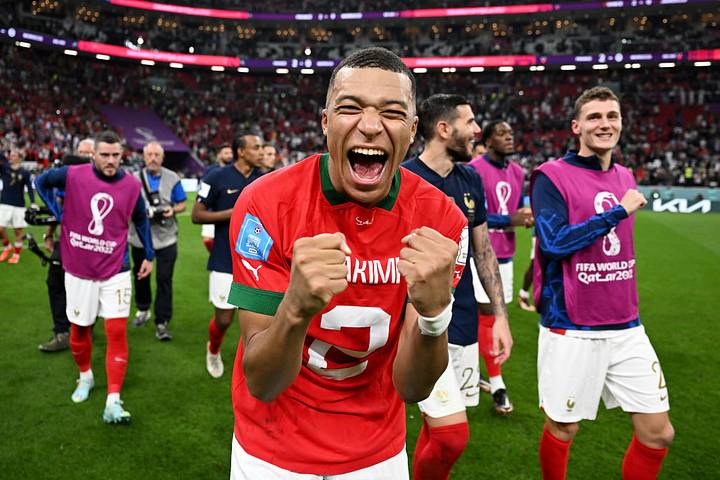
Jersey swaps rank among soccer's most understated yet deeply meaningful customs, with players trading shirts as a symbol of respect, admiration, and gratitude after sharing the pitch together.
Nor is it a ritual exclusive to the sport's biggest names. Players at all levels exchange jerseys to mark special occasions, outstanding performances, or fiercely contested matches where mutual respect has been forged.
That said, it's the swaps involving global superstars that tend to draw the most attention.
For many players, receiving the shirt of one of soccer's greatest icons is a defining career moment. That's why players like Lionel Messi, Cristiano Ronaldo, and Erling Haaland are frequently approached by opponents eager to take home a piece of memorabilia from someone they hold in high regard. At the 2026 World Cup, Cabo Verde goalkeeper Vozinha did just that, swapping shirts with Messi in the tunnel following Argentina's thrilling 3–2 victory, later saying the moment would remain in his "heart forever."
Over the years, shirt collecting has also evolved into something of a fine art among players. Former Barcelona defender Gerard Piqué, for instance, has assembled an impressive collection featuring jerseys from legends including Messi, Andrea Pirlo, and David Beckham.
Messi himself is an avid collector, maintaining an extensive collection at his home, with shirts displayed across walls and preserved behind glass. His collection spans household names like Yaya Touré and Raúl, as well as lesser-known figures such as Youssef El-Arabi and Oscar Ustari.
Paulo Dybala is another player with a genuine passion for shirt collecting. The Argentine forward owns jerseys from stars including the late Diogo Jota and Ronaldinho, and his collection has grown so vast that even he seems uncertain of the precise total. At one point, Dybala posted a photo of his collection on Instagram and simply asked his followers: "How many are there?"
The History of Jersey Swapping in Soccer
The custom of exchanging jerseys has been embedded in soccer culture for close to a century.
According to FIFA, the first documented jersey swap occurred in 1931 after France pulled off a stunning 5–2 upset over England. Following the game, French players requested their English counterparts' shirts as a memento from the historic result, and England agreed to the exchange.
The practice eventually reached soccer's grandest stage, with the first World Cup jersey swaps recorded at the 1954 tournament held in Switzerland.
Since then, what started as a simple gesture between rivals has grown into one of the sport's most enduring traditions.
The Most Famous Jersey Swaps in Soccer

Jersey exchanges take place after matches all over the globe, but a handful have cemented themselves in soccer folklore.
Perhaps the most legendary example unfolded at the 1970 World Cup between Pelé and Bobby Moore. After Brazil defeated defending champions England 1–0 in a celebrated group-stage clash in Guadalajara, the two captains shared a moment of profound mutual admiration at the final whistle. They embraced at the center circle before swapping shirts, producing an unforgettable image that came to embody the respect, dignity, and sportsmanship at the core of the game.
Another celebrated swap took place at the 1986 World Cup following Argentina's memorable 2–1 win over England.
The match featured Diego Maradona scoring two of the most talked-about goals in World Cup history—the controversial "Hand of God" and the breathtaking "Goal of the Century." After the final whistle, England midfielder Steve Hodge exchanged shirts with Maradona, with that jersey later becoming one of the most valuable pieces of soccer memorabilia ever sold, fetching a record $9.3 million at auction in 2022.
Are Players Allowed to Swap Jerseys?
Given how deeply ingrained the tradition is in soccer culture, it might come as a surprise to learn that jersey swapping could ever be restricted. In reality, players are free to exchange shirts after matches, though there are some behind-the-scenes arrangements that help facilitate the process.
Players are typically issued multiple jerseys per match—one to wear during the game and a spare in case the original becomes damaged or heavily soiled. If they opt to swap their jersey afterward, they are generally permitted to keep the shirts, whether trading with opponents, passing them on to family and friends, or donating them.
However, replacement shirts don't always come without cost. Players are often expected to cover the expense of any additional jerseys they need, a practice observed by many clubs across the world's top leagues.
According to The New York Times, Premier League kit managers even maintain a dedicated WhatsApp group to coordinate shirt exchange requests between clubs ahead of matches, enabling teams to prepare in advance for potential swaps.
Do Players Ever Refuse to Swap Jerseys?
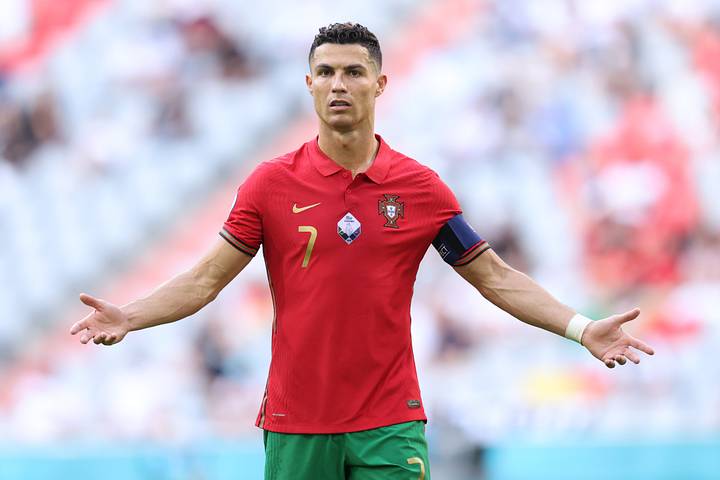
While jersey exchanges are a widely embraced tradition in soccer, they are far from guaranteed. There have been instances where players have declined requests, whether out of personal preference, the emotional weight of a match, or simply a choice not to participate.
Cristiano Ronaldo, for example, famously turned down a shirt swap request during his time at Juventus. After a match against Atalanta, German defender Robin Gosens approached the Portuguese star hoping to walk away with his jersey.
"After the final whistle I went to him, but Ronaldo did not accept," Gosens wrote in his autobiography Dreams Are Worthwhile. "I asked: 'Cristiano, can I have your shirt?'. He didn't even look at me, he just said: 'No!'.
"I was completely ashamed. I went away and felt small. You know that moment when something embarrassing happens and you look around to see if anyone noticed it? That's what I felt and tried to hide it."
Fortunately for Gosens, the story ended on a brighter note. His Atalanta teammate Hans Hateboer later purchased a Ronaldo shirt and surprised him with it in the locker room.
Enable functional cookies to see this feature.
One of the most notorious cases of jersey swapping being actively discouraged came at the 1966 World Cup.
Following England's contentious quarterfinal win over Argentina, manager Sir Alf Ramsey famously rushed onto the pitch to prevent George Cohen from exchanging jerseys with an Argentine player, referring to the opposition as "animals." Ramsey even retrieved a shirt Cohen had already received from Silvio Marzolini, prompting Argentine players to forgo swaps entirely after the match.