
 ไทย
ไทย English
 中國人
中國人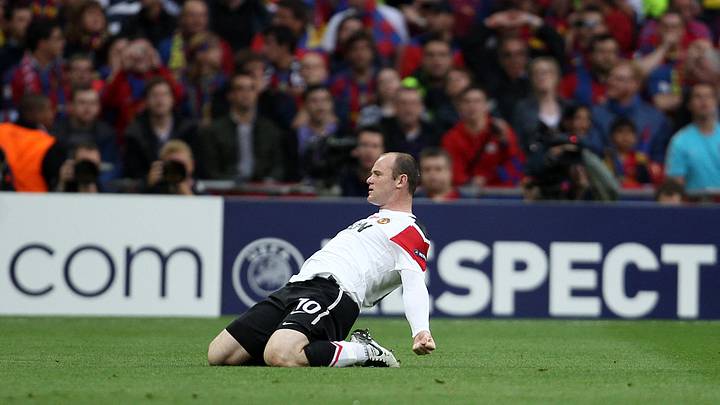
Manchester United's record goalscorer Wayne Rooney has acknowledged there was "a possibility" he could have joined Pep Guardiola's iconic Barcelona side during the peak of his career, raising the prospect of an entirely different chapter in modern football history.
At the beginning of the 2010–11 campaign, a 24-year-old Rooney publicly demanded to leave Manchester United. The celebrated England international had just witnessed a big-spending Chelsea claim the Premier League title and was dissatisfied with the signings made to fill the void left by several high-profile exits at Old Trafford.
Following the departures of Cristiano Ronaldo and Carlos Tevez in back-to-back summers, Rooney made the ill-advised decision to sit down with United's legendary boss Sir Alex Ferguson in August 2010 to question the club's transfer plans. Predictably, he was shown the door.
That October, Rooney went public with his transfer request, prompting interest from Chelsea, Manchester City, Real Madrid and Barcelona.
"It was a little bit [of a possibility]," Rooney disclosed on the United Stand podcast, "but financially it was difficult for them as well."
The forward was clearly enthusiastic about the potential switch. "I would've loved to have played for Barcelona," Rooney enthused. Whether it would have delivered the success he craved, however, remains an open question.
How Rooney Would Have Fit in at Barcelona
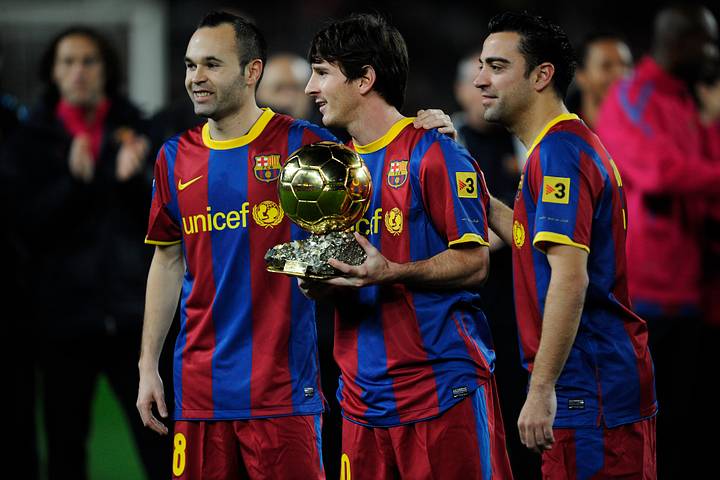
Barcelona were hardly lacking in elite talent at the dawn of the previous decade. Rooney would have been eyeing a departure from Manchester United in January 2011, the very month that Lionel Messi, Andrés Iniesta and Xavi Hernández all took the stage at the Ballon d'Or ceremony, the award recognizing the world's finest footballer of the year.
Nevertheless, in Rooney's estimation, he still had plenty to contribute to the Catalan giants.
"The team beat us in the [2009 and 2011 Champions League] finals. They didn't actually have a regular No. 9, if you like," he noted. "Obviously it'd be easy to play in that team, but I think it would have suited me, because of the way they played."
Rooney is correct that Pep Guardiola didn't deploy a conventional center forward. He had experimented with that approach after signing Zlatan Ibrahimović at considerable cost in 2009, but it became apparent during the Swede's sole season in Spain that he lacked the flexibility to accommodate Messi, who increasingly demanded a central position.
As a fluid, roaming attacker himself, Rooney would not have faced the same limitations as Ibrahimović. Having spent five years alongside Ronaldo, the unselfish striker also knew how to reshape his game around a superstar of Messi's stature.
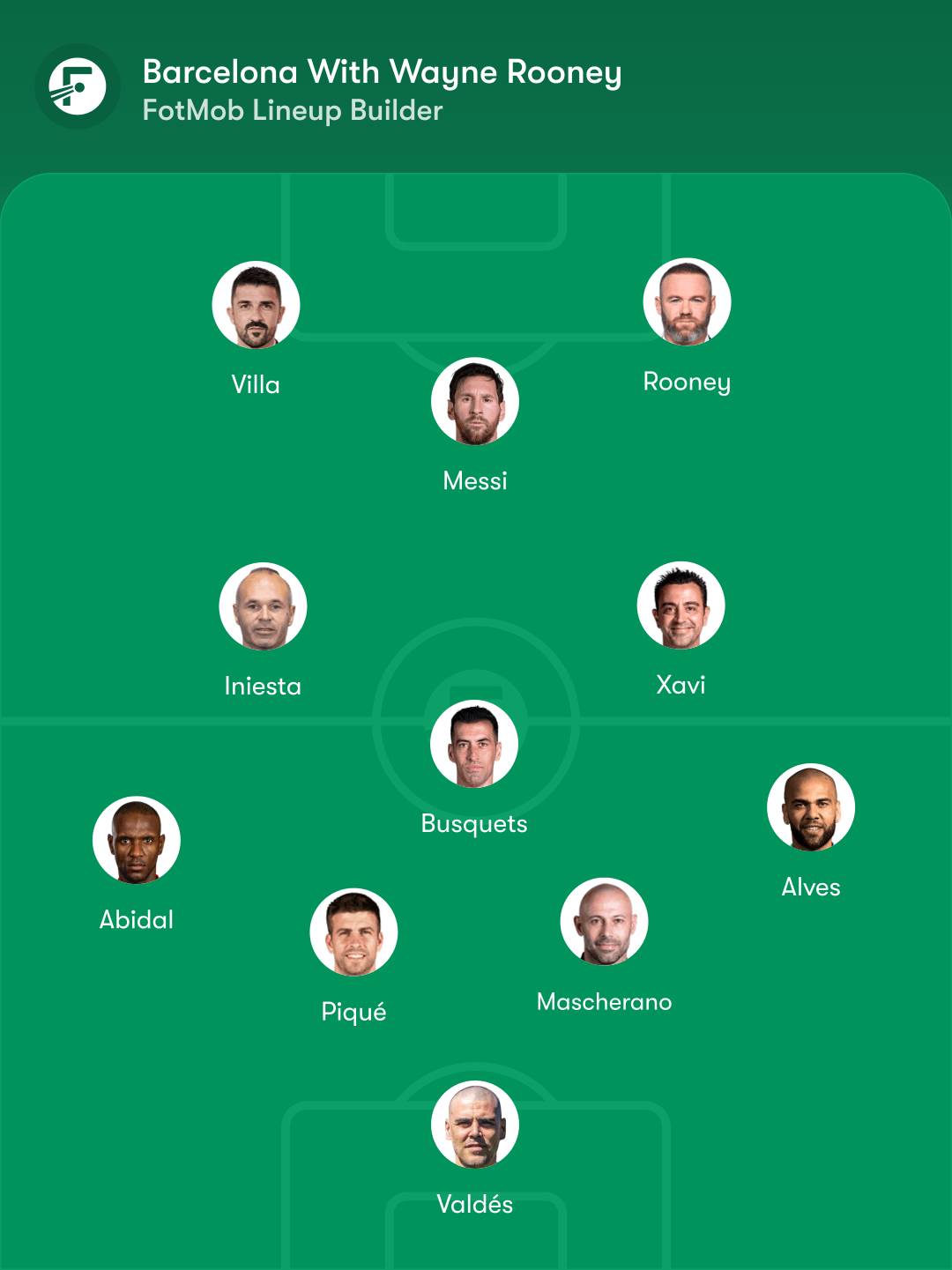
The challenge for Rooney was that Barcelona had already found the ideal dynamic partner for Messi to replace Ibrahimović, securing David Villa in the summer of 2010. Pedro rounded out Guardiola's attack—all three scored against Rooney's United in that season's Champions League final—while the young trio of Bojan, Jeffrén and Nolito served as occasional backups. Rooney could conceivably have pushed Pedro aside, but that might well have bred the kind of discord that Guardiola always worked hard to eliminate from his squads.
Refreshing the attack was clearly on Guardiola's agenda at the time. The following summer, Barcelona moved on from Bojan and Jeffrén to bring in Cesc Fàbregas and Alexis Sánchez. Had Rooney made the move to La Liga six months earlier, at least one of those high-profile signings would likely have been unnecessary.
Rooney was a tactically intelligent player with a deep admiration for Guardiola's Barcelona. The proud Scouser admitted to jumping off his sofa to applaud certain passages of play while regularly watching that team's matches. The respect was reciprocated. Xavi praised Rooney as "a player I have admired for a long time. He is an extraordinary player with extraordinary capabilities."
How Man Utd Would Have Coped Without Rooney
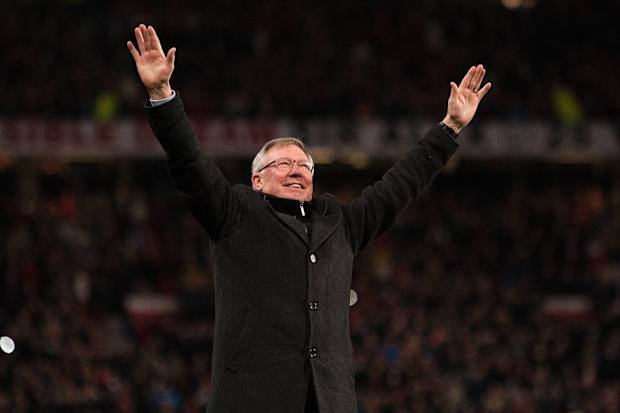
Rooney was ultimately persuaded to stay at Manchester United, though Ferguson didn't strengthen his attack until the summer of 2012 with the signing of Robin van Persie. Between 2010–12, Rooney was the undisputed centerpiece of every offensive move the Red Devils constructed.
Across those two campaigns, the versatile striker led the squad in starts, minutes and goals, netting 47 across the Premier League and Champions League—nobody else could reach 30. Rooney also contributed 18 assists, a figure only Nani and Ryan Giggs managed to surpass.
Had Barcelona produced the funds and lured the talismanic attacker away from Old Trafford, Ferguson would almost certainly have been compelled to act in January 2011. That window was defined by Chelsea's remarkable capture of Fernando Torres from Liverpool for a then-record $80 million (£50 million at the time of the deal).
"This is the target for every footballer," the newly crowned World Cup winner declared at his presentation, "to try to play for one of the top clubs in the world." United certainly qualified, though crossing the divide from Merseyside to Manchester would have been an intensely controversial move.

Torres ultimately failed to justify his hefty fee at Chelsea and was overshadowed by the man who succeeded him at Anfield, Luis Suárez. The prolific Uruguayan, who would go on to excel at both Liverpool and Barcelona, had been frequently linked with a move to Manchester United while still at Ajax in 2010.
Suárez would later become a villain at Old Trafford following his alleged racial abuse of United fullback Patrice Evra, yet there exists a plausible alternative timeline in which the two were teammates rather than adversaries.
Judging by the remarkable form of his final season at Anfield—Liverpool's beloved No. 7 scored 31 Premier League goals in just 33 appearances—Suárez would have been capable of matching Rooney's impressive output. Whether his volatile temperament would have been compatible with a club operating under Ferguson's strict authority is a far more complex hypothetical to unravel.