
 ไทย
ไทย English
 中國人
中國人
In some alternate reality, Lionel Messi would be gearing up to don Spain's red jersey—rather than Argentina's blue and white—in the 2026 World Cup final.
That's because Messi had the choice to represent the country where he grew up and came of age, rather than his birthplace. At one point, Spain genuinely believed it could win him over.
Messi was born and raised in his early years in Rosario, Argentina, before relocating to Barcelona at age 13 to launch his professional career. Initially the entire family moved to Spain, but his mother, brothers, and sister eventually headed back home, leaving only him and his father in an apartment close to Camp Nou. Despite battling homesickness and undergoing growth hormone treatment, he persevered, quickly becoming a key figure in La Masia's celebrated 'Baby Dream Team.'
What followed in his club career is well-documented. However, at that point, his international future remained uncertain—Spain was actively pursuing him while Argentina appeared disengaged, perhaps a case of out of sight, out of mind after he left home so early.
Messi acquired a Spanish passport in September 2005 and became a dual national, primarily to help Barcelona navigate regulations restricting La Liga clubs to no more than three non-EU players per matchday squad. He had already officially made his debut—and been sent off—for Argentina a month before. Yet Spain had sensed years earlier that there might be a window to bring him into La Roja.
In 2025, former Argentina senior and U-20 coach José Pékerman revealed in an interview with Diario Olé that the "paperwork was prepared for him to play the U-20 World Cup for Spain.
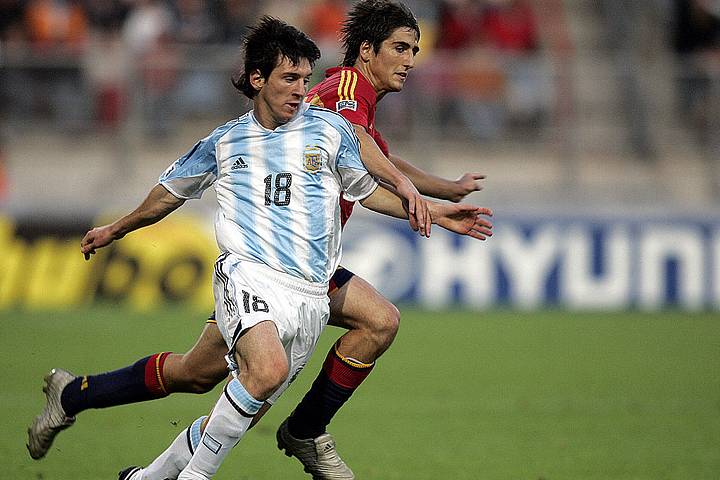
"[Messi] was the player of the future. I couldn't afford to be wrong; he was the next great thing in Argentine football, a true gift. We had to act fast. I told him I didn't want him to play [for Argentina] unless it was necessary, just that he appear in a friendly, sign the match sheet and submit it to FIFA. Spain, no more."
It was in early 2004 that FIFA revised its eligibility regulations, permitting players to switch national allegiance between youth and senior levels. By mid-2004, Messi had made his debut for Argentina's U-20 side and went on to represent his country at the 2005 U-20 World Cup, netting six goals as La Albiceleste claimed the title.
His senior Argentina debut followed just weeks later. Under FIFA rules at the time, his commitment was sealed.
Argentina's Soccer Federation Reached Messi Through His Grandmother
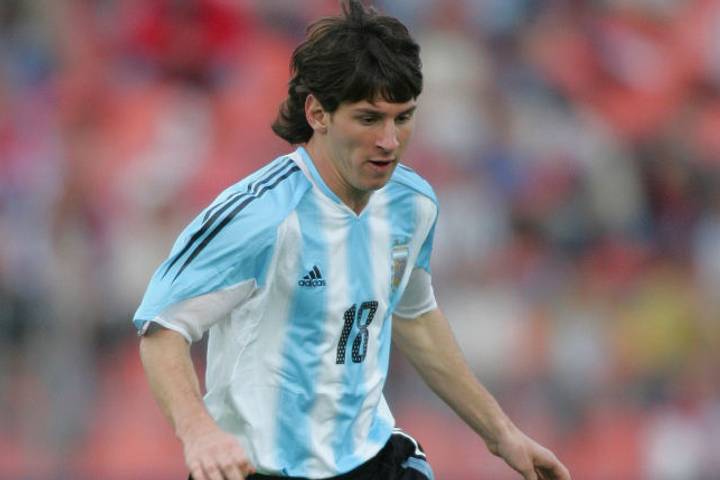
Longtime Argentina football official Omar Souto, whom Messi honored on Instagram following his passing last year, once shared a version of events that traced back to the 2003 U-20 World Cup—when Messi was just 16—during which Spain actually tipped off Argentina about him.
"At the U-20 World Cup, we were always sharing hotels with Spain, and someone from their technical staff came up to us and said, 'Why didn't you bring the kid from Barcelona? He's far better than anyone here,'" Souto disclosed to TyC Sports in 2021.
"When we got back to Buenos Aires, [AFA executive Hugo] Tocalli told me we needed to get that player. I thought his name was Leonardo because everyone called him Leo. I went to a call center in Monte Grande and asked for a directory of Rosario listing all the Messis.
"I called the grandmother, who gave me the uncle's number. When I called him, he gave me the father's number, and when I called the father, he said, 'Finally, you're going to call him up. My son wants to play for the Argentine national team.'"
Messi Always Wanted Argentina
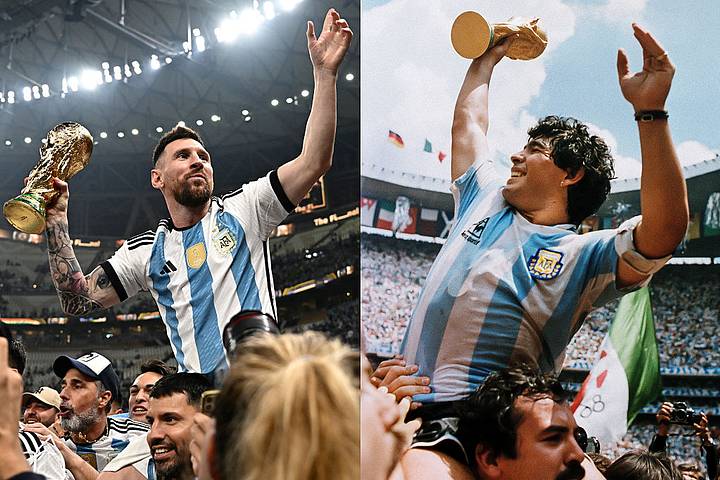
Despite spending his teenage years in Spain and being well on his way to becoming a naturalized Spaniard, Messi always dreamed of pulling on Argentina's shirt at the international level.
In the early stages of Messi's Argentina career, a Spanish side packed with many of his Barcelona teammates and close friends claimed back-to-back European Championships around the 2010 World Cup. Meanwhile, with Argentina, Messi had to wait until 2021 for his first senior honor and even briefly stepped away from the national team in 2016, frustrated by a string of final defeats.
Enable functional cookies to see this feature.
On Pasión por el Fútbol in 2018, he confessed: "I was talking to a friend and he said, 'Just imagine if you'd stayed with Spain—you'd already be a world champion.' But it wouldn't have felt the same. Honestly, it never even entered my mind. Winning the World Cup with Argentina would be something truly special."
Messi ultimately led Argentina to World Cup glory in 2022, the year after ending the nation's 28-year wait for silverware with a long-overdue Copa América triumph. Now, he finds himself on the verge of a second World Cup title—in the fourth final of his career—dressed in blue and white.