
 ไทย
ไทย English
 中國人
中國人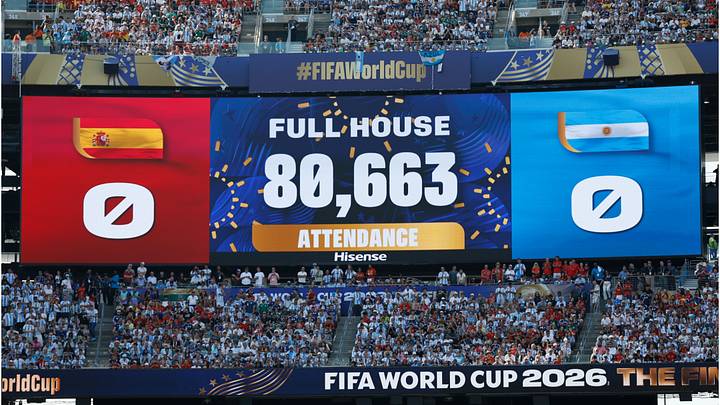
New York New Jersey hosted eight FIFA World Cup matches this past summer at MetLife Stadium, including the highly anticipated final, in what quickly became the most costly edition of the tournament for soccer supporters to date. In case anyone had any doubts, the host committee has now released the official figures.
Soccer's flagship event generated a staggering $3.5 billion in total economic impact across New York and New Jersey, the committee announced Wednesday through a report carried out by Tourism Economics, an Oxford Economics company. That figure is roughly $200 million higher than originally anticipated from the summer's festivities and doesn't even factor in the enormous revenue from ticket sales, which went directly to FIFA.
Soccer's governing body charged supporters thousands of dollars to attend the most in-demand matches, with resale prices—of which FIFA collected a 15% cut—climbing even higher. In April, tickets for the lower bowl of the World Cup final started at $10,990, more than four times the cost of the showpiece event at the 2022 Qatar tournament. And in the days leading up to the clash between Spain and Argentina, last-minute lower bowl seats were listed at an eye-watering $30,000—making it the most expensive U.S. sporting event on record based on average purchase price.
Beyond the steep ticket prices, fans held nothing back when it came to the broader World Cup experience, spending money that the host cities actually benefited from directly. The largest share of New York New Jersey's $3.5 billion total came from direct tournament spending ($1.9 billion). More than 645,000 fans attended matches at the East Rutherford, N.J. stadium, spending on lodging in the area ($653 million), retail ($264 million), transportation ($200 million), local entertainment ($195 million) and food and beverages ($346 million).
Meanwhile, an additional 626,300 visitors traveled to the region specifically to take part in World Cup-related activities, spending money at events such as the World Cup Fan Zones held throughout the five New York City boroughs.
One of the most controversial price points in the region was the cost of public transit to and from MetLife Stadium. Normally just a $12.90 train ticket from Penn Station in New York City to the venue, the price surged to nearly $100 for fans, igniting tensions between FIFA president Gianni Infantino and New Jersey Governor Mikie Sherrill.
The other major component of the $3.5 billion total came from overall labor income ($1.4 billion) generated by the more than 27,000 jobs the tournament created throughout the region.
"The final numbers show that New York and New Jersey didn't just meet the moment—we surpassed expectations and delivered an impact that will resonate long after the final whistle," said Alex Lasry, CEO of the New York New Jersey host committee. "Billions of dollars moved through our hotels, restaurants, small businesses and communities, tens of thousands of jobs were supported and people across the region shared in the rewards of welcoming the world."
FIFA Generates Historic Revenue From 2026 World Cup

Driven largely by the record-breaking ticket prices, the commercialization of "hydration breaks" and the inclusion of a record 48 tournament teams, FIFA reportedly walked away with $15 billion in revenue—an all-time high for a World Cup and a figure more than $4 billion above initial projections.
Infantino, who has become known—for better or worse (mostly worse)—for his enthusiasm for revenue streams, attributed the remarkable numbers simply to the nature of the U.S. market.
"We have to look at the market," he said in defense of ticket pricing back in May. "We are in the market in which entertainment is the most developed in the world. So we have to apply market rates. In the U.S., it is permitted to resell tickets as well. So if you were to sell tickets at the price which is too low, these tickets will be resold at a much higher price.
"And as a matter of fact, even though some people are saying that the ticket prices we have are high, they still end up on the resale market at an even higher price, more than double our price."
Infantino has faced significant backlash over the past month for his latest revenue-generating scheme: offering stakes in future World Cups and other FIFA events to private investors—a secretive proposal he has since been compelled to abandon.
Much of the soccer world continues to demand his resignation as president. First, he made the world's game financially out of reach for the average fan. Second, he endorsed splitting matches into quarters to accommodate commercial breaks that frequently ran long. Third, he put the World Cup up for sale to private interests. That last move appears to be the final straw.