
 ไทย
ไทย English
 中國人
中國人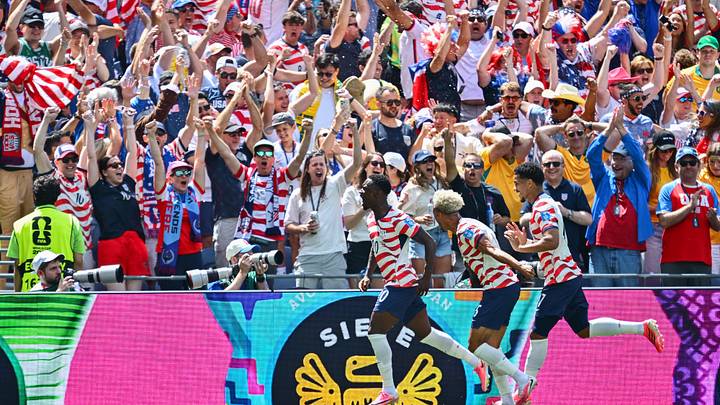
SEATTLE, Wa. — For a city celebrated for its coffee culture, securing a cup on Friday morning proved nearly impossible, as U.S. men's national team supporters flooded Downtown Seattle ahead of a crucial and decisive 2–0 victory over Australia.
At some establishments, wait times for a simple drip coffee stretched beyond 30 minutes. Bars threw open their doors as early as 6 a.m., with some serving coffee, though queuing up that early likely meant ordering something stronger instead.
Lines snaked outside every restaurant, coffee shop and bar as fans awaited kickoff, as though each venue were the sole pub in a small college town rather than a spot in the 18th largest city in the United States.
The match itself, scheduled for noon local time, carried the energy of a college football Saturday rather than a World Cup fixture. As supporters gathered at the iconic Harbor Steps before the march to the stadium, their feet stuck to the beer-soaked pavement just as they would to the floor of that same college-town bar.
It didn't carry the feel of a World Cup match the way it might in other nations. The chants during the march rarely ventured beyond "U-S-A" and the well-known "I Believe That We Will Win," with no trumpets or drums anywhere in sight.
Instead, the entire occasion was boldly and distinctly American. The whole afternoon had that quality — even before the chants began, or the pre-game military helicopter flyovers took place.
"I've seen the Scottish fans and stuff on TikTok, about them in Boston, and that people think their atmosphere is really cool, and yes, it's awesome, but Americans have their own way to show love and show appreciation," said USMNT center back Auston Trusty, who made his World Cup debut on Friday in the 79th minute.

What is U.S. Soccer Fan Culture?
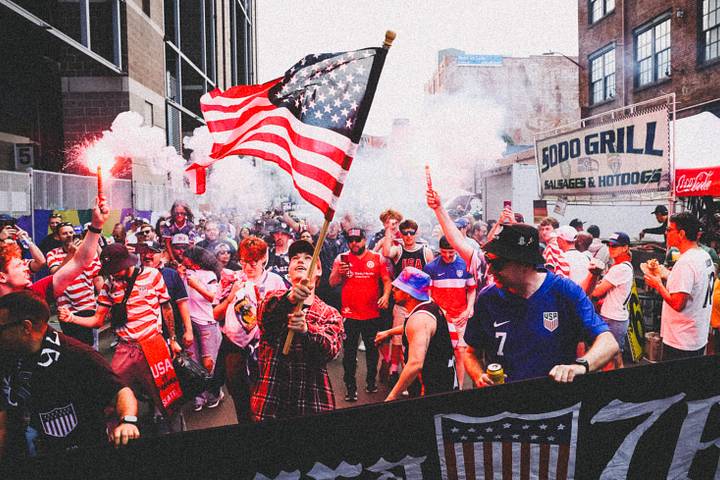
As vibrant as soccer culture is across the globe, the American version is still taking shape. More than 113 years after the founding of the U.S. Soccer Federation, the sport continues to carve out its identity within a multi-sport landscape unlike anything seen elsewhere. At the pivotal 1994 World Cup, few Americans grasped what the game meant to the rest of the world.
Yet in 2026, and particularly in a soccer stronghold like Seattle — which has supported professional soccer since 1974 — the picture looks very different. At times the crowd roared; at others, it fell into a hushed anticipation reminiscent of football or baseball, as elements of various sports cultures blended with a growing U.S. soccer identity.
When the crowd did erupt, however, it did so with staggering force. Like a touchdown or a home run, the burst of joy was thunderous. As is customary at Lumen Field, it registered on the local seismograph and sent visible tremors through the stands.
"You don't realize how much support you have in the stands, and then after the game, we were just able to take it all in and realize how much of a great support system we have with these U.S. fans," said right back Alex Freeman, who netted the match's second goal. "I was so happy they were able to come out and be able to kind of have the atmosphere... It kind of makes us calm and accept the fact that we're here and we have such an amazing thing to do."
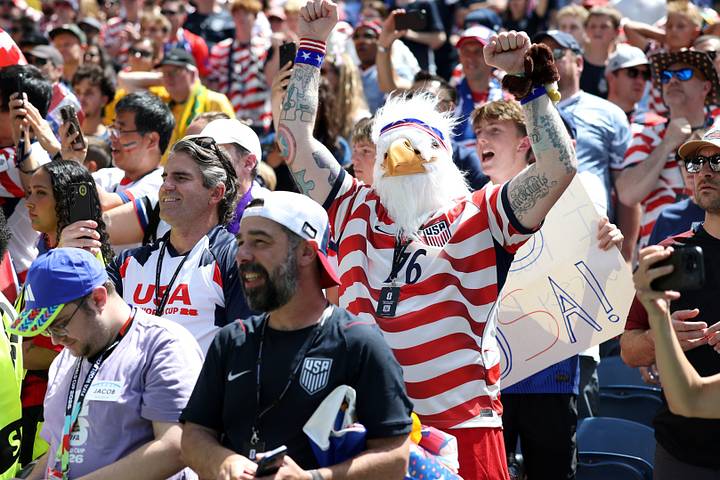
Nothing surpassed the passion of the final whistle, when the players circled the pitch to acknowledge the supporters, soaking in the sound of over 65,000 voices belting out John Denver's "Country Roads."
"That was one of the highlights of this whole tournament, just singing that song. It felt so American," said midfielder Sebastian Berhalter. "Tonight was an example of us on the field and then also the fans...They've been incredible."
🗣️🗣️ Country roads, take me home…
To the place I belong 🗣️🗣️ pic.twitter.com/4VIK9kCMuE
While the atmosphere at USMNT matches may differ from many others at this 48-team World Cup, it is unapologetically American — especially now that the stands are filled with red, white and blue rather than opposing supporters, as had been the reality for so many years.
"We know we're here for ourselves and we're here for the team, but we're here to change the game in America, the perception of soccer in America," added Trusty.
"To hear that atmosphere and feel just the whole vibe of the game, I think as people who are fans of the sport, but also who are becoming fans of the sport through watching us play and watching this entire environment, the World Cup is what it's all about."
The USMNT Believes They Can Win It All
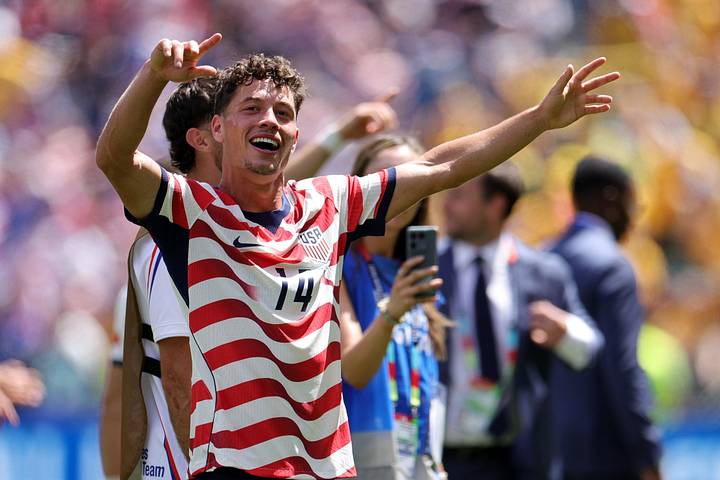
For the first time since 1930, the USMNT has claimed consecutive victories at a World Cup, and they've done so in commanding fashion. With millions tuning in, the team is bringing a divided nation together during a challenging period — and the belief is that this journey is far from finished.
The win all but secured the USMNT's place in the knockout rounds and positioned them as frontrunners to top Group D.
Through two matchdays, the co-host advantage has proven very real. Between Canada, Mexico and the U.S., the host nations have outscored their opponents 16–2, and each is dreaming boldly. The USMNT, however, may be dreaming the boldest of all.
For all the mockery the "I Believe" chant receives, the players genuinely carry that conviction, with July 19 in East Rutherford, N.J. — the date of the World Cup final — firmly circled on their calendars.
SI answers is our AI answer engine trained on human-created content.
"I don't think you enter this tournament not to have that mindset [to win the World Cup]," Trusty added, after Zlatan Ibrahimovic suggested on FOX Sports that the USMNT could have a genuine shot at glory. "We can only control what we do on the pitch, and our mindset is to inspire the next generation, and that's the main goal and what we're trying to do."
As difficult as it was to track down a morning coffee in one of the world's great coffee cities, the USMNT found their own fuel — powered by hope, belief and the fans, while embracing an atmosphere that is unlike any other, yet in every sense, purely American.