
 ไทย
ไทย English
 中國人
中國人
VANCOUVER—Vancouver Whitecaps CEO and Sporting Director Axel Schuster says he remains optimistic about the club's future in Canada, even as concerns and relocation rumors continue to mount.
"I am concerned," Schuster told reporters during an hour-long roundtable on Wednesday, following reports of an offer from Grant Gustavson, son of Kentucky billionaire Tamara Gustavson, which reportedly includes plans to relocate the club to Las Vegas. "That doesn't mean that I'm not also hopeful that we will find the solution. I understand that everyone is concerned, but no one has to think that something is already done."
"There's no deadline," he added. "[But] we have to speed up to find the solutions, or to get, at least, to the point to see what is the best that we can get in certain categories."
The 52-year-old Whitecaps—one of the longest-standing active clubs in North America—have been publicly listed for sale since December 2024 and had been quietly seeking a buyer for even longer. Despite more than 100 groups expressing interest, no Vancouver-based buyer had emerged, until potentially now.
While Schuster was speaking to reporters Wednesday morning, British Columbia Jobs and Economic Growth Minister Ravi Kahlon—the provincial government's lead on the Whitecaps file—announced hours later that a local group had come forward.
"We just had a group that reached out to us, that's been organizing, apparently, for a few weeks to put a bid in for the Whitecaps," Kahlon told reporters.
Details on the potential local buyer and whether they could submit a credible bid remain unavailable at this time.
Revenue Shortfalls Highlighted
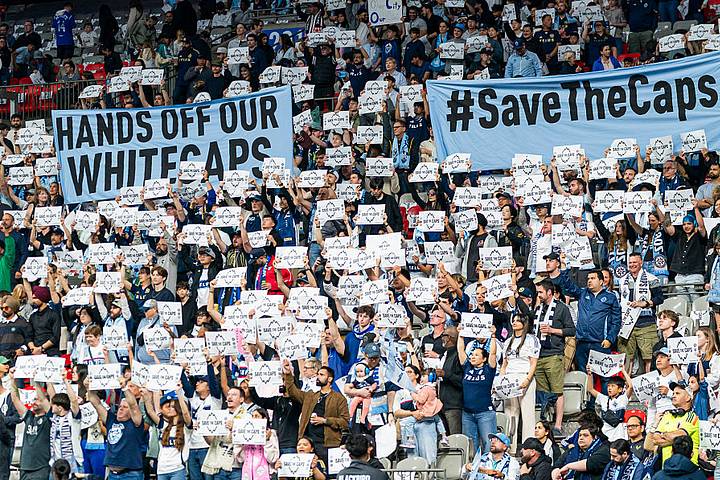
The central issue in Vancouver is a $40 million gap between what the club can spend and what the average MLS side spends. The root of the problem lies in the sharp rise in MLS operating costs since the Whitecaps were granted expansion in 2009, while the club's revenues have largely stagnated.
Despite high valuations across the league, few MLS clubs are believed to be profitable or breaking even. A key contributor to Vancouver's financial struggles is their arrangement with BC Place, the government-owned, crown corporation-operated stadium.
The Whitecaps receive just 12% of matchday revenue—a stark contrast to clubs that own their venues and retain close to 100%—severely limiting their earning potential, even with 19 consecutive home games drawing over 20,000 fans and a recent attendance of more than 27,500.
Beyond securing a more favorable BC Place deal, the Whitecaps are in need of a soccer-specific stadium. They hold a one-year Memorandum of Understanding with the City of Vancouver, signed in December 2025, for a proposed stadium at nearby Hastings Park. However, that project appears increasingly unlikely to move forward without a new owner prepared to take on the club's Forbes-estimated value of $445 million, on top of stadium construction costs.
Problems Beyond BC Place
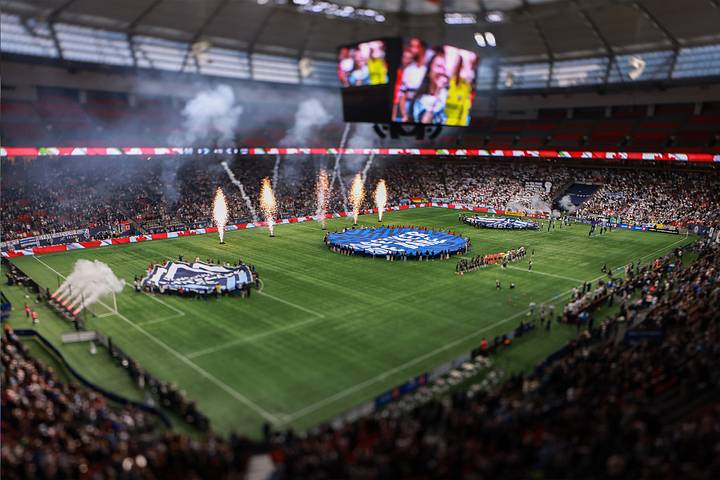
Schuster also pointed to challenges beyond the stadium situation, citing additional factors weighing on the club's finances, including in-venue partnerships, corporate sponsorships, and operational efficiency.
"This isn't an easy problem to solve," he said. "If it were an easy problem to solve, we probably would have solved it...Even a new stadium, it's like the same discussion we have with BC Place, it can't solve everything."
Unlike their American counterparts, Vancouver cannot tap into private sports gambling or private healthcare revenue streams due to local regulations, though several avenues to grow sponsorship income remain available.
Local commercial interest has picked up in recent months, and the club is working through a checklist of approximately 30 marketing categories and additional subcategories to attract investment at any price point—all while competing for sponsorship dollars against the dominant local sports franchise, the NHL's Vancouver Canucks.
Schuster confirmed that multiple meetings have taken place between himself, two members of the four-person ownership group, provincial officials, and senior MLS executives, with MLS Vice President Charles Altchek scheduled to visit Vancouver next week for further discussions.
He also stressed that the club has not sought any public funding and remains committed to keeping ticket prices accessible for fans.
Sporting Side Remains Healthy, Save The Caps Movement Vital

Despite the off-field turbulence, the team continues to perform strongly on the pitch, sitting second in the Western Conference heading into this week's clash with first-place San Jose Earthquakes.
That on-field success has fueled optimism within the club, with fan enthusiasm and energy at an all-time high. Schuster also confirmed that the uncertain ownership situation has not affected player contract talks, with several players signing extensions beyond 2026.
"The energy that comes from this team...it makes it makes it easier for everyone," Schuster said. "You feel this energy, and you get that energy and being meaningful and winning, and having so many people love the club, excited about the club, it helps."
The growing Save the Caps movement among Whitecaps supporters has also amplified the urgency of the situation, drawing attention from previously unaware audiences and placing the club in the global spotlight—most notably through a protest at the 76th FIFA Congress in Vancouver and with backing from fellow MLS supporters' groups.
"Without somebody else, other stakeholders, helping us, we are not able to get to the next step," Schuster added. "We are open for all solutions, from A, B, C, D, all the way to X and Y...And now that is more real because there is a Z solution," with Z referring to the Las Vegas offer.