
 ไทย
ไทย English
 中國人
中國人
"There has never been anything quite like it, probably in terms of an event, let alone soccer."
Those were U.S. President Donald Trump's characteristically understated words about the 2026 World Cup, which he also claimed would be "probably five times" more successful than any previous FIFA event.
Alongside Trump's enthusiasm, FIFA president Gianni Infantino is reveling in the financial results, with soccer's governing body poised to announce a record-breaking $15 billion in revenues from the tournament.
The 2026 World Cup was—perhaps unsurprisingly given the additional matches—the most attended in the competition's nearly 100-year history, while the final between Spain and Argentina shattered television viewing records in the United States.
But beyond the raw figures that will dominate FIFA's press releases for years ahead, how successful was this reimagined tournament really? And what does it signal for the future of the World Cup?
Expanded Format
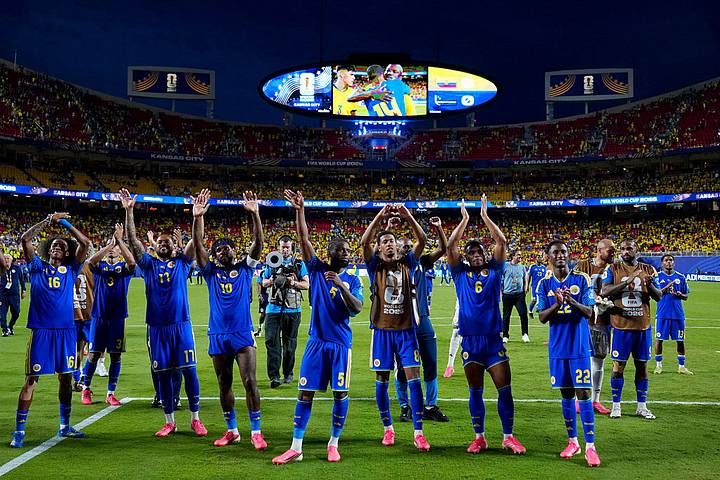
A major point of contention was the expansion from 32 to 48 teams, which required the first format overhaul since 1998.
Rather than an opening phase of eight groups of four teams with the top two progressing, this summer's edition featured 12 groups, with the top two from each joined by the eight best third-place finishers in the knockout rounds. For the first time, the competition also included a round of 32 stage, meaning champions were required to win eight matches in total.
Some—including Infantino—contend that the expanded format gave more nations a chance to shine. However, the downside is that group stage quality became watered down, there was little tension for the bigger sides and no true "group of death." Without singling anyone out, Infantino's assertion that "every team played at a high level" simply doesn't hold up, and the real motivation behind expansion is the additional revenue generated by more matches.
As seen at the European Championships, the best third-place system proved clunky and meant three rounds of matches were needed to eliminate just a third of the field.
Infantino has already floated the idea of a 64-team tournament in 2030, which would at least resolve the format issue, but would mean a group stage filled with 12 more teams—potentially of even lower quality than the weakest sides at this summer's event.
Verdict: Failure
Host Cities
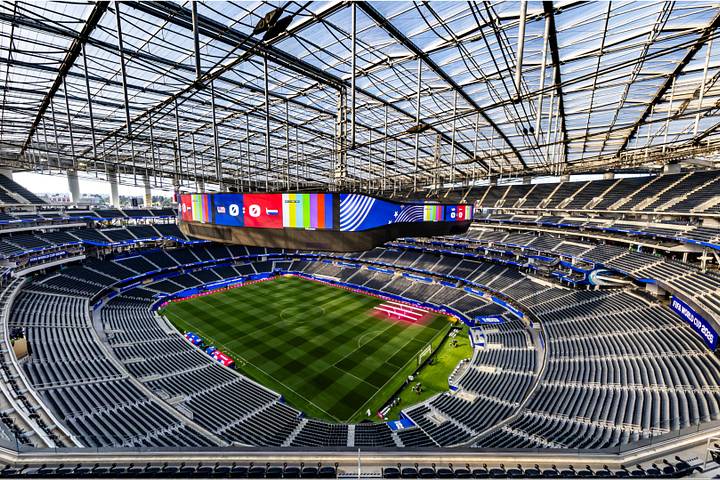
From 1978's confetti and Adidas Tango to 2010's vuvuzelas and Jabulani, every World Cup carries its own distinct identity. In terms of sheer visual appeal, 2026 delivered, with the host stadiums playing a central role.
The Azteca was already a genuine World Cup icon well before this summer, but soccer fans worldwide were also introduced to breathtaking venues across the continent—from the celebrity-filled SoFi Stadium in Los Angeles with its seemingly endless screen, to Dallas's AT&T Stadium, better known as "Jerry World."
On the ground, reports of organizational and safety concerns were relatively scarce—though public transport and accommodation costs remained painfully steep in many locations.
Vancouver, Seattle and Atlanta were among the cities that left the strongest impression on supporters with their warmth and atmosphere. Scotland's Tartan Army will always hold a special connection with Boston, while the people of Algeria will never forget Lawrence, Kansas.
Verdict: Success
Quality of Soccer
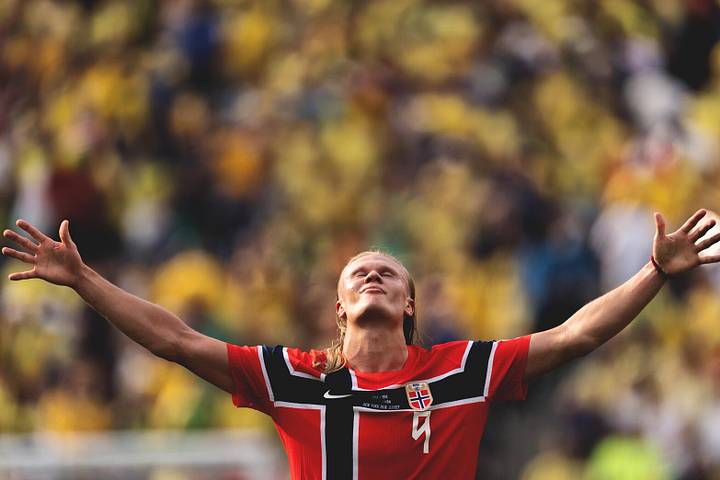
In years to come, the 2026 World Cup will be remembered as a tournament where the biggest stars truly stepped up.
Lionel Messi became the World Cup's all-time top scorer, before Kylian Mbappé surpassed him. Meanwhile, Jude Bellingham, Harry Kane and Erling Haaland all dazzled on the biggest stage. The latter perhaps captured the American public's imagination more than any other player with his meme-worthy personality and relentless goal-scoring. Surprise standouts also emerged in Vozinha, Eloy Room and others.
All three host nations advanced from the group stage and contributed to the quality and energy of the tournament, even if none reached the quarterfinals.
In total, 308 goals were scored across 104 matches, averaging 2.96 per game—the highest ratio since 1970 (2.97), comfortably exceeding the average at the previous tournament in Qatar 2022 (2.69).
While the final itself may not have been a classic, England's 3–2 victory over Mexico and nearly all of Argentina's knockout matches will be remembered as all-time greats.
Verdict: Success
Rule Changes
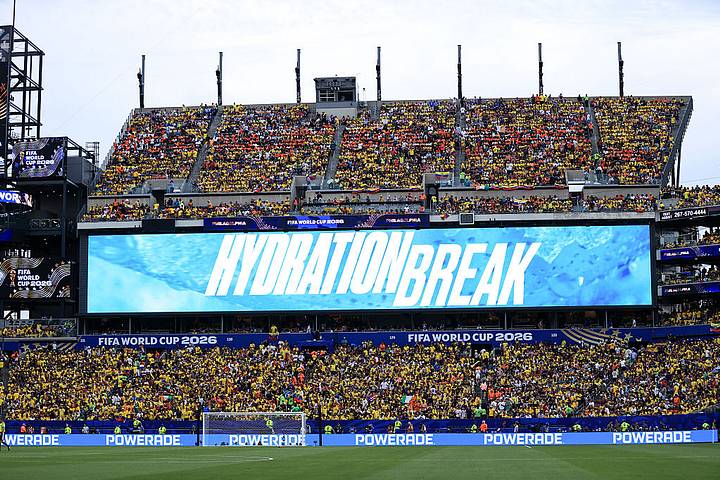
"Time for the Powerade hydration break" became the most unwelcome phrase of the summer, as every match featured a mandatory three-minute pause for players to hydrate (and receive a brief tactical talk from their manager) in each half.
Introduced under the guise of player welfare, the breaks were maintained even in climate-controlled stadiums, effectively transforming soccer from a game of two halves into something resembling four quarters.
Echoing the views of many around the world, La Liga president Javier Tebas called the enforced breaks "a lie," adding: "We have them in La Liga, but only when it's genuinely hot. Here, the pitches in Dallas, Los Angeles and Atlanta had air conditioning; I had to put on a jumper in the stands. It was a lie, a break for advertising."
Many broadcasters eagerly seized the opportunity to air more commercials, with one even missing 10 seconds of live action as a result.
UEFA, meanwhile, has pledged not to enforce breaks in either the Champions League or Euro 2028, opting instead to assess conditions match by match and pausing only when genuinely warranted.
Other rule changes for the tournament—including making it a red card offense for players to cover their mouths during confrontations—proved less divisive. However, it did produce the bizarre and somewhat unfortunate moment where Messi attempted to get Marc Cucurella sent off in the World Cup final for the most fleeting of mouth touches.
Verdict: Failure
Controversies

In the end, pre-tournament concerns about empty stadiums and extreme heat were largely avoided. Yet other problems cast a shadow over the event.
Inflated ticket prices were a persistent issue, while the final's 27-minute halftime show frustrated many—as did Trump's prolonged presence on stage as Rodri and Spain lifted the World Cup trophy.
Infantino can always be counted on for at least one tone-deaf moment, and this year's "today, I feel..." equivalent came on the eve of the tournament when, in response to Somali referee Omar Artan being denied entry at Miami airport, the FIFA president told reporters to "chill and relax."
Entry problems were not limited to Artan, with Iran manager Amir Ghalenoei openly criticizing how his team had been treated amid visa complications that severely disrupted his side's preparations.
While Ghalenoei urged FIFA to push back against Trump, Infantino's closeness to the U.S. president was on full display once again when Folarin Balogun had a one-match suspension lifted so he could feature in the USMNT's round of 16 match against Belgium.
Enable functional cookies to see this feature.
The Balogun affair will go down as one of the World Cup's most notorious controversies and further eroded the organizers' already shaky credibility on the world stage. Despite this, Infantino appears set to be re-elected as soccer's top official next year without opposition.