
 ไทย
ไทย English
 中國人
中國人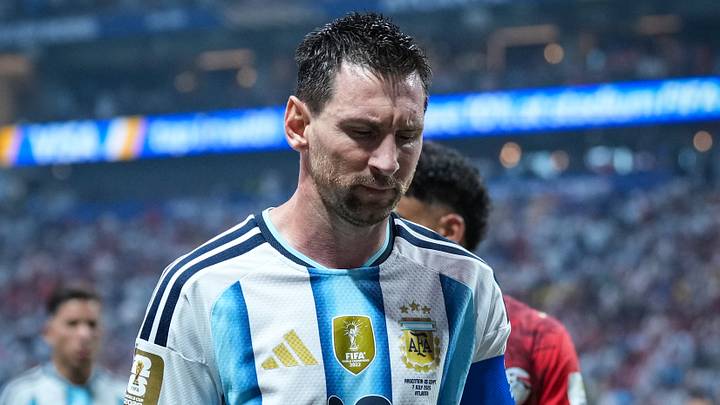
FIFA's head of refereeing Pierluigi Collina has strongly pushed back against claims that match officials can be swayed by external pressures, following allegations of favoritism toward Argentina.
The defending World Cup champions narrowly escaped elimination in the round of 16 against Egypt, coming back from 2–0 down with just 11 minutes remaining and benefiting from a VAR ruling that disallowed what would have been Egypt's third goal.
The Egyptian Football Association lodged an official complaint following the match, alleging that referee François Letexier had shown bias against Egypt — sentiments that echoed those of coach Hossam Hassan, who suggested "pressure from the Argentina camp" and the commercial appeal of keeping Lionel Messi in the tournament had led FIFA to deliberately manipulate the outcome.
"Constructive debate about refereeing decisions will always exist in football, but baseless accusations have no place in our sport," Collina fired back.
"No one should question the integrity of FIFA World Cup referees. When such allegations are made, they can trigger reactions that result in threats against officials and their families. That is simply unacceptable.
"Equally, no one can suggest that FIFA Refereeing is subject to outside influence — not even from FIFA President Gianni Infantino. He has consistently demonstrated his full backing for FIFA Team One while allowing us to operate with total independence. Match officials make honest calls and, just like players and coaches, they always strive to perform at their best."
FIFA Defends Controversial Decisions in Argentina's Favor
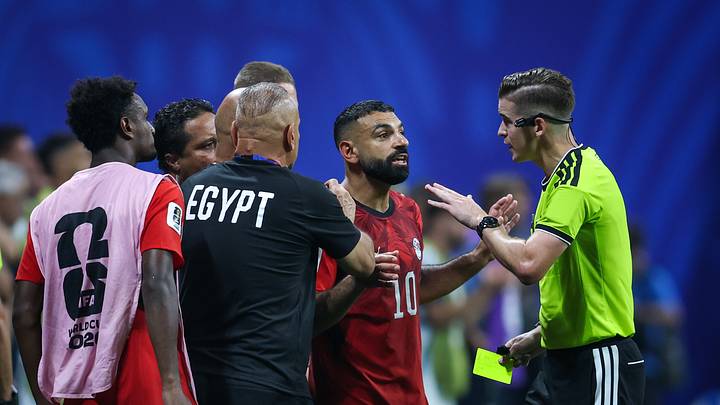
Egypt's grievances appeared to revolve around two key moments during their loss to Argentina.
Mostafa Ziko, who eventually scored Egypt's second goal, believed he had done so nine minutes earlier after converting a move that featured brilliant individual skill from Haissem Hassan and a Mohamed Salah assist.
That effort was, naturally, subjected to a VAR review, which identified a foul by Marwan Attia on Lisandro Martínez in the build-up, ultimately resulting in the goal being disallowed.
"After every goal is scored, the VAR reviews the attacking possession phase (APP)," Collina explained. "If a foul is detected in the build-up and is considered to have influenced the goal, the VAR will recommend an on-field review. There is no set threshold regarding either the distance from goal or the time elapsed between the incident and the goal.
"One such example occurred in the Argentina vs. Egypt match, where Egypt's No. 19 Marwan Attia clearly steps on the foot of Argentina's No. 6 Lisandro Martínez.
"Our position is that a foul is a foul. Regardless of how 'obvious' it may appear, if the referee missed it on the pitch, the VAR has the authority to intervene."
WIN FIFA WORLD CUP 2026™ FINAL TICKETS & OTHER PRIZES

Egyptian frustrations reached a peak in stoppage time when penalty appeals were waved away at the start of the sequence that culminated in Enzo Fernández's 92nd-minute winner.
Enable functional cookies to see this feature.
"When no foul is detected in the build-up to a goal, the VAR will inform the referee accordingly," Collina concluded. "Stepping on an opponent's foot constitutes a foul, whereas a defender who plays the ball first before making standard football contact has not committed one.
"This was illustrated at the end of that same match. Both the referee and VAR determined that the contact between Egypt's No. 10 Mohamed Salah and Argentina's No. 10 Julián Álvarez was normal football contact."