
 ไทย
 English
 中國人
Following a catastrophic defeat in Trinidad and Tobago that sealed the U.S. men's national team's fate as bystanders to the 2018 World Cup, bright spots were nearly impossible to find for a soccer nation that had sunk to its lowest point in a generation.
In the year that followed, however, under caretaker manager Dave Sarachan, optimism surfaced in the form of bright, young faces. Christian Pulisic, who had become something of a poster child, headlined a trio of returning teenagers—himself, Tyler Adams and Weston McKennie—who were integrated into the squad's regular setup. Beyond that, Sarachan handed debut caps to six additional teens, among them Timothy Weah and Josh Sargent. These five would go on to become defining figures heading into the 2022 World Cup cycle, which featured one of the youngest USMNT rosters in recent memory and a remarkable 15 teenagers called up in 2020, with 12 more selected in 2021.
As current manager Mauricio Pochettino assesses a squad that captivated tens of millions of Americans this summer, yet ultimately fell short, that familiar flicker of hope is beginning to resurface.
Pulisic, now 28, is no longer a prodigy but a seasoned veteran, as are those who followed in his footsteps a decade ago. In their absence, room is opening for a new generation to rise, spearheaded by a young man—or boy, really—who, much like Pulisic, is nothing short of a wunderkind. That boy, Cavan Sullivan, embodies a new breed of USMNT youngster. Where Pulisic came through Dortmund, Sullivan developed within MLS—as have many of the other teenagers who have earned Pochettino's trust.
MLS Is Center Stage for USMNT's Newest Talent—But How?

U.S. Soccer finds itself in a comparable position to eight years ago: rebuilding for another push four years down the line. Yet the approach has shifted; where Europe was once the primary breeding ground for young national team talent, MLS has now stepped into the spotlight. This not only challenges the long-held belief that Europe is a more favorable route for young Americans than MLS, but it also raises one pressing question: how did this come about?
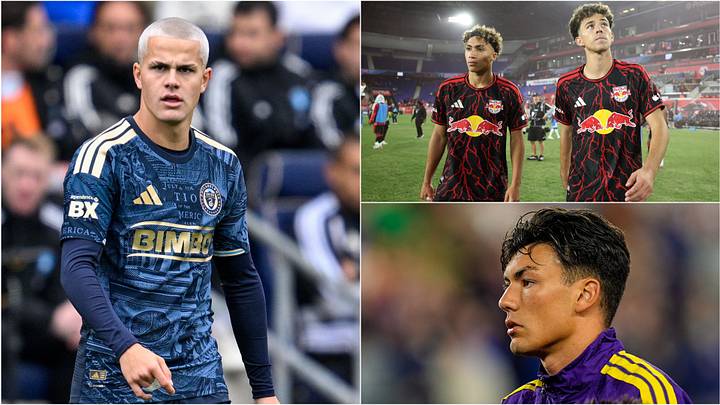
MLS, much like the USMNT, is experiencing its own teenage revolution. According to the league, a record 84 teenagers had made appearances in MLS by mid-September, with a combined 57 goals among them also setting a new benchmark. While Sullivan has been the face of this talent surge, the credit is not his alone. Other teenagers, such as Julian Hall and Adri Mehmeti at New York Red Bulls and Neil Pierre, another Philadelphia Union product, have claimed their own share of the headlines.
6'7'' Neil Pierre RISES to pull one back for @PhilaUnion! 👀 pic.twitter.com/8SVdODDYHZ
Players like these point to a trend that helps explain the surge in young MLS stars: stronger academies. One or two decades ago, American soccer academies were in their early stages, or simply did not exist. Today, institutions like YSC Academy in Philadelphia and the New York Red Bulls Academy offer comprehensive education alongside professional training environments, dramatically expanding the opportunity and sustainability of youth development at the academy level.
Another contributing factor is the league itself. The homegrown rule, part of MLS since 2008, significantly enhanced clubs' ability to sign youth talent, while the introduction of the U-22 initiative in 2021 has allowed teams to better retain that talent through more attractive, cap-friendly second contracts.
Players like Jack McGlynn, Owen Wolff and Niko Tsakiris, among others, are able to stay in the league and earn competitive wages while their clubs remain within league regulations. Jack McGlynn has since departed for Stoke City in a deal worth up to $5.5 million—a considerable figure that would not have been achievable had he left the league two or three seasons earlier. Within a system defined by strict structure and rules, space deliberately carved out for the development and retention of academy products has produced tremendous results and stands as a key driver of MLS' teenage moment.
Then, of course, there are the practical realities. In 2008, when the homegrown contract rule was introduced, the league comprised just 14 teams—fewer than half of today's total. Each new club brought its own academy, pool of local talent, and financial investment into the league, reshaping the infrastructure one expansion at a time.
MLS NEXT and MLS NEXT Pro were not established until 2020 and 2021, respectively, meaning that young players had fewer stepping stones between the academy and the first team prior to five years ago. These changes, driven by league expansion, have similarly multiplied the number of opportunities available to young players in the U.S.
They have also transformed what the journey looks like for an emerging player. Rather than forcing teenagers to compete with seasoned professionals for contracts, MLS has built both a system that allows younger players to develop in a lower, more age-appropriate environment before making the leap, and a set of rules that incentivize clubs to sign those players regardless of the broader squad composition. Today's league would seem like a fantasy to a fan, player, or executive from twenty years ago—but now, it is simply the norm.
USMNT Reaping the Benefits of MLS' Growth

The outcome of this development is a fundamental shift in how American players progress and enter professional football.
Traditional pathways remain available for talented Americans—Mathis Albert, as Pulisic once did, is climbing the ladder at Dortmund, while Diego Kochen's parent club is Barcelona; however, during the fall international window, a quarter of Pochettino's squad consisted of MLS teenagers (seven), all of whom are regularly playing and performing well at their respective domestic clubs.
Sullivan's path to professional football would not have been possible without each of these advances within MLS. At YSC, he developed into a 14-year-old mature and capable enough to make his first league appearance. He was retained through a record-breaking homegrown contract. Then, in MLS NEXT Pro, the world witnessed his brilliance: Sullivan recorded 11 goals and nine assists across two seasons, and his mesmerizing dribbles and creative instincts were ultimately enough to convince the Union he had earned a place in the first team.
Hall's journey followed a similar trajectory—the teenager spent two seasons with the NEXT Pro side before establishing himself as a regular rotation player at 17 years old last season. This season, he erupted, propelling himself into the upper tier of MLS scoring talent. He has emerged as a fully developed striker with 14 goals in 31 appearances across all competitions. Where players in Europe gain experience through occasional substitute cameos, this generation of MLS youngsters are making themselves the cornerstone of their respective teams.
Sullivan has been among the finest players in the league since the World Cup, contributing six goals and 10 assists in the last 11 league matches since mid-August. It is little surprise that Pochettino has been so taken with these young stars. Rather than appearing as mere prospects for the future, MLS teenagers have proven themselves to be vital contributors right now, irrespective of age.
Hall and Sullivan are showcasing their abilities because they are being given the platform to do so. While exposure and elite training standards aid player development, the single greatest asset has always been and will always be minutes on the pitch. Those will always be more accessible in MLS, and this season, teenagers are seizing every opportunity presented to them.
17 years old and the best player under 22 in MLS. ⭐️🇺🇸
Cavan Sullivan tops the 22U22 list: https://t.co/fkQdu3Fmjr pic.twitter.com/XVcOj37DmV
Whether this trend persists in the years ahead remains uncertain. There is, however, good reason for optimism; with top prospects like Zavier Gozo and Alex Freeman departing for Europe in high-value deals, the wider world appears to be waking up to MLS' developmental model.
Twenty years ago, MLS had prospects, wunderkinds, and golden boys. But the landscape around them has changed entirely—opportunities are greater, structures are more sustainable, academies are abundant, and pathways to the professional game have become well-oiled machines rather than rare strokes of luck. Pochettino, the first foreign coach to lead the USMNT since Jurgen Klinsmann departed a decade ago, now finds himself the beneficiary of a decades-long grassroots process finally bearing fruit.
Whether or not the class of 2026 reaches the same heights as Pulisic, McKennie and Adams over the past eight years, the new generation represents something far greater: the growing influence of MLS on youth player development in the U.S. and a shifting tide at the international level.
Sullivan may be the face of this movement, but the foundation was laid long before he arrived.