
 ไทย
ไทย English
 中國人
中國人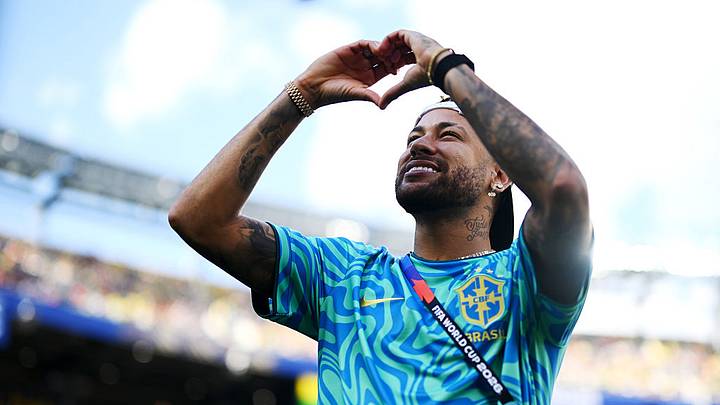
EAST RUTHERFORD, N.J. — Draped in a Brazilian flag and sporting a yellow Neymar jersey, Seleção supporter Artur didn't think twice when asked whether 34-year-old icon Neymar Jr. had earned a place on the squad.
"Absolutely," Artur says, despite the lengthy injury history that preceded Saturday's World Cup opener against Morocco, which ended in a 1–1 draw. MetLife Stadium saw the star planted on the bench, dressed in a pink vest, warm-up jersey and a backward trucker cap.
"He is my friend, after all," Artur adds about Neymar. He reached into his pocket and pulled up the Instagram app, scrolling to a recent photo of the two of them together.
While the nature of that relationship may have been somewhat exaggerated, it touched on something undeniably true about certain global soccer stars—a bond that feels almost like family and goes beyond rational fandom and, in some people's minds, roster decisions.
Brazil has historically been an unquestioned powerhouse. Elite programs typically don't make decisions based on popularity. But Neymar, who was also left off the 2010 squad as a rising young talent—a call that former manager Dunga is still questioned about 14 years later—feels like a central figure in the Brazilian football story who has yet to receive his proper heroic moment.


The Need for Nostalgia
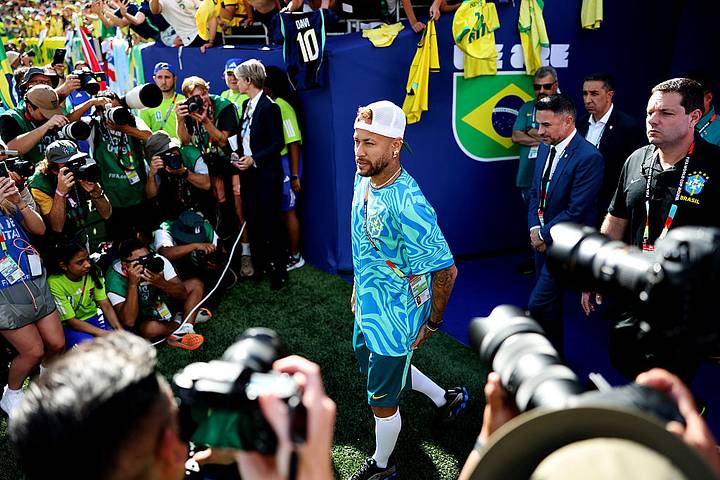
Artur spoke about Neymar's technical brilliance, drawing comparisons to Lionel Messi and Cristiano Ronaldo. "A genius," he says. "You need that kind of star." He was considerably more hopeful about Neymar logging meaningful minutes at this summer's World Cup than many of his fellow supporters, who worry that Neymar's calf injury will persist throughout the group stage.
Fittingly, the stadium's video boards were simultaneously playing a montage of Brazil's 1994 World Cup triumph, set to a wave of pure nostalgia including Tina Turner's "Simply The Best," released just a few years before that victory. Highlights of Bebeto and Romário played out as a flood of Brazilian fans arrived wearing jerseys representing their own cherished eras of Canarinho football. Ronaldo. Ronaldinho. Kaká. And of course, Pelé. The atmosphere captured the singular magic of World Cup soccer—the deep attachment a nation holds for its greatest players and the difficulty of ever truly letting them go.
Portugal and the 41-year-old Ronaldo continue their own awkward tango, with Ronaldo headlining the squad's World Cup roster despite being benched during crucial knockout-stage matches at the Qatar World Cup and facing serious questions about his age and decline for nearly four years. That situation is far more pronounced, yet it mirrors the core dilemma Brazil has had to confront: Is it wiser to use this stage to cultivate the next Neymar, or to appease the current one and the fans who adore him?
Francisco, another Brazilian supporter in a Neymar jersey, said he understands why transcendent talent gets attached to a team, even though he personally doesn't believe Neymar will play a meaningful role in any World Cup match this summer or even deserves to be on the roster.
Both things can be true at once, he says. Neymar probably shouldn't be here, but the Brazilian fans who endured an almost epic hours-long journey through New York and New Jersey public transit to reach the stadium—all the while cheering, drumming, throwing arms around each other and chanting, "Olé, Olé, Olé,"—wanted him there all the same.
"It still matters," he says.
The Need for Hope
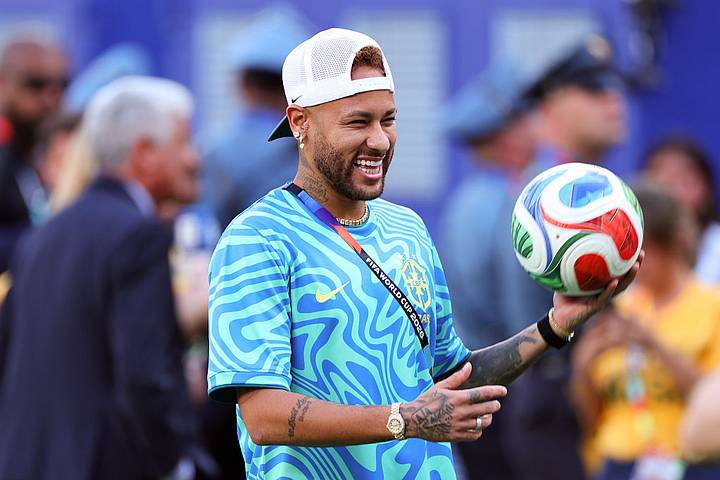
And, at least through the opening 40 minutes of the match, Neymar represented something else that may lie at the psychological heart of why so many fans can't release their grip on an icon: hope that some remnant of the past might still be tucked away, ready to rescue an offense that seemed to be fading.
Morocco controlled the first 30 minutes, probing a vulnerable Brazilian midfield and taking advantage when striker Ismael Saibari split the defenders and created an opening to chip the ball over the onrushing goalkeeper. Brazil looked toothless, being outshot and stifled, playing passes into empty space and repeatedly giving up possession deep in their own half.
While the rhythmic drumming and steady roar of the heavily Brazilian crowd never let up, the surprise arrival of Vinícius Júnior's goal in the 32nd minute shook off the lethargy. After the break and subsequent cooling stoppages, Brazil briefly edged ahead in shots, held a slim possession advantage and generated a flurry of genuine scoring chances.
Vini Jr., much like the Neymar of old, seems to float above the ground when he has the ball at his feet. Glimpses of the team's storied flair—the kind immortalized on jerseys worn for decades and destined to fuel the same complicated devotion—still shine through when the team can isolate him against a single defender, something that didn't happen nearly often enough against Morocco. He was responsible for the few moments when the crowd erupted with the kind of noise befitting its enormous presence.
After the final whistle, Brazil manager Carlo Ancelotti said he would not single out any individual player for criticism. He spoke only of the team, which he felt performed well, particularly following a round of substitutions. Yet the questions kept circling back to why Vini Jr. wasn't given more support. The underlying message was clear: Where was the creative spark?
Perhaps that, more than anything else, explains why Neymar was included on the roster. After the game, still wearing his trucker cap, he made his way through a series of post-match pleasantries, drawing just as large a crowd of Moroccan players as Brazilian ones—all of them simply hoping to enter his orbit and shake his hand.