
 ไทย
ไทย English
 中國人
中國人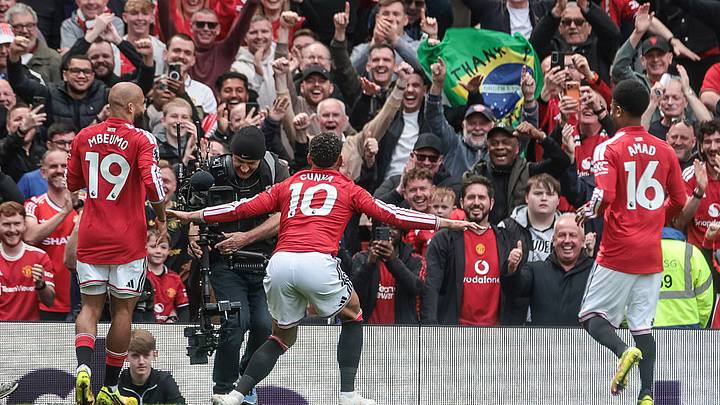
Manchester United's pivotal second goal in Sunday's 3–2 victory against Nottingham Forest should have been ruled out, according to refereeing chief Howard Webb.
Webb, who heads Professional Game Match Officials (PGMO), reportedly acknowledged during a conversation he initiated with Forest on Monday that on-field referee's decision to allow Matheus Cunha's goal was a mistake.
Cunha provided the finish, a strike that gave Manchester United a 2–1 lead following a spell of Forest dominance, but the controversy centered around Bryan Mbeumo's role in the buildup.
Mbeumo's effort rebounded to Cunha after being blocked, having used his arm—unintentionally—to bring the ball under control initially. It became trapped between Mbeumo's hip and arm, preventing it from going past him.
When Cunha slotted into the bottom corner, celebrations were somewhat muted despite referee Michael Salisbury signaling a goal. A VAR check that held up play for roughly three minutes then recommended the on-field official review the incident.
At that point, most anticipated Salisbury would overturn his decision and disallow the goal. However, after consulting the pitchside monitor for an additional minute, he upheld the original call on the basis that Mbeumo's handball was still considered "accidental."
Providing live commentary for Sky Sports, former United skipper Gary Neville branded the decision "an absolute shocker in every single way."
#MUNNFO – 55'
After VAR review, the referee stuck with the original decision to award a goal to Manchester United.
Referee announcement: "After review, the decision of goal stands because the handball offence is accidental, therefore the final decision is goal."
What Is the Rule on Handball in Soccer?
Soccer's rulebook leaves considerable room for interpretation, yet nothing in this case specifically supports Salisbury's decision to allow the goal on the grounds of accidental handball.
Only deliberate handball—"moving the hand/arm towards the ball"—is automatically penalized. Critically, though, a player who "touches the ball with their hand/arm when it has made their body unnaturally bigger" is also considered guilty of handball. Despite Mbeumo having no intention of using his arm, the fact that it made contact with the ball in that position still constitutes handball.
The bitter irony for Nottingham Forest is that had Mbeumo scored directly from his shot—before it was blocked and fell to Cunha—disallowing the goal would have been far more straightforward.
The rules specify that handball is an offense if a player "scores in the opponents' goal immediately after the ball has touched their hand/arm, even if accidental."
Had Mbeumo netted the goal himself, the situation would have been clear-cut rather than open to debate.