
 ไทย
ไทย English
 中國人
中國人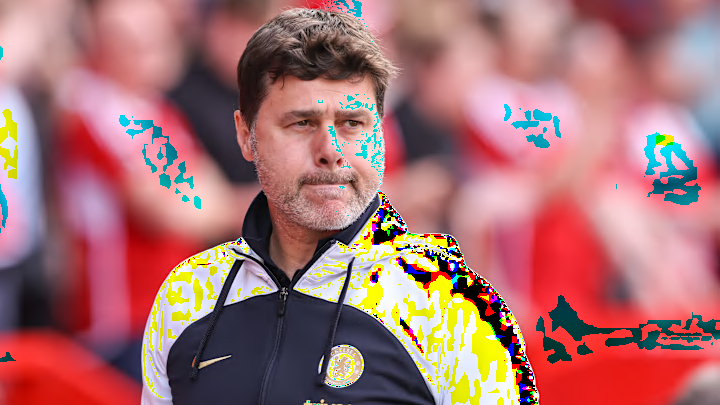
Former Chelsea head coach Mauricio Pochettino has spoken candidly about the difficulties of operating under the club's current ownership structure.
Pochettino was BlueCo's second managerial appointment when he took the role in the summer of 2023 but, despite a largely encouraging campaign as the club recovered from the chaos of the group's debut season at the helm, he and Chelsea parted ways by mutual consent after only a single year.
Now leading the USMNT, Pochettino appeared on The Overlap to discuss the circumstances, stressing that there are important lessons the increasingly unpopular ownership group still needs to learn.
'They Need to Explain the Plan'
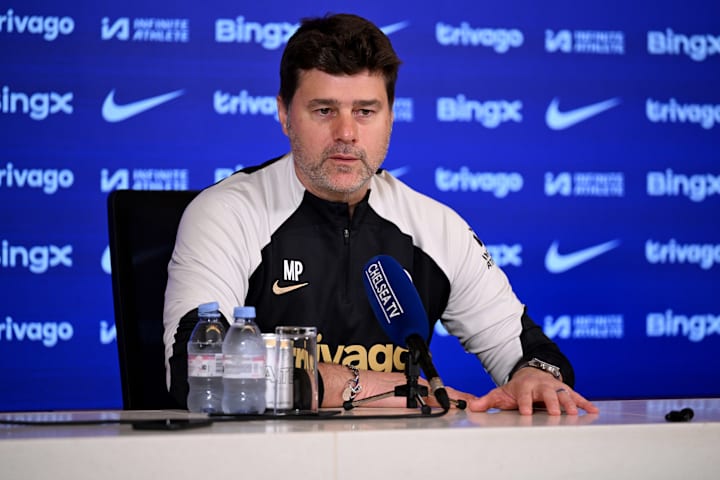
BlueCo's takeover signaled a dramatic shift in Chelsea's philosophy. A club once built to win immediately transformed into one focused on long-term development, prioritizing young, high-ceiling signings with strong resale potential. So far, genuine success stories have been few and far between.
"They have a plan that is perhaps entirely different from what Chelsea was under [former owner Roman] Abramovich," Pochettino acknowledged. "It's true that it's not easy because it's hard for people to understand.
"When I think about a new project, the most important thing is how we can communicate and demonstrate what the plan is, what we want to achieve, and what the process looks like to get there. Sometimes in football, that's difficult to explain because people don't listen. They only respond to results.
"And then because there are too many people involved in decision-making—football is not a conventional business—sometimes people struggle. They need to explain the plan."
'Lack of Experience Cost the Team'

Supporters have long raised doubts about the reliance on youth, pointing to a shortage of experienced signings—Tosin Adarabioyo is currently the oldest player in the squad at just 28 years of age.
Marc Cucurella and Enzo Fernández, among the more seasoned members of the current group at 27 and 25 respectively, have added to the pressure on ownership by voicing similar concerns about inexperience—something Pochettino says hampered his progress during the 2023–24 campaign.
"What I understood [about the plan] didn't happen after ... and maybe I was wrong," he continued.
"Chelsea was about winning. In the past, it meant Champions League titles, experienced players, the best signings available, but now it's an entirely different project. People need to accept that it's different. Different ideas about how to operate.
"When we arrived, the team was 12th in the Premier League. We weren't playing in Europe. [Chelsea] was in the middle of all the changes from one ownership to another—things you need to put in place and prioritize.
"Why I feel disappointed about the internal situation is that under our assessment and vision, it was a natural process to build something solid for the future, to evaluate things and add quality, but not as rapidly as people thought it needed to happen. The pace wasn't there. We finished sixth, winning the last five or six matches, reached the Carabao Cup final, played the FA Cup semifinal against Manchester City—we deserved to win both, but due to inexperience and other factors, we didn't. Still, we were on a very positive trajectory.
"But when things no longer aligned with our vision, we decided it was better to part ways and give the club the freedom to pursue what they wanted."
'Managers Need to Be Involved'

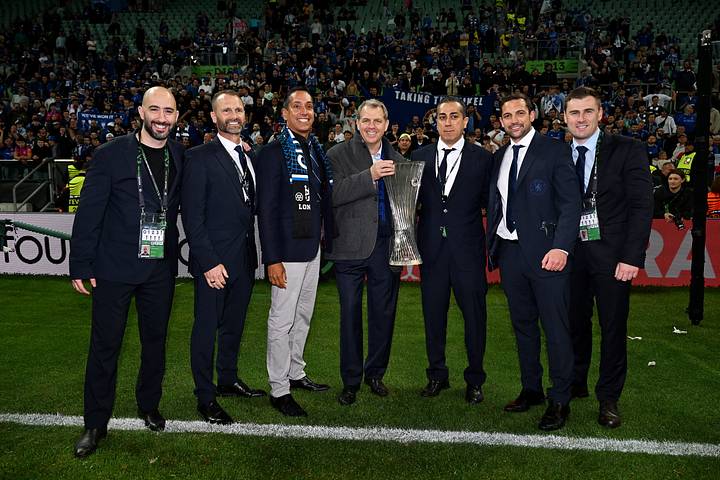
Pulling the strings behind the scenes at Stamford Bridge is co-owner Behdad Eghbali, supported by co-sporting directors Paul Winstanley and Laurence Stewart along with recruitment leads Joe Shields and Sam Jewell.
The group take a >ultimately led to his departure.
"When we signed, the signings were already done," Pochettino acknowledged. "I was involved—I gave the green light when we signed [Axel] Disasi because [Wesley] Fofana was injured in preseason, and Cole Palmer. With those two, we were part of the decision-making.
"It's more about a philosophical belief that the coaching staff needs to be involved. We need to be an important part of the decisions because, if not, it's not easy. I don't want to state the obvious, but Manchester City works because Pep [Guardiola] is involved.
"For players to perform, they need to feel connected to the coaches. If not, it's difficult. 'I play for the club'—no. Players need to play for the club through the coaches. If they play for the coaches, they can play for the club. I've never seen a player perform for the club but not for the coach. It's impossible. You need that connection."
'Data Isn't Everything'
With BlueCo's data-driven approach yet to produce meaningful results, Pochettino cautioned the group that, while analytics do have a role in the modern game, nothing can substitute a coach's instinct and judgment on qualities like passion, mental resilience under pressure, and tactical compatibility—none of which can be captured on a screen.
"When we arrived, we fully backed the club in all the decisions they had already made," he concluded. "What happened after that, I'm not sure. If you agree to go to Chelsea, the club's management philosophy becomes much clearer after our experience.
"I'm not complaining because leaving was also my decision, but I think in trying to understand the new people coming in—new ownership, new football, new coaches, new sporting directors, new everything—we sometimes underestimate the analog side of things.
"Football is both analog and digital. You cannot throw the analog elements away, because they support the digital. In technology, digital replaces analog, but football doesn't work that way. There are things you simply cannot measure with data or science. It's still a game that holds a certain mystery you can't pin down.
"It's not just about data. 'Do they shoot often? Do they run or not? Throw-ins?' There are things that science and numbers will never be able to measure."