
 ไทย
ไทย English
 中國人
中國人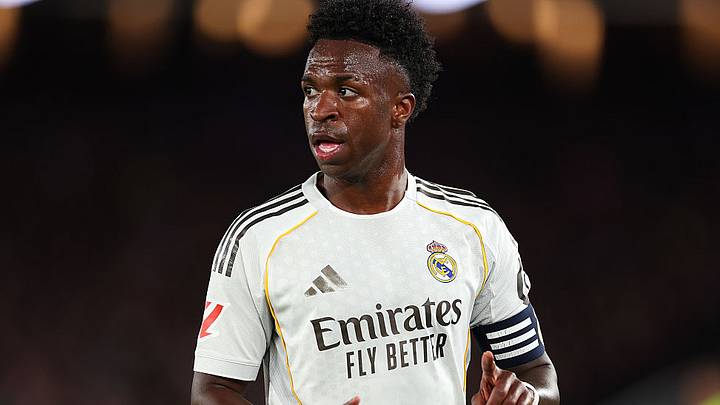
A certain ruthlessness is required to repeatedly conquer the summit, woven into the very DNA of the Real Madrid badge adorning every player's white jersey.
Difficult decisions on the field and in the front office are standard practice at the Bernabéu, much like the relentless jeers that occasionally cascade from the terraces toward the club's biggest stars. The bar is set so impossibly high that even 42 goals in a single campaign can earn you nothing but a petition with over 52 million signatures demanding your departure—just ask Kylian Mbappé.
Club president Florentino Pérez operates with a comparable cold-bloodedness behind closed doors, occasionally entering contract standoffs with Real Madrid's most pivotal players. Club icons Cristiano Ronaldo, Sergio Ramos and Luka Modrić have all experienced it, as did Mesut Özil and now, Vinícius Júnior.
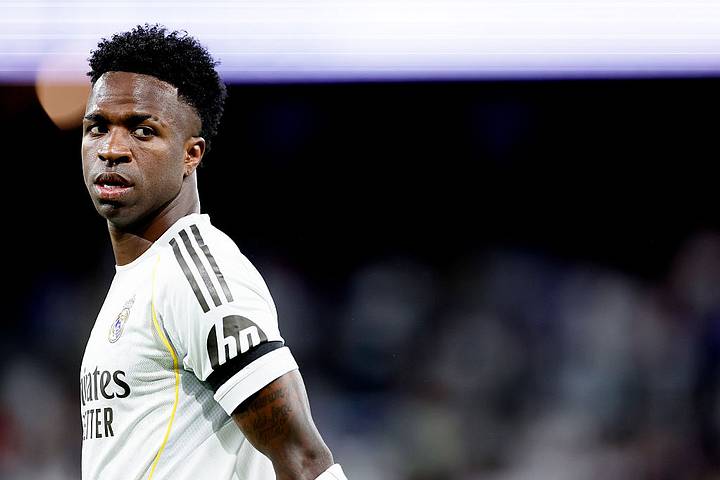
The Brazilian international has been deadlocked with Los Blancos since January 2025 over a contract extension. Despite both parties being open to a deal, wage disagreements have halted any meaningful progress, leaving the door ajar for Arsenal to step in and attempt to tempt Vinícius Jr. to north London.
The answer appears relatively straightforward: find a middle ground and secure an agreement to retain the player who helped Real Madrid claim their last two Champions League crowns. But nothing is ever simple at the world's biggest club, particularly when contracts are involved.
Real Madrid's Aggressive Tactics Have Paid Off

"All the news about my renewal with Real Madrid are false," Ronaldo famously declared in June 2013. The striker, who was contracted until 2015 at the time, found himself at the center of a transfer whirlwind, with growing reports linking him to a stunning return to Manchester United, while Manchester City and Paris Saint-Germain lurked in the background.
Ronaldo was coming off a turbulent 2012–13 season, during which the Portuguese star fell out with then-manager José Mourinho. He was also visibly discontented with the team's Champions League shortcomings amid mounting pressure to finally deliver La Décima. On top of that, Gareth Bale was soon arriving as the club's prized new acquisition.
Adding to the tension were prior failed contract negotiations with Real Madrid, which cast a shadow over both the team and the player throughout the entire season. Pérez stood firm in his refusal to meet Ronaldo's elevated salary demands, given that the club had already absorbed a portion of his tax obligations.
For obvious reasons, losing Ronaldo would have been catastrophic for Los Blancos, as would prolonging the standoff into the 2013–14 season. Deep down, Pérez recognized this and ultimately relented, handing his No. 7 a pay rise and an extension through 2018 just one month into 2013–14.
Ronaldo went on to help the club capture its 10th Champions League title that very season, before adding three more to the trophy haul at the Bernabéu.

Özil found himself in a comparable position, seeking a new deal with Real Madrid in 2013 following three productive seasons at the Bernabéu. However, the midfielder revealed in his book, The Magic of the Game, that negotiations were handled by his father, who "did not keep a cool head" when sitting across from Pérez.
The club was unwilling to match the terms put forward by Özil and his representatives, prompting his father to storm out of Pérez's office. That meeting effectively pushed Özil straight into Arsenal's embrace, despite the World Cup winner having no desire to leave the Spanish capital.
Many believed losing Özil would cripple Real Madrid and pointed the finger at Pérez for his unyielding approach. Yet the club went on to win La Décima the following season and then brought in Toni Kroos ahead of the 2014–15 campaign, rendering Özil little more than a distant memory.
Pérez's Hard-Nosed Approach Backfires Just As Frequently

For every success story Pérez can claim, there are equally as many missteps that have cost the club dearly, both in the near and distant future. Ramos was caught in a very public tug-of-war with Real Madrid in 2021 as the clock wound down toward his free agency at the end of the campaign.
Both sides offered conflicting accounts, sending the Spanish media into a tailspin. Alleged hotel room meetings, PSG counter-offers and Zinedine Zidane's public endorsement of Ramos only added to the chaos, all culminating in the player's quiet departure that summer.
The crux of the issue was Real Madrid's insistence on reducing Ramos's wages in any new agreement, a stance that was met with fierce resistance from the captain. But Pérez refused to budge, and ultimately allowed the legendary defender to walk away.
The decision appeared inconsequential in the short term—after all, Los Blancos lifted the Champions League the following season. Yet as time passed and defensive injuries ravaged Real Madrid's backline, the choice not to retain Ramos—even in a reduced capacity off the bench—proved increasingly difficult to justify.

Much the same can be said of Pérez's refusal to hand Modrić a new contract following the 2024–25 season. The Croatian was emphatic about his desire to remain at the club, even if it meant fewer appearances going forward, but his wish was flatly rejected by the president.
Pérez passed up the opportunity to retain the 2018 Ballon d'Or winner, only to watch his team's underwhelming midfield struggle over the subsequent two seasons. Even at 40, Modrić would have lifted a midfield unit prone to aimless passing, but instead he took his talents to AC Milan.
The decision was part of Pérez's broader vision to build around Real Madrid's emerging young core under the newly appointed Xabi Alonso. Yet the former Bayer Leverkusen boss lasted only until January in his new role, and three of his four summer signings barely featured in the second half of the season.
Which Path Will It Be for Vinícius Jr?
In recent seasons, Pérez has accumulated more misjudgments than triumphs, as reflected by the club's failure to secure a major trophy in consecutive campaigns. Los Blancos endured a similar barren spell following Ronaldo's exit in 2018.
There could hardly be a worse moment for the president to find himself in yet another contract standoff, and with Vinícius Jr. of all people. The Brazilian commands Real Madrid's left flank and wears Ronaldo's iconic number seven shirt for good reason, and his two Champions League titles before the age of 24 speak for themselves.
Allowing Vinícius Jr. to depart this summer or the next could shatter an already fragile Real Madrid squad, one desperately in need of creative spark and additional goal threat behind Mbappé.
Yet every argument for keeping Vinícius Jr. carries little weight with such a hard-nosed president, one determined not to compromise his wage structure for any single player, regardless of their stature.
Enable functional cookies to see this feature.
Pérez holds Vinícius Jr. in high regard, much as he did Ronaldo before their relationship soured in 2018. The president could draw from his 2013 standoff with the Portuguese icon and push a deal across the finish line—even if it means swallowing his pride—if it ensures one of the squad's most indispensable figures remains in white for years ahead.
Or he can take the Ramos route and flex every ounce of his authority, forcing Vinícius Jr. to embark on a new chapter elsewhere, even if it ultimately comes at Real Madrid's own expense.