
 ไทย
ไทย English
 中國人
中國人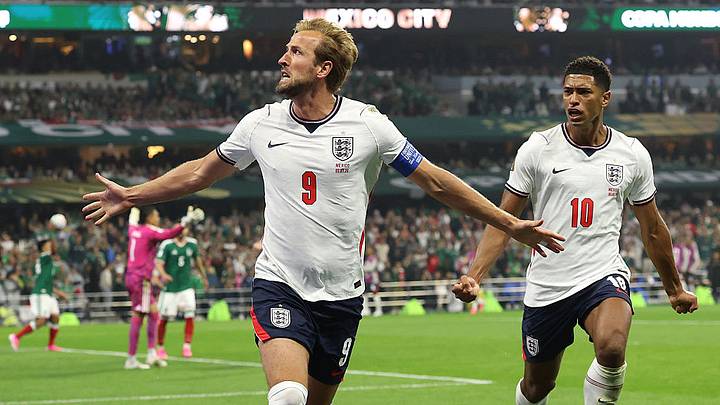
Almost as soon as Harry Kane's heroics secured England's passage into the World Cup round of 16, the dangers of high-altitude football became an unavoidable topic across every media platform.
The Three Lions' upcoming clash against co-hosts Mexico at the legendary Estadio Azteca presented an extraordinary challenge. England boss Thomas Tuchel acknowledged his squad would face a "big disadvantage," with proper acclimatisation to the 2,240-metre elevation simply not feasible in the available time.
FIFA rules also ruled out any "get in, get out" strategy, meaning England touched down in Mexico City just 48 hours before kick-off. There was a growing feeling that Tuchel's side were being thrown to the lions despite Mexico's relative lack of quality.
El Tri had energised a football-mad nation, cruising through Group A unbeaten before impressively eliminating Ecuador in the round of 32. Sunday's match had all the hallmarks of a momentous occasion.
For England, every condition was set for another classic tournament disappointment. A sluggish defeat in the thin air of Mexico City seemed like a perfectly fitting end to their campaign following the post-Croatia hangover.
Three Lions Defy Azteca Altitude in Thrilling Victory
As altitude anxiety gripped a nervous nation, a peculiar trend swept through the English press corps. Journalists covering the match dusted off their running gear and logged 5K efforts on Strava in a show of solidarity. Groundbreaking conclusions were drawn: exercise was significantly harder with less oxygen in the air.
The Independent's Miguel Delaney spent much of his Sunday defending the experiment to anyone who found it mildly absurd, while fans back home debated what hour it was socially acceptable to crack open a drink. The wait grew longer still when kick-off was delayed by an hour due to a severe weather warning.
It was 2 a.m. BST when England launched proceedings with a long ball into Raúl Rangel's box, drawing an unconvincing punch from Mexico's goalkeeper. If the altitude hype was to be believed and Mexico truly was unbeatable at its fortress — two home defeats in 500 years, or something to that effect — then Tuchel needed to adapt.
The German was hired precisely for moments like this. Sir Gareth Southgate deserves considerable credit for transforming public perception of the national team and building a strong sense of unity at St. George's Park, yet his tactical limitations proved costly at crucial moments. Nevertheless, when Tuchel took charge in January 2025, he inherited solid foundations and an enviable squad headlined by two world-class talents.
England Stats vs. Mexico
Statistic | England's Total |
|---|---|
Possession | 33% |
Expected Goals (xG) | 1.61 |
Total Shots | 6 |
Shots on Target | 5 |
Passing Accuracy | 80% |
Tackles | 18 |
Blocks | 7 |
Clearances | 49 |
Duels Won | 51 |
Harry Kane and Jude Bellingham had graciously shared the spotlight for England throughout their time in the Americas. Both shone in the wins over Croatia and Panama before Kane took centre stage in Atlanta to down DR Congo.
While Kane's ability to deliver on the biggest occasions has oddly been questioned throughout his career, Bellingham thriving under the brightest lights is the very foundation upon which his reputation has been built.
There was never any question that England's No. 10 — benefitting from the contentious absences of Phil Foden and Cole Palmer — would step up in Mexico City. After England had carefully managed the game through to the first, and suddenly invaluable, hydration break, Bellingham struck twice in the space of 98 seconds to silence the Mexican crowd. England's travelling supporters were in absolute ecstasy.
But this was never a match that would fade quietly into the night. Mexico couldn't exit without validating England's pre-match nerves. Julián Quiñones smashed home a lifeline before the break — his fourth World Cup goal — and after England tried to reassert control at the start of the second half, Jarell Quansah's red card following VAR review forced a significant tactical reshuffle.
Kane's composed penalty gave England only brief relief, before the captain clumsily conceded a spot kick straight back to the hosts: 3–2.
Twenty minutes of normal time remained, plus a considerable amount of stoppage time already accumulated. The clock seemed to slow to a crawl and then reverse, as Tuchel's men were pushed into a desperate rearguard action.
Yet it was during those 31 gruelling minutes that England's unsung heroes etched their names into history. Mexico's relentless crossing was repelled by Dan Burn, no longer merely a squad cheerleader, who produced a string of defensive interventions worthy of a standing ovation. Ezri Konsa and Djed Spence expertly controlled the wide channels, while John Stones cleverly averted disaster at the death. Anthony Gordon seemingly sprinted all the way back to base camp in Kansas City.
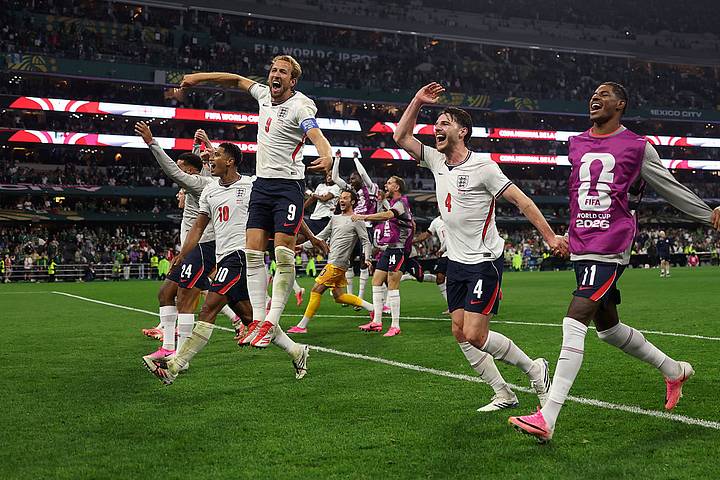
Fittingly, it was the outstanding Jordan Pickford who punched clear to give England one final moment of relief, just seconds before Alireza Faghani's whistle sparked a mass collapse onto the Azteca turf.
"A heroic performance and a heroic result," Tuchel said after the final whistle, paying tribute to a group of players who stared adversity down and delivered arguably England's finest World Cup result since the 1966 final.
It felt like a tournament win in itself, with Mexico beaten at their revered fortress for the first time in 13 years. The immediate legacy of this victory will be defined over the coming fortnight, yet its lasting significance for English football may never truly fade.
England's road to World Cup glory is no longer haunted by Aztecan ghosts — but it is now blocked by a superhuman Viking striker. Erling Haaland's Norway awaits in Miami this Saturday.