
 ไทย
ไทย English
 中國人
中國人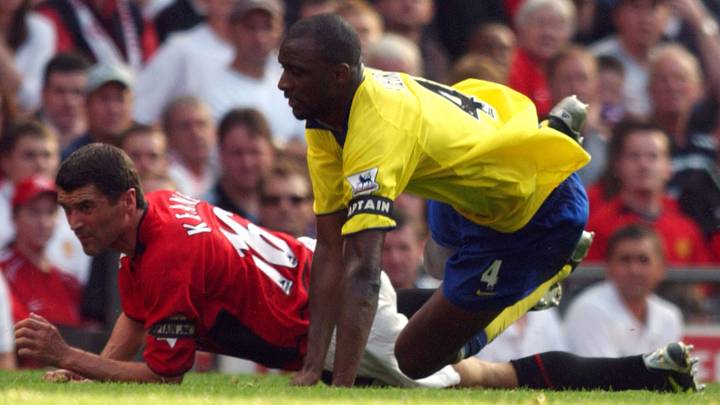
Arsenal's iconic former skipper Patrick Vieira has made the bombshell admission that he held talks with Manchester United boss Sir Alex Ferguson about a possible move during the height of the two clubs' intense and combustible Premier League rivalry.
It has taken twenty years for Vieira to finally reveal a remarkable chain of events that could have entirely rewritten the modern history of English football's top division.
"I had the opportunity to move to Real Madrid a couple of times and I even had ... an opportunity to move to Manchester United," Vieira told Sky Sports this week. "I had a meeting with Sir Alex Ferguson. Full respect, I couldn't say no to meeting him because he was an important figure in the Premier League."
Vieira didn't place an exact date on this clandestine encounter, but reports emerged in the summer of 2003 that United had been keeping tabs on Arsenal's inspirational captain. Vieira had just one year remaining on his contract in north London, and United's underwhelming marquee midfielder Juan Sebastián Verón was pushing for a departure before eventually joining Chelsea.
The Gunners' vice-chairman David Dein boldly insisted that his captain "is not for sale," yet Arsenal were not in a particularly strong negotiating position — especially if Vieira was willing to hold talks with Arsène Wenger's fiercest rival behind closed doors.
Arsenal and Man Utd's Battle for Premier League Supremacy
Premier League Season | Arsenal Finish | Man Utd Finish |
|---|---|---|
1997–98 | 1st | 2nd |
1998–99 | 2nd | 1st |
1999–2000 | 2nd | 1st |
2000–01 | 2nd | 1st |
2001–02 | 1st | 3rd |
2002–03 | 2nd | 1st |
How Man Utd Would Have Looked With Vieira
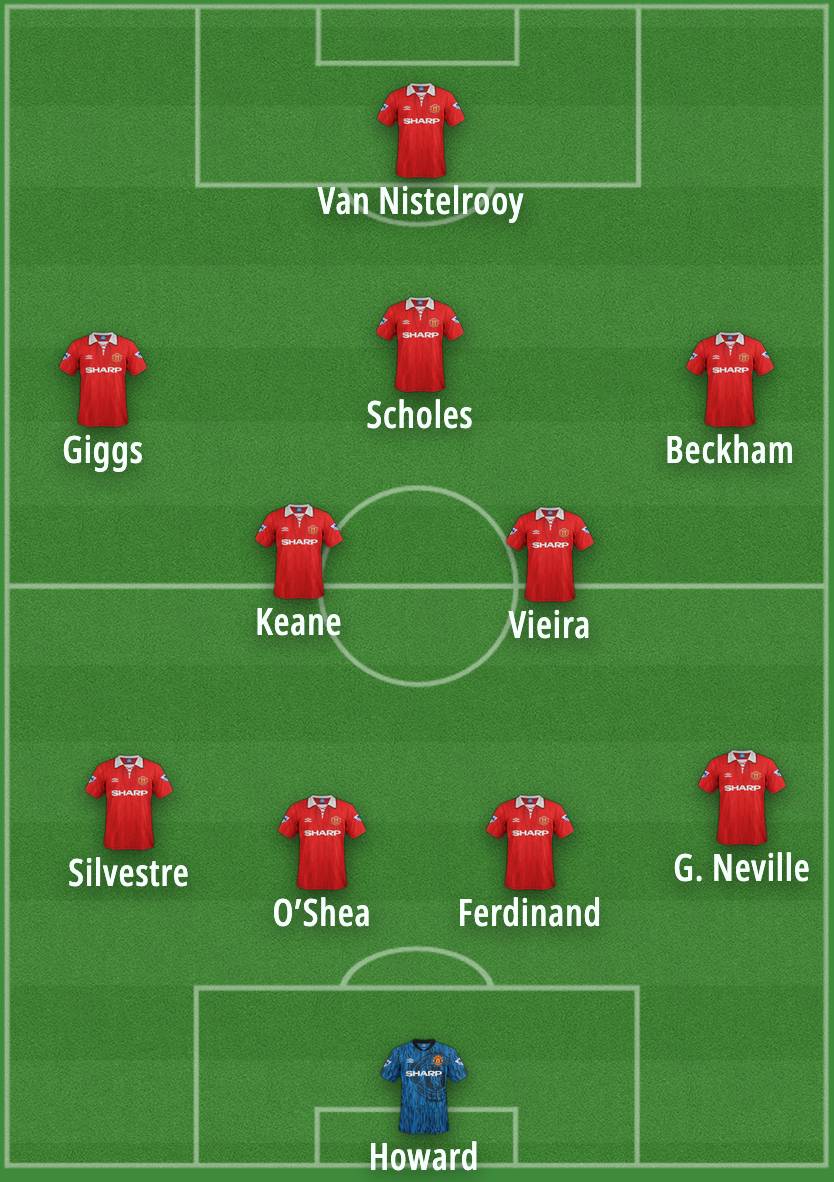
"We met and we talked and he explained to me his vision that he had for Manchester United and the team that he wanted to build," Vieira recalled, reflecting on who his potential teammates at Old Trafford might have been.
"He wanted to play me with Roy Keane, [Ryan] Giggs on the left-hand side, David Beckham on the right-hand side and [Paul] Scholes to play behind [Ruud] Van Nistelrooy, so it wasn't a bad team."
United had just claimed the title with that attacking lineup, finishing five points ahead of Vieira's Arsenal in 2002–03. Nevertheless, Ferguson was already conscious that his second great squad — which had claimed the treble at the turn of the millennium — was nearing the end of its cycle. "Although I was always trying to disprove it, I believe that the cycle of a successful team lasts maybe four years, and then some change is needed," he would reflect years later.
Vieira turned 27 that summer and was widely considered one of the finest players on the planet. The previous year he had been nominated for the Ballon d'Or, earning more votes than Real Madrid's first Galáctico Luís Figo, among others. Replacing Vieira for Verón — who never justified the record fee paid for him — would have made United considerably stronger while simultaneously weakening their nearest rivals.
Ferguson delivered a persuasive pitch, yet he ultimately fell short of convincing Vieira to cross the divide.
Why Vieira Rejected Man Utd
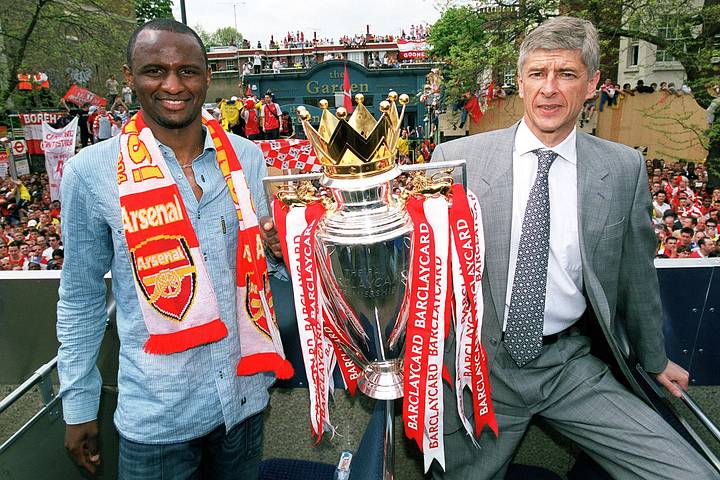
"I couldn't leave Arsenal," Vieira has since confessed. "I was too happy there and we were on the way of building something quite really special for the club and that's the way it was.
"When you do well, of course there's teams who are interested and then you have to make a decision. But the decision for me was to stay at Arsenal because I felt the love from the club, from the players and from the fans. Everything was there for me to grow up as a player and to achieve what I wanted to."
Arsenal reaped the rewards in the short term, going through the entire 2003–04 Premier League season unbeaten, with Vieira at the heart of a side brimming with elegance and intensity. United, however, were not entirely set back by the outcome.
How Man Utd Benefitted From Vieira Snub

Vieira may not have arrived in 2003, but it would still prove to be a pivotal transfer window for Manchester United. Verón was joined by David Beckham among the high-profile departures, prompting Ferguson to move swiftly and secure a teenage Cristiano Ronaldo — just days before Wenger could complete his own move for the youngster.
Ferguson's instinct that a squad overhaul was necessary proved well-founded, and United would gradually assemble the core of a new generation, bringing in the likes of Wayne Rooney, Edwin van der Sar, and Nemanja Vidić.
First Arsenal and then a newly wealthy Chelsea capitalised on United's transitional period, but by the time Vieira eventually departed the Gunners in 2005, Ferguson's side was primed. The Red Devils stormed to three successive Premier League titles while also reaching back-to-back Champions League finals.
Arsenal may never have had their Invincibles had Vieira departed, yet Manchester United could equally have been robbed of their own glorious era. In a curious twist of fate, both clubs may ultimately look back on how events unfolded with a sense of satisfaction.