
 ไทย
ไทย English
 中國人
中國人
Heading into Sunday's 2026 World Cup final, Spain stands as the overwhelming favorite to claim international football's most coveted trophy.
Opta's supercomputer gives La Roja a commanding 59% probability of triumph over reigning champion Argentina, with the majority of betting markets firmly backing Luis de la Fuente's squad.
While other sides have produced more eye-catching moments, Spain has remained steady yet somewhat under the radar for much of this summer. That changed dramatically in the semifinal, when a commanding demolition of Kylian Mbappé's France announced to the world that something truly extraordinary was unfolding.
This Spain side is markedly different from the team that hoisted the trophy 16 years ago in South Africa, yet meaningful comparisons can be drawn between that legendary squad and the current one.
One final match separates De la Fuente's men from eternal glory, but how have they gotten here? And what makes them so difficult to contain?
System Over Stars
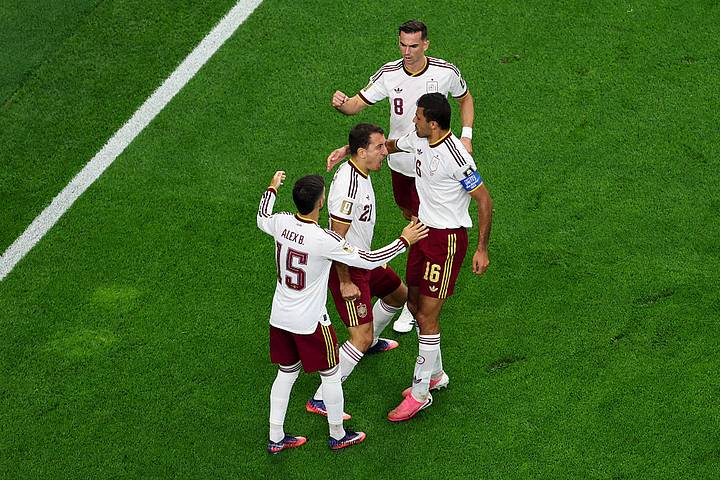
How many players from Spain's starting lineup against France would you include in a hypothetical 'World XI'? More to the point, how many would you have selected in Spain's own best XI before the tournament began?
One of the core strengths of De la Fuente's setup is that it doesn't revolve around any single individual.
Pedri not performing at his peak today? In steps Fabián Ruiz, or Dani Olmo. Or both.
Álex Baena, Pedro Porro and Mikel Merino are three others who have contributed significantly despite rarely being considered guaranteed starters.
Even the persistent fitness concerns surrounding wingers Lamine Yamal and Nico Williams, initially viewed as a serious problem, have barely registered—with worries over width and pace almost entirely neutralized by a watertight system that appears to elevate players whenever they pull on the national shirt.
Pass Masters
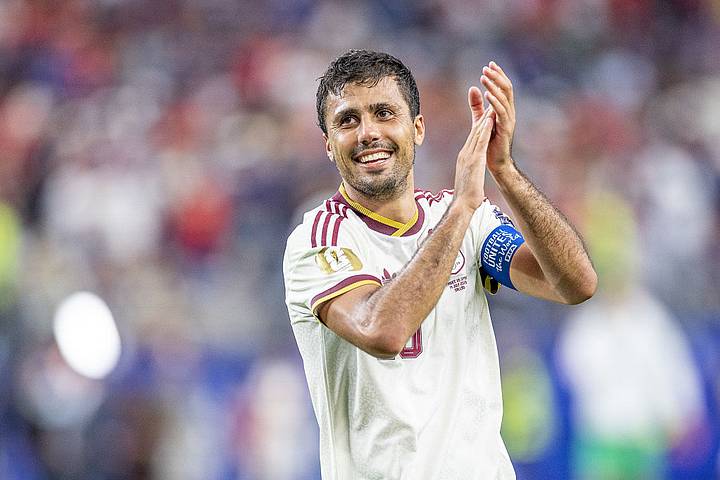
A founding principle of Spain's first World Cup triumph in 2010 was that an opponent without the ball cannot score. That philosophy has become a cornerstone of the 2026 generation as well.
No team to advance past the round of 32 has averaged a greater share of possession than Spain (63.8%), and the tournament's top three passers are all Spanish—Rodri, Aymeric Laporte and Pau Cubarsí. 2024 Ballon d'Or holder Rodri's tally of 694 passes is the highest recorded at any World Cup since tracking began in 1966.
In the semifinal, confronted with the tournament's most potent attack, Spain simply placed France on a carousel it had no way of escaping, leaving Mbappé, Michael Olise and others dizzy and subdued.
Across seven matches, Spain has surrendered just a single goal and faced a remarkably low xG of 2.1. Among the other semifinalists, Argentina faced an xG of 4, France 5.5 and England 6.5 (via FotMob).
A recurring criticism of Spain is that their passing can become excessive, with attacks devolving into a tedious sideways shuffle incapable of breaking down a deep defensive block. However, that has seldom been the case this summer—with the emphatic result against Cabo Verde in the group stage opener appearing less surprising in retrospect given the African nation's performances that followed.
Consistent Approach

The other pivotal factor behind Spain's rise has been De la Fuente himself.
The 65-year-old has virtually no experience managing at club level, yet he is a genuine international football specialist who methodically worked his way up through the youth ranks before taking charge of the senior side.
As a result, he has been able to embed his philosophy and cultivate a winning culture from the Under-19s all the way to the first team, having worked alongside many of the same players throughout his decade-long progression through the age groups.
De la Fuente's trophy-winning record is virtually unrivaled, having claimed the European Under-19 Championship in 2015, the European Under-21 Championship in 2019, a silver medal at the Tokyo Olympics in 2020, the Nations League in 2022–23 and the 2024 Euros.
Enable functional cookies to see this feature.
Five members of the Under-21 Euro-winning squad and eight from the Olympic team are part of this summer's roster.
With the limited time available during international windows typically restricting how deeply a coach can shape a team, Spain's long-term approach has produced a level of consistency, familiarity and mutual understanding that very few nations could ever realistically achieve.