
 ไทย
ไทย English
 中國人
中國人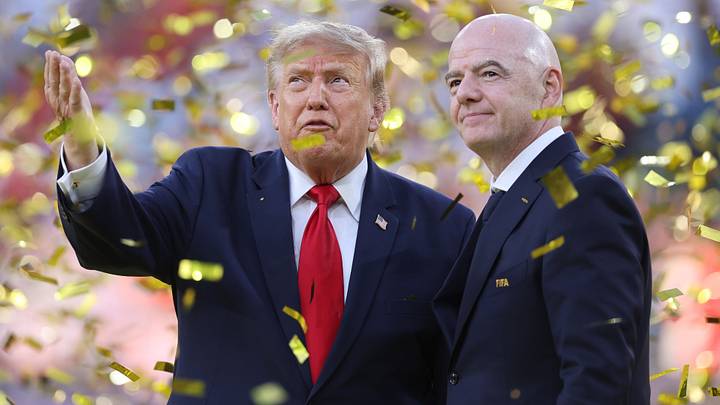
For better or worse, the 2026 World Cup held across North America will always be linked by some to U.S. President Donald Trump.
As he was eager to highlight, it was during Trump's first term that the United States, Canada and Mexico won hosting rights for a tournament that would be mired in governmental controversy. Beyond the issues of pricing, visas and travel restrictions, Trump also inserted himself into the center of the Folarin Balogun red card controversy.
The President openly acknowledged that he intervened during an unprecedented protest which ultimately resulted in the U.S. men's national team striker having his one-match ban suspended, enabling him to feature in the round of 16 clash against Belgium. ESPN is among several outlets reporting that the FIFA council is preparing to vote on a motion that would ban such interference going forward.
The concern for many is that no amount of revising future regulations will undo the tarnished history.
Trump's Role in Biggest Controversy of 2026 World Cup
When Balogun accidentally landed on Tarik Muharemović's ankle during the USMNT's round of 32 victory over Bosnia and Herzegovina, the matter could have been resolved within the confines of Levi's Stadium. A FIFA spokesperson told assembled journalists awaiting Mauricio Pochettino's press conference that there was no mechanism for the U.S. to challenge Balogun's red card, meaning he would be required to serve the automatic one-match suspension it carried.
Pochettino initially stated that the team would contest the ruling before Peter Rutzler of The Times quickly informed him of the briefing everyone had just received. The USMNT head coach turned to his communications director, Michael Kammarman, received a firm nod, and promptly accepted Balogun's fate. But the matter would not rest there.
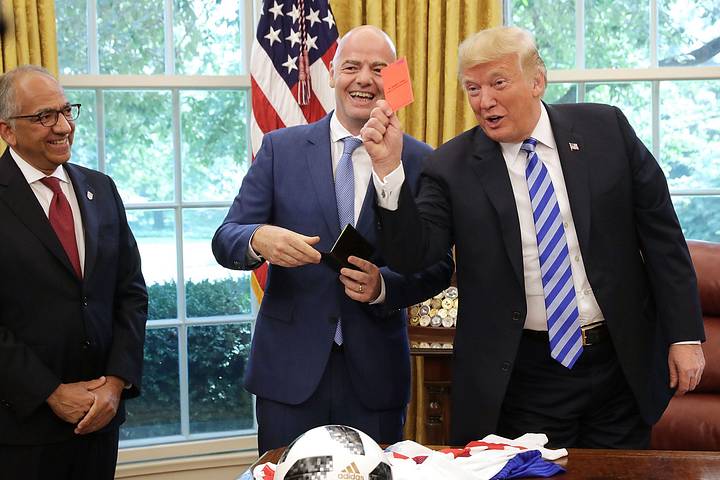
Trump openly admitted that he subsequently "asked for a review" of the incident after contacting FIFA president Gianni Infantino. "I didn't think it was a foul. I'm good at this stuff," he remarked. "I didn't tell [Infantino] what to do. I can't tell him what to do, but I don't believe he made the decision."
The matter was reviewed by FIFA's disciplinary committee, who agreed to suspend Balogun's pending ban by invoking Article 27. This obscure clause states: "The judicial body may decide to fully or partially suspend the implementation of a disciplinary measure."
Infantino, a self-declared ally of Trump who would have had no authority to rule on Balogun's suspension, was careful to emphasize that "FIFA's judicial bodies are independent," even as he acknowledged "regularly" discussing World Cup affairs with Trump.
"I read the decisions of the FIFA disciplinary committee when they are issued," Infantino added. "Sometimes I am surprised by them. Sometimes I agree with them, and sometimes I disagree." Many took issue with this particular decision.
Why Rule Change Is Only the First Step

One of the primary concerns surrounding Balogun's suspended ban is the lack of clarity involved. Beyond referencing Article 27, which itself offers little detail, there was minimal explanation as to why the U.S. striker was spared the punishment.
England Football Association chair Debbie Hewitt has called for the release of all documentation related to the decision—as well as Infantino's abandoned World Cup private investment scheme. The Belgian FA had previously seen a comparable appeal go unheeded.
This controversy will come to a head during Thursday's session of FIFA's 37 council members, which will be presided over by Infantino. Balogun's red card will be just one of several contentious topics on the agenda.