
 ไทย
ไทย English
 中國人
中國人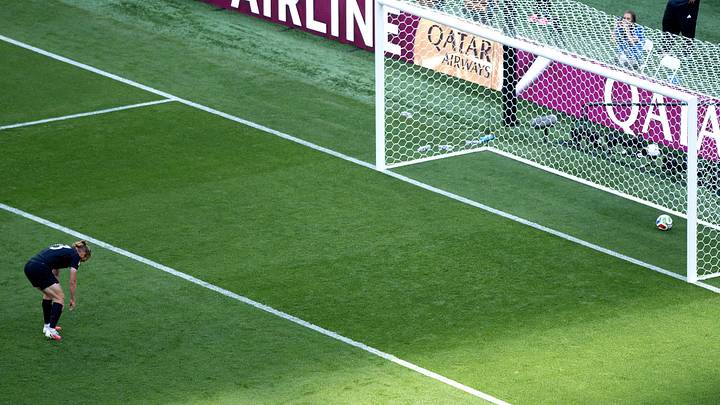
SEATTLE — The most thunderous cheer Lumen Field's celebrated Seattle faithful could summon in the second half of the U.S.'s miserable World Cup elimination came during the water break.
Down 3–1 to Belgium, devoid of creativity, drive and spirit, the stadium's big screen operator attempted to lift the atmosphere with that beloved tradition of this World Cup: celebrity spotting. In a telling reflection of the absence of star quality on the field, the camera found Pearl Jam frontman Eddie Vedder, who understood exactly what the moment demanded.
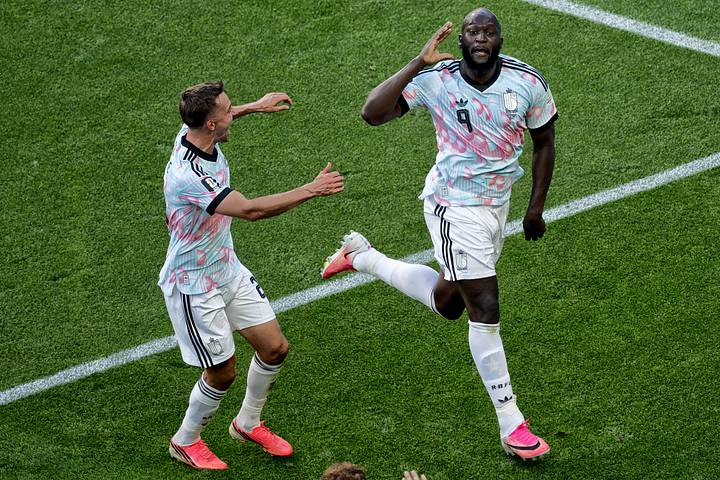
The 61-year-old rock legend rose to his feet and finished the can of beer in his hand, foam spilling from both corners of his mouth before he balanced the empty vessel on his baseball cap. This moment of showmanship jolted the crowd from its stupor, but it was a brief triumph. By the time Romelu Lukaku slotted in Belgium's fourth goal in stoppage time, it had been long since faded from memory.
After a summer filled with such hope, a tournament in which the U.S. spent the opening four matches playing like a side shaped in Mauricio Pochettino's vision, the wealth of positive principles the manager had carefully built were doused in fuel and set ablaze during 90 humbling minutes.
"We were not the same team," Pochettino would sigh.
Sloppy Start
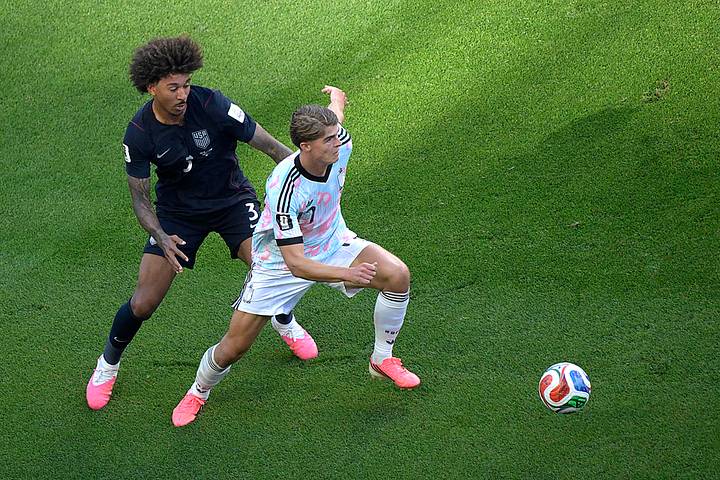
One of the hallmarks of the U.S. group stage campaign had been explosive beginnings. The co-host found the net within the first 11 minutes against Paraguay, Australia and Türkiye, quickly dictating the tempo and game situation, granting them the freedom to choose when to press and burst forward in transition once an early lead had been secured.
External distractions could hardly be held responsible for Monday's sluggish opening. Despite the extensive media attention surrounding Folarin Balogun's overturned suspension, any sense of political grievance had not spilled into the streets of Seattle.
This has proven to be an outstanding World Cup city. Fans enjoy walkable access to the sweeping arches of Lumen Field, with massive screens appearing to be installed at nearly every intersection leading to the stadium. The only disruption to a pleasant stroll through downtown on a beautiful summer's afternoon was the collective groans and gasps rising above the rooftops. To the uninformed, it sounded like some kind of catastrophe. In reality, Spain was simply facing Portugal.
The waves of red and white flooding the streets before kickoff were either unbothered by the controversy surrounding Balogun's selection, or thoroughly enjoying it. "We're hosting the d--- thing, it should be rigged," one supporter, Brett, shouted, the vein in his temple pressing against the stars and stripes bandana tied around his shaved head. "I'm surprised we're not already one goal up."
In every previous match, the U.S. had gone 1–0 ahead. On Monday, the co-host had conceded twice before registering a single attempt on goal.
"We never got into the rhythm of the game," Pochettino lamented, insisting that the Balogun controversy had no bearing on the performance: "We were not good enough today. We don't need to look for another excuse."
WIN FIFA WORLD CUP 2026™ FINAL TICKETS & OTHER PRIZES

No Intensity
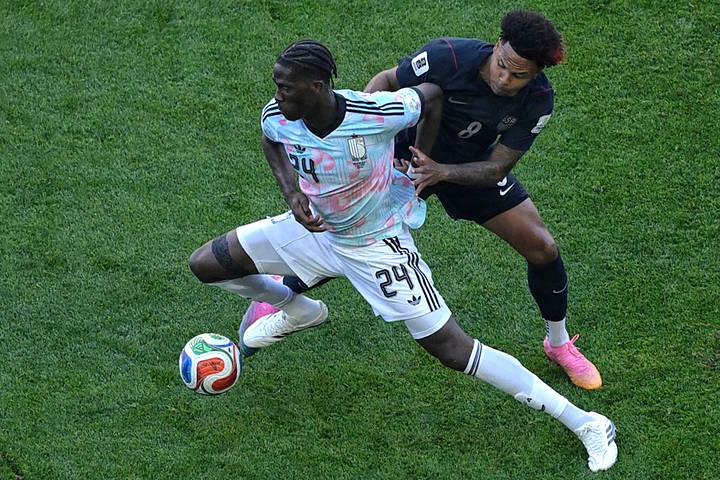
Pochettino must have felt as though he were staring into a mirror on Monday. There was one team buzzing around the attacking third, striking early and firmly planting their boot on the neck of the opposition with a lineup energized by a host of youthful inclusions. Regrettably for Pochettino, it was the USMNT's adversary.
"They wanted to play with a high press, but that is what we did, not them," Belgium manager Rudi Garcia noted with evident satisfaction.
Three of Belgium's four goals originated from winning possession against a lethargic home side. Three U.S. players converged on a dropping ball inside their own penalty box, each waiting for another to deal with the threat. Nicolas Raskin surged into the confusion and cut back for Charles De Ketelaere to tap Belgium into a ninth-minute advantage.
The catastrophic blunder jointly produced by Tim Ream and Matt Freese stemmed from a moment of pressure, while both Alex Freeman and Chris Richards appeared to compete with one another over who could surrender possession more cheaply to Lukaku in the dying moments of a World Cup elimination.
All the urgency that had characterized this squad throughout the summer dissolved into the pale blue Seattle sky. Even the energy in the stands had completely drained away. The electric atmosphere before kickoff, with spontaneous renditions of "Country Road" breaking out in the concourses, had given way to an unsettling silence by evening.
Weaknesses Exposed
This display came as a massive shock, primarily because Pochettino had made no attempt to change anything. This was the identical XI that dismantled Paraguay on opening night and ground out a victory against Bosnia and Herzegovina in the previous round. The message was unchanged, the atmosphere even more electric and the motivation considerably higher.
Yet in these precisely calibrated tactical systems, it takes only a few minor adjustments to completely destabilize the entire structure.
Enable functional cookies to see this feature.
Ream didn't suddenly become a 38-year-old with a man bun overnight. Freese didn't transform into a goalkeeper lacking experience beyond MLS in an instant. The brilliance of Pochettino's system this summer has been its capacity to not only showcase the squad's strengths, but conceal its vulnerabilities. Without a functioning high press or any cohesion in movement, the cracks that had always existed were mercilessly laid bare.
Once Freese and Ream combined to hand Hans Vanaken Belgium's third goal of the match, extinguishing any lingering hope of a U.S. comeback, Balogun sank to the turf and rolled onto his back, gazing up at the sky in anguish. Try as he might, not even Pearl Jam's lead vocalist could lift his spirits.