
 ไทย
ไทย English
 中國人
中國人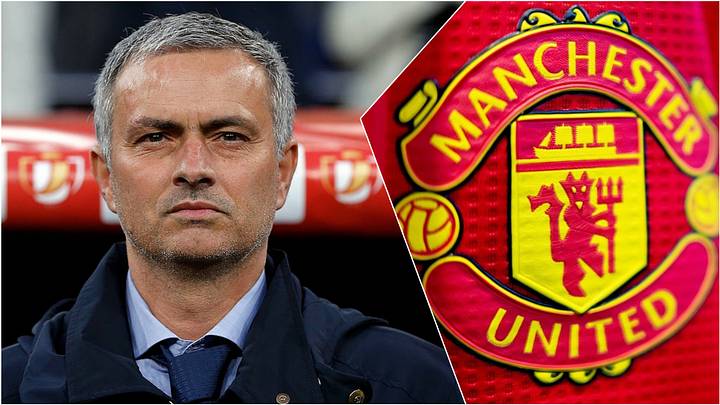
Netflix sports documentaries have a knack for uncovering remarkable revelations. A new series chronicling the life of iconic soccer manager José Mourinho has done exactly that.
The 63-year-old disclosed that he had agreed to take over from Alex Ferguson at Manchester United when the legendary Scotsman stepped down in 2013 after an extraordinary 26-year reign at Old Trafford.
However, having just left Real Madrid at the time—the club he is once again at the helm of heading into the upcoming campaign—Mourinho ultimately decided against joining the Red Devils, opting instead to return to former club Chelsea, a fact Ferguson himself has also confirmed.
David Moyes was chosen as the alternative heir to Ferguson and arrived bearing the title of 'The Chosen One.' Yet he was dismissed after a mere 10 months in charge. Over in west London, it took Mourinho just two seasons to claim his third Premier League crown with Chelsea.
The Portuguese tactician would, of course, eventually find his way to United, taking charge in 2016 following yet another exit from Stamford Bridge. He delivered the League Cup and Europa League before the relationship soured—as it so frequently does with Mourinho—culminating in his early departure in 2018.
But what might have unfolded had he taken the United job ahead of the 2013–14 season? Let's explore an alternate timeline.
Squad Assessment

United's transfer activity under Moyes was undeniably disappointing. The club brought in just three players during the summer of 2013, with Marouane Fellaini—one of the Scot's trusted allies from Goodison Park—being the only notable arrival. The January signing of Juan Mata was a necessity, but the club was already spiraling toward disaster.
Paul Scholes's second retirement before the season kicked off certainly didn't help Moyes, who could have benefited greatly from such a seasoned presence in the middle of the park. Mourinho, however, may well have been able to attract a more high-profile replacement for the club icon given his standing in world football.
United had made approaches for Barcelona midfielder Cesc Fábregas during Moyes's sole summer in charge, but the Spaniard chose to remain at the Catalan giants. Mourinho might have persuaded him otherwise, luring him back to the Premier League to partner Michael Carrick in United's engine room. As it turned out, Fábregas did eventually link up with Mourinho—at Chelsea in 2014.
Elsewhere, wholesale changes weren't necessarily on the agenda. United had David De Gea between the sticks, and he ultimately came into his own despite an uncertain beginning, while the backline featured a veteran Rio Ferdinand and Nemanja Vidić alongside younger talents like Chris Smalling and Phil Jones. At full-back, Patrice Evra and Antonio Valencia provided solid options.

United still possessed considerable attacking threat. While Robin van Persie struggled to match his previous season's brilliance, he still contributed 18 goals across all competitions, and Wayne Rooney chipped in with 19 of his own. Javier Hernández (9) and Danny Welbeck (10) also made their mark.
There was room for further reinforcement, though, with Gareth Bale having held discussions with the Red Devils in 2013 before ultimately completing a move to Real Madrid from Tottenham Hotspur. Those negotiations might have gone differently with Mourinho at the table, potentially creating a world where the Welsh winger was tearing up the flanks at Old Trafford rather than the Bernabéu.
Regardless of new arrivals, there's little question that Mourinho would have extracted far more from United's 2013–14 squad.
How the 2013–14 Season Might Have Panned Out

A Community Shield victory over Wigan Athletic was about as bright as things got for Moyes. He lost three of his opening six Premier League fixtures, including a narrow defeat at Anfield to fierce rivals Liverpool and a humbling 4–1 thrashing at neighbors Manchester City. The latter set the tone for a deeply embarrassing campaign.
United managed just one win from their 10 league encounters against fellow 'Big Six' clubs, suffering some truly mortifying defeats along the way. The nadir came in March, shortly before Moyes was shown the door, as they endured back-to-back 3–0 home losses to Liverpool and Man City at Old Trafford.
Mourinho has built his reputation as a master of the big occasion, with his tactical intelligence and psychological edge frequently giving his teams the upper hand against top-level opposition. It's hard to imagine United failing to win 90 per cent of their matches against 'Big Six' rivals under him. For context, Chelsea won seven and drew three of their 10 such fixtures in 2013–14.
As United slumped to seventh—their lowest-ever Premier League placing at that point—Chelsea finished third, behind only Manchester City and an overachieving Liverpool side. The Blues accumulated 18 more points than United and lost half as many games, with their defensive solidity proving the decisive factor.
Mourinho is celebrated for his ability to make teams compact and hard to break down, regardless of the occasion or the opposition. Chelsea conceded just 27 times in the 2013–14 Premier League season, while United shipped 64 goals throughout the campaign, with Moyes utterly powerless to stop the defensive collapses from recurring.
Chelsea also outshone United in both the Champions League and FA Cup, advancing to the semifinals of the former and the fifth round of the latter. United, by contrast, were comfortably eliminated by Bayern Munich over two legs at the quarterfinal stage of Europe's top club competition, while their FA Cup run ended at the very first attempt with a third-round exit to Swansea City.
While United may not have lifted major silverware in 2013–14 regardless of who was in the dugout, Mourinho would have delivered a significant upgrade on what was endured under Moyes. At the very minimum, they would almost certainly have secured Champions League qualification, providing a solid platform to build on the following season.
The Future Under Mourinho

It was in Mourinho's second season back at Stamford Bridge that Chelsea truly hit their stride. A domestic double was secured as the London club won the Premier League title with 87 points—a staggering 17 more than fourth-placed United managed under Louis van Gaal—and also lifted the EFL Cup.
We can never say for certain whether United would have matched that in Mourinho's hypothetical second season in 2014–15, but the chances of success would have been considerably greater with him in the Old Trafford dugout.
That said, long-term commitments have never been Mourinho's forte, with Chelsea dismissing him midway through 2015–16. His combative personality and unwavering self-confidence tend to breed internal tensions and very public fallouts, as virtually every chapter of his managerial career has demonstrated.
Even had Mourinho steered United to short-term glory, the likelihood of him remaining at the club for any extended period would have been slim at best.